How Often Should You Service a Scissor Lift?
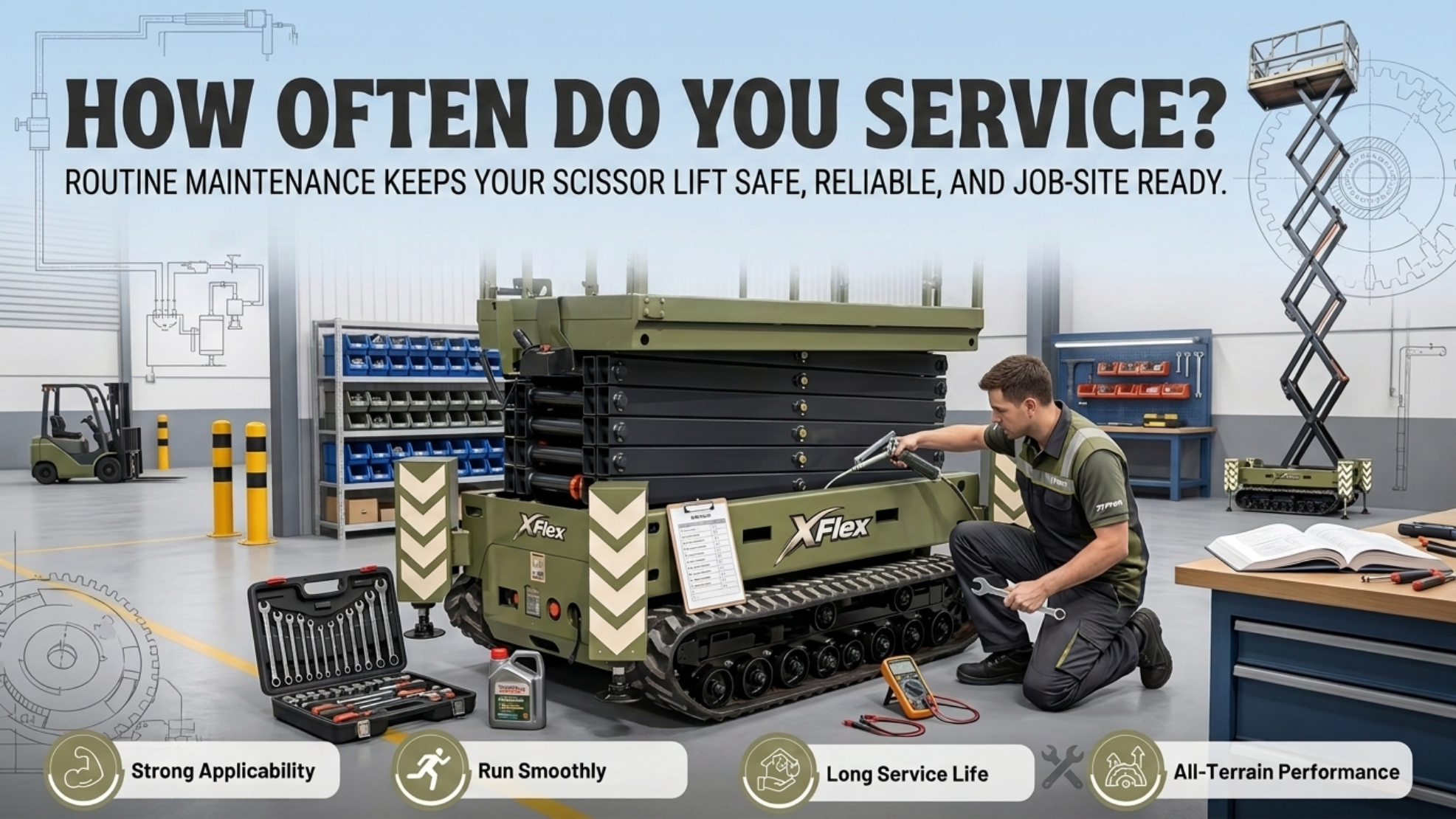
A scissor lift only earns its keep when it works safely and reliably, and that dependability comes down to one thing: regular, well-timed service. Skip maintenance or put it off, and you invite breakdowns, safety hazards, and repair bills that dwarf the cost of routine care. Stay on top of it, and the machine rewards you with years of steady, trouble-free performance. The real question most owners and operators face is not whether to service a scissor lift, but how often. This guide walks you through the answer, covering manufacturer schedules, daily inspections, usage-based maintenance, the warning signs that call for immediate attention, and the records and annual inspections that keep everything on track.
Follow the Manufacturer’s Recommended Service Schedule
Every scissor lift comes with a maintenance schedule set by the manufacturer, and it is the single most reliable guide you have for keeping the machine in good working order. These schedules are built around two measures: operating hours and calendar time intervals. Some tasks are due after a certain number of hours of use, while others need attention at set periods such as monthly, quarterly, or annually, regardless of how much the lift has run. Following both measures ensures that a machine used heavily and one used occasionally each receive the care they actually need.
The reason these schedules matter so much comes down to safety and reliability. Manufacturers develop their maintenance intervals through careful engineering and real-world testing, so the recommended service points reflect exactly when components tend to need inspection, lubrication, or replacement. When you follow that schedule, you address wear before it turns into failure, keeping the lift stable, responsive, and safe for the people who work on it. Ignoring the schedule, by contrast, allows small problems to develop unnoticed until they cause a breakdown or, worse, a safety incident.
Sticking to the manufacturer’s plan also protects your investment in practical, everyday terms. A lift serviced on schedule runs more smoothly, suffers fewer unexpected failures, and holds its condition far longer than a neglected one. It keeps you compliant with warranty requirements too, since manufacturers often expect proof of proper maintenance. Treat the recommended service schedule as the foundation of your maintenance routine, consult the operator’s manual for the specific intervals your model requires, and you give yourself a clear, dependable framework for keeping the machine safe and productive throughout its working life.
Perform Daily Pre-Operation Inspections
Beyond the scheduled service intervals, the most valuable maintenance habit is a thorough inspection at the start of every shift. A daily pre-operation check takes only a few minutes, yet it is your first line of defense against breakdowns and accidents. Because a scissor lift raises workers to height, even a minor fault left unchecked can create a serious hazard. Building this quick inspection into the daily routine ensures the machine is safe to operate before anyone steps onto the platform.
A proper pre-operation inspection covers the key systems that keep the lift running safely and dependably. Operators should work through each area methodically:
- Fluid levels, including hydraulic fluid, checked and topped up as needed.
- Tires, inspected for proper condition, inflation, and signs of damage.
- Batteries, checked for charge, secure connections, and clean terminals.
- Guardrails, confirmed to be secure, complete, and free of damage.
- Controls, tested for smooth, responsive operation from both platform and base.
- Safety devices, verified to function correctly, including emergency stops and alarms.
Catching small issues early is what makes these daily checks so valuable. A low fluid level, a soft tire, a loose guardrail, or a control that responds sluggishly might seem minor on its own, but each one can grow into a costly repair or a dangerous failure if ignored. Spotting these problems before the shift begins lets you address them while they are still small, cheap, and safe to handle on your own terms rather than in the middle of a job.
Make the daily inspection a firm, non-negotiable part of your operation. Train every operator to perform it consistently, and never put a lift into service until any issue found has been resolved. This simple discipline protects your people, preserves your equipment, and keeps the machine ready to work whenever you need it.
Schedule Preventive Maintenance Based on Usage
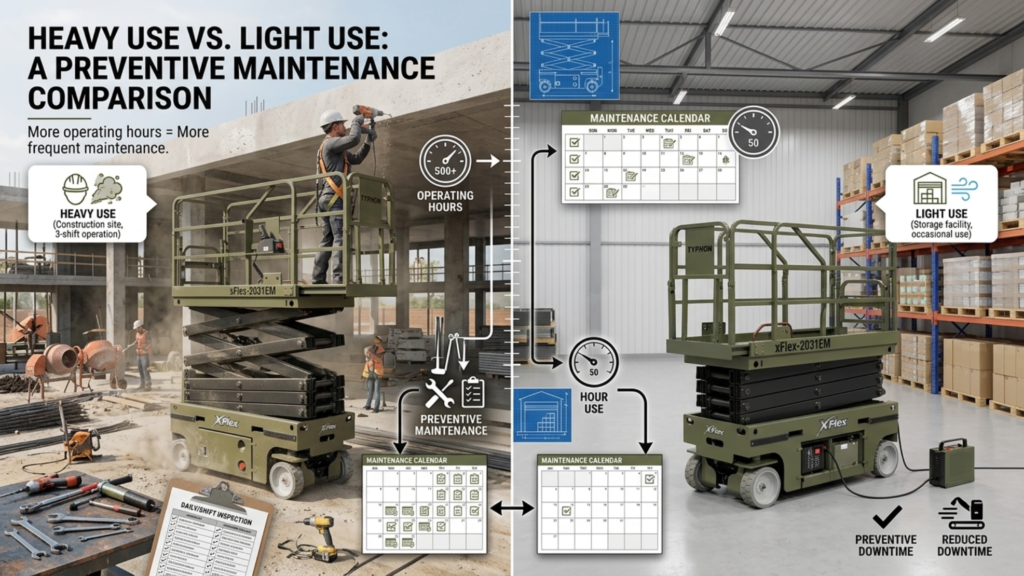
While the manufacturer’s schedule gives you a solid baseline, how often you service a scissor lift in practice depends heavily on how hard it works. A machine running long hours on a busy job site experiences far more wear than one used occasionally for light tasks, and its maintenance needs reflect that difference. Matching your servicing frequency to your actual usage is what keeps the lift dependable without either neglecting it or wasting effort on unnecessary work.
Heavy, continuous use puts sustained demand on every component, from the hydraulic system and scissor arms to the batteries and moving joints. A lift working full shifts day after day accumulates operating hours quickly, so it reaches its service intervals sooner and benefits from more frequent inspection and preventive care. Occasional-use machines wear more slowly, but they still need attention on a time basis, since fluids can degrade, batteries can lose charge, and seals can dry out even when the lift sits idle. Both patterns of use require a maintenance plan, just at different rhythms.
The goal of usage-based preventive maintenance is to keep components in good condition and minimize downtime. When you service the lift in step with how hard it works, you replace worn parts and address developing problems before they cause a failure, rather than reacting after the machine has already broken down. That proactive approach keeps the lift available when you need it and spares you the disruption and expense of unexpected repairs.
Take an honest look at how your scissor lift is used and adjust your servicing accordingly. Track operating hours, note how demanding the conditions are, and increase the frequency of preventive maintenance for machines that work hard. A lift maintained in proportion to its workload stays reliable, performs consistently, and delivers the steady productivity your operation depends on.
Watch for Signs That Service Is Needed
Scheduled maintenance and daily checks cover most situations, but a scissor lift will often tell you when something needs attention between service intervals. Learning to recognize these warning signs is essential, because a developing fault rarely fixes itself and usually worsens with continued use. When the machine shows symptoms of trouble, the safest and smartest response is to stop, investigate, and service it promptly, even if it is not yet due for scheduled maintenance.
Several clear signals indicate that a lift needs immediate attention:
- Unusual noises such as grinding, squealing, or knocking during operation.
- Slow or jerky platform movement when raising or lowering the lift.
- Hydraulic leaks or damp spots and drips around hoses, cylinders, and fittings.
- Warning lights or error codes appearing on the control panel.
- Reduced battery performance, including shorter run times or weak lifting power.
Each of these signs points to a problem that deserves investigation before the lift returns to work. Strange noises often indicate worn or poorly lubricated components, while slow or uneven platform movement can signal low hydraulic fluid, a failing pump, or a developing leak. Visible hydraulic leaks should never be ignored, since losing fluid affects both performance and safety and can damage the wider system if left unchecked. Warning lights exist precisely to alert you to faults the machine has detected, and reduced battery performance can leave an operator stranded at height or unable to complete a lift.
Treat these symptoms as service triggers in their own right. Take the machine out of operation, have it inspected by a qualified technician, and resolve the issue before putting it back to work. Responding quickly to warning signs prevents small faults from cascading into major failures, protects the people who rely on the lift, and keeps your equipment safe and dependable between its regular service intervals.
Keep Maintenance Records and Annual Inspections Up to Date
Good maintenance is only complete when it is properly documented, and keeping detailed service records is one of the most valuable habits an owner can build. A thorough maintenance log records every inspection, service, repair, and part replacement, along with the dates and operating hours at which they occurred. This history gives you a clear picture of the machine’s condition over time, helps you plan future service accurately, and makes it far easier to spot recurring problems before they become serious.
Alongside routine records, completing required annual inspections is essential. Many regions require scissor lifts to undergo a formal, comprehensive inspection each year, carried out by a qualified inspector who examines the machine in depth for safety and structural integrity. These annual inspections go beyond daily checks and routine servicing, confirming that the lift remains safe to operate and compliant with the regulations that govern aerial work platforms. Staying current with them is not optional where they are required, and skipping them exposes you to serious safety and legal risks.
Keeping records and inspections up to date delivers benefits that reach well beyond compliance:
- Regulatory compliance, demonstrating that the lift meets required safety standards.
- Longer equipment life, since documented, consistent care keeps the machine in better condition.
- Preserved resale value, as buyers pay more for a lift with a complete service history.
- Better maintenance planning, using past records to anticipate future needs.
Make thorough documentation and timely annual inspections a permanent part of how you manage your scissor lift. Store your records in an organized, accessible place, schedule annual inspections well before they are due, and keep certificates on file as proof. This diligence protects your people, satisfies the regulations that apply to your operation, and ensures the machine holds both its performance and its value throughout its working life.
Conclusion
Servicing a scissor lift is not a single task on a fixed calendar but a layered routine that keeps the machine safe, reliable, and ready to work. Start with the manufacturer’s recommended schedule as your foundation, following both the operating-hour and time-based intervals it sets out. Add a thorough daily pre-operation inspection to catch small issues before they grow, and adjust your preventive maintenance frequency to match how hard the lift actually works. Stay alert to the warning signs that call for immediate service between intervals, and keep detailed records while completing every required annual inspection on time. Together, these practices protect the people who rely on the machine, minimize costly downtime, extend the lift’s working life, and preserve its value. Commit to this routine, and your scissor lift will deliver dependable performance for years to come.