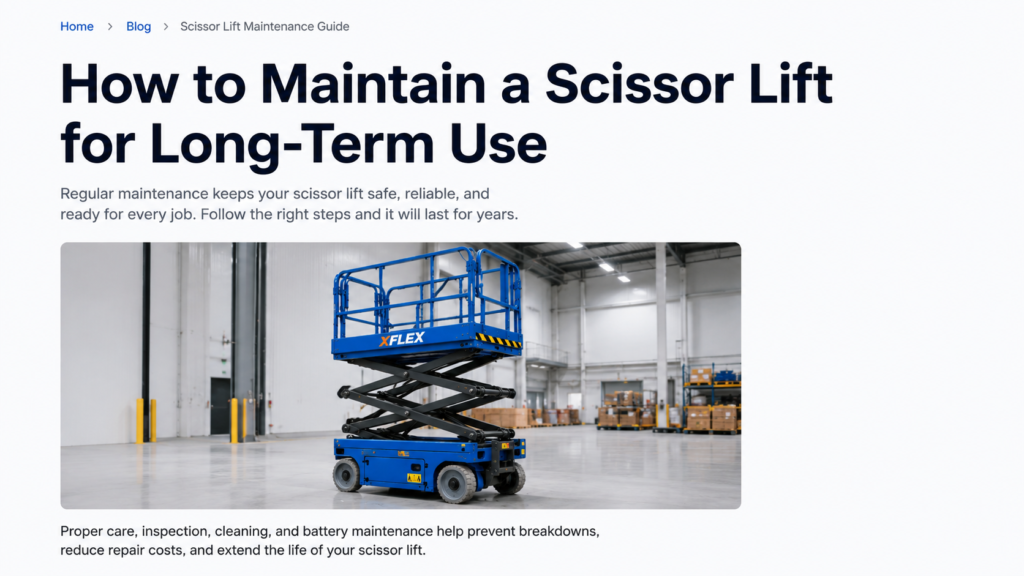
How to Maintain a Scissor Lift for Long-Term Use
A scissor lift is a valuable machine for working at height. It helps workers reach ceilings, shelves, walls, signs, lights, roofing areas, and other elevated work zones safely and efficiently. But like any machine, a scissor lift needs regular maintenance if you want it to last for many years.
Good scissor lift maintenance is not only about fixing problems after they happen. It is about preventing problems before they become expensive. A poorly maintained lift can lose battery power faster, move unevenly, leak hydraulic fluid, damage tires, fail safety functions, or become unsafe for operators.
For businesses, contractors, warehouse owners, and facility teams, proper maintenance protects both the machine and the people using it. OSHA guidance also stresses that aerial lifts should be removed from service when unsafe conditions or defects are found until repairs are made.
This guide explains how to maintain a scissor lift for long-term use in simple, practical steps.
Why Scissor Lift Maintenance Matters
Scissor lifts are used to raise workers and tools above ground level. Because of that, small maintenance problems can become serious safety risks. A weak battery, damaged guardrail, leaking hydraulic hose, worn tire, or faulty emergency lowering system can affect how safely the lift performs.
Maintenance also protects your investment. A new scissor lift can serve your business for a long time if it is inspected, cleaned, charged, lubricated, and stored correctly. Without care, the machine may lose performance much earlier than expected.
For electric scissor lifts, battery care is one of the biggest factors in long-term ownership cost. For rough-terrain or outdoor models, tires, hydraulic parts, steering components, and platform structure need more attention because the machine works in harder conditions.
The goal is simple: keep the lift safe, stable, clean, charged, and ready for work.
Start With the Operator Manual
The first rule of scissor lift maintenance is to follow the manufacturer’s manual. Every model is different. A compact indoor electric scissor lift is not maintained exactly the same way as a large rough-terrain scissor lift. Lift height, platform capacity, battery type, tire type, hydraulic system, control system, and service intervals can all be different.
The operator manual usually explains what to inspect before use, how to charge the batteries, what warning signs to watch for, how to use the emergency lowering system, and when service should be done. Service manuals also explain scheduled maintenance tasks that should be handled by trained or qualified technicians.
Genie’s maintenance manual notes that scheduled maintenance inspections should be performed by qualified service technicians according to the manufacturer’s specifications. This is important because some maintenance tasks are simple operator checks, while others require proper tools and technical knowledge.
Before using or maintaining any scissor lift, make sure the manual is available, readable, and matched to the exact model.
Do a Pre-Use Inspection Before Each Shift
A pre-use inspection is one of the most important habits for long-term scissor lift care. It helps operators catch small issues before the lift is used. This inspection should be done before the machine starts work, especially at the beginning of each shift.
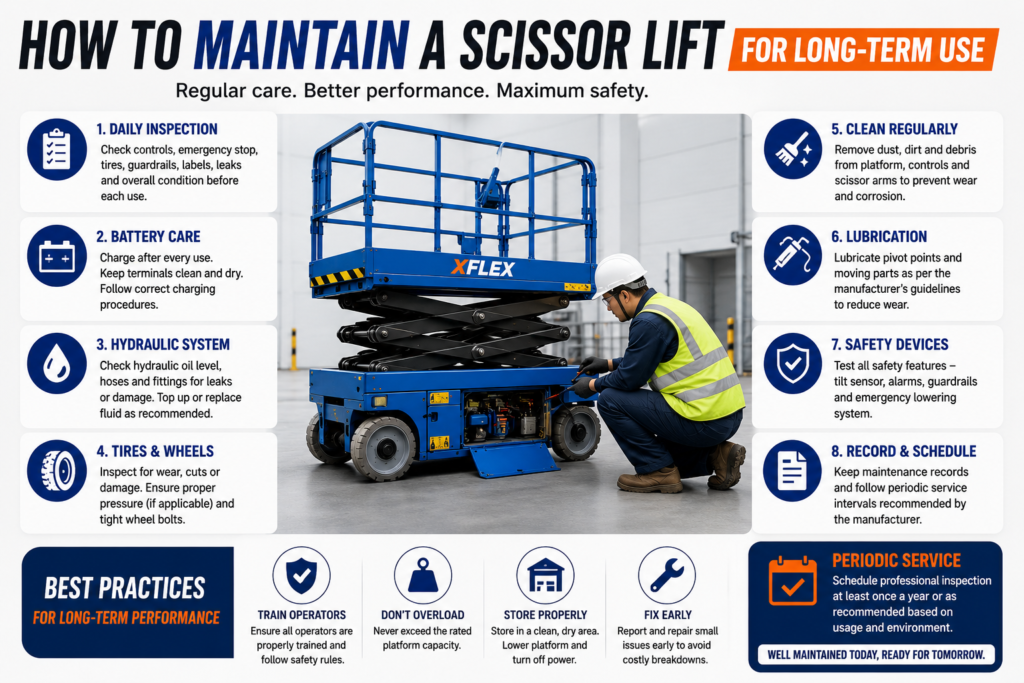
A good pre-use inspection starts with a walkaround. Look at the machine from all sides. Check for visible damage, loose parts, missing pins, cracked welds, bent guardrails, damaged platform gates, fluid leaks, worn tires, loose covers, and broken labels.
Then check the controls. Test the ground controls and platform controls. Make sure the lift raises and lowers smoothly. Check that steering and driving functions respond properly. Test the horn, emergency stop buttons, alarms, and emergency lowering system.
Also check the work area before operating the lift. OSHA states that work zones should be inspected for hazards before and during aerial lift operation. These hazards may include holes, drop-offs, unstable surfaces, overhead obstructions, power lines, and other risks.
If the lift does not pass inspection, do not use it. Tag it out and report the problem so it can be repaired properly.
Keep the Battery in Good Condition
For electric scissor lifts, the battery is one of the most important parts of the machine. A weak or poorly maintained battery can reduce runtime, slow down lifting speed, cause charging problems, and shorten the life of the lift.
Battery care starts with proper charging. Charge the lift in a safe, dry, well-ventilated area. Use the correct charger for the machine. Avoid using damaged plugs, exposed wires, or loose outlets. Some manuals advise connecting the battery charger only to a grounded AC outlet and checking cords, cables, and wires daily for damage.
Do not let batteries sit fully discharged for long periods. Deep discharge can shorten battery life. After daily use, charge the machine according to the manufacturer’s instructions. For many electric scissor lifts, overnight charging is common, but you should still follow the specific manual.
JLG’s electric scissor lift maintenance guidance recommends performing a charge test by plugging in the battery charger and verifying that the batteries are charging properly. This is a simple way to catch charging issues before the machine is needed on a job.
If the lift uses flooded lead-acid batteries, the water level may need to be checked and maintained. Use only the correct water type recommended by the manufacturer, and never overfill. If the lift uses lithium batteries, follow the lithium-specific charging and storage rules because they are different from lead-acid batteries.
Good battery care means longer runtime, fewer breakdowns, and lower replacement cost.
Inspect Cables, Chargers, and Electrical Parts
Electrical issues can create downtime and safety risks. On electric scissor lifts, the charger, battery cables, wiring, control boxes, and connectors should be checked regularly.
Look for cracked cable insulation, loose connections, corrosion on battery terminals, damaged charger plugs, burned smells, warning lights, or error codes. If the charger does not start properly or the lift does not hold a charge, do not ignore it.
Corrosion around battery terminals can reduce electrical performance. Loose cables can cause weak power, intermittent problems, or failure during operation. Damaged wires should be repaired or replaced before the lift is used.
Control panels also need attention. Make sure buttons, joysticks, switches, and emergency stop controls are not sticky, broken, or loose. If the platform controls respond slowly or unevenly, the machine should be checked by a qualified technician.
Electrical problems often start small. Catching them early can prevent bigger repair costs.
Check the Hydraulic System
The hydraulic system raises and lowers the scissor lift platform. If the hydraulic system is not maintained, the platform may lift slowly, lower unevenly, drift down, make strange noises, or leak fluid.
Start by looking for hydraulic leaks. Check under the machine, around hoses, fittings, cylinders, and the pump area. Even a small leak should be taken seriously because hydraulic pressure is important for safe operation.
Look at hydraulic hoses for cracks, rubbing, swelling, cuts, or worn areas. Hoses that rub against metal parts can weaken over time. Fittings should be tight, clean, and dry.
Hydraulic fluid should also be checked according to the manual. Low fluid can affect lifting performance. Dirty or incorrect fluid can damage components. Do not mix fluids unless the manual allows it.
When lifting the platform, listen for unusual sounds. Grinding, whining, jerking, or slow lifting may be signs of hydraulic or electrical issues. If the lift does not raise or lower normally, stop using it and have it inspected.
The hydraulic system does heavy work every time the platform moves. Keeping it clean, sealed, and properly serviced is key to long-term machine life.
Keep Tires and Wheels in Good Shape
Tires affect stability, movement, and safety. A scissor lift with damaged tires may not drive smoothly or sit evenly on the ground. This is especially important because scissor lifts depend on a stable base when working at height.
Indoor electric scissor lifts often use non-marking solid tires. These tires should be checked for cuts, chunks, flat spots, cracking, and uneven wear. Outdoor or rough-terrain scissor lifts may have larger tires that need closer inspection because they work on uneven surfaces.
Also check the wheels and wheel hardware. Loose bolts, damaged rims, or worn steering parts can make the machine unsafe. If the lift pulls to one side, shakes during travel, or makes unusual noises while moving, inspect the wheels and drive system.
Never ignore tire damage. Tires are part of the lift’s stability system. Good tires help the machine move safely and support the rated load properly.
Clean the Scissor Lift Regularly
Cleaning may sound simple, but it is a major part of long-term maintenance. Dirt, dust, mud, grease, concrete dust, and jobsite debris can hide problems and damage parts over time.
After use, clean the platform, steps, guardrails, tires, base, and control areas. Remove mud and debris from around wheels and moving parts. Keep the platform floor clean so workers do not slip.
For warehouse use, cleaning helps keep dust away from controls, chargers, and moving parts. For construction use, cleaning is even more important because cement dust, dirt, and outdoor moisture can wear down the machine faster.
Do not spray sensitive electrical parts directly with high-pressure water unless the manufacturer says it is safe. Use the correct cleaning method for the model. The goal is to keep the lift clean without pushing water into electrical parts, battery areas, or control boxes.
A clean machine is easier to inspect, easier to service, and safer to operate.
Lubricate Moving Parts When Required
Scissor lifts have moving parts that need proper lubrication. These may include pivot points, pins, bushings, steering parts, or other joints depending on the model.
Lubrication reduces friction and wear. Without it, moving parts can become noisy, stiff, loose, or damaged. Over time, poor lubrication can affect lifting performance and increase repair cost.
However, lubrication should be done according to the manual. Using too much grease, the wrong grease, or lubricating the wrong area can create problems. Some modern machines may have sealed parts that do not need regular greasing.
If the machine squeaks, moves unevenly, or shows visible wear around pivot points, it may need service. But do not guess. Check the manual or ask a qualified technician.
Proper lubrication helps the lift operate smoothly and protects the structure from early wear.
Inspect the Platform, Guardrails, and Entry Gate
The platform is where workers stand, so it must stay in good condition. Before use, check the platform floor, guardrails, entry gate, toe boards, extension deck, and locking parts.
The platform should not have cracks, holes, heavy rust, bent rails, missing bolts, or loose sections. The entry gate should close properly. If the platform extension slides out, it should lock securely.
Do not modify the platform without manufacturer approval. Adding homemade rail extensions, drilling holes, welding brackets, or changing the platform structure can create safety and compliance problems.
Also make sure safety labels are readable. Labels usually show platform capacity, warning messages, emergency instructions, and operating limits. If labels are missing or unreadable, they should be replaced.
A strong and properly maintained platform helps protect workers at height.
Watch the Platform Capacity
Every scissor lift has a rated platform capacity. This includes workers, tools, materials, and anything else placed on the platform. Exceeding the rated capacity can affect stability, lifting performance, and machine safety.
Long-term maintenance is not only about parts. It is also about how the machine is used. If a lift is constantly overloaded, driven roughly, or used on poor surfaces, it will wear out faster.
Operators should know the rated load before using the machine. They should also understand that platform extensions may have separate weight limits. A lift may handle one capacity on the main platform and a lower capacity on the extension deck.
Never use a scissor lift as a crane. Do not hang heavy loads from guardrails. Do not push or pull heavy objects from height beyond safe limits. Bad operating habits can damage the machine even if it looks fine at first.
Respecting the rated capacity helps the scissor lift last longer and operate safely.
Store the Scissor Lift Correctly
Storage has a big effect on long-term scissor lift condition. If the lift is left outside in rain, sun, dust, or mud for long periods, it may develop electrical problems, corrosion, tire wear, and battery issues faster.
For indoor electric scissor lifts, store the machine in a dry, clean, secure area. Keep it away from standing water, heavy dust, and areas where other equipment may hit it. Charge the batteries as recommended before storage.
For longer storage, follow the manufacturer’s battery storage instructions. Some batteries need periodic charging. Leaving batteries unused for too long can reduce their lifespan.
If the lift must be stored outside, use proper protection and keep it on a stable surface. Avoid leaving it in mud or soft ground. Make sure the platform is lowered, controls are protected, and the machine is secured.
Good storage protects the lift when it is not working.
Keep Maintenance Records
Maintenance records are important for safety, warranty, resale value, and business organization. A simple maintenance log can show when inspections, repairs, battery service, hydraulic checks, tire replacements, and annual service were completed.
Records help you spot patterns. If the same problem happens again and again, the log makes it easier to find the root cause. It also helps operators and managers know whether the machine is ready for work.
Some safety programs require inspection documentation. The University of Tennessee’s aerial and scissor lift safety guidance notes that periodic inspections must be documented and that lifts must be labeled when periodic inspection was performed or when the next one is due.
Even if your business is small, keeping records is smart. It helps prevent missed service and supports responsible machine ownership.
Schedule Professional Inspections
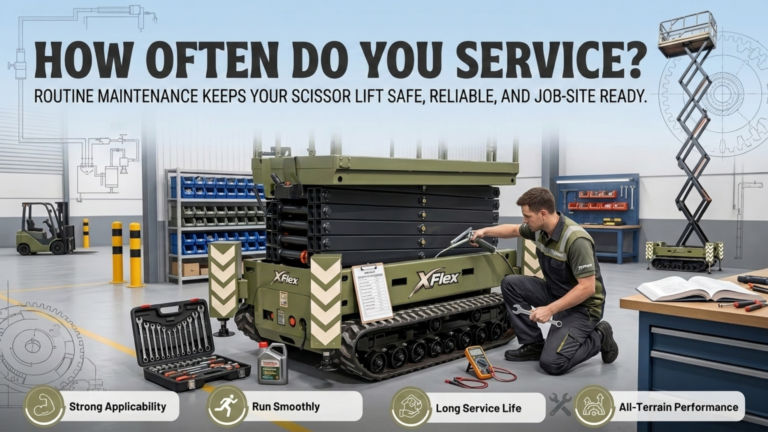
Daily checks are important, but they do not replace professional service. Some parts of a scissor lift should be inspected by trained technicians. This is especially true for hydraulic systems, structural parts, electrical systems, safety systems, and major repairs.
Professional inspections can find hidden problems that normal operators may miss. These may include worn bushings, internal hydraulic issues, damaged wiring, weak batteries, calibration problems, or structural wear.
Annual and periodic inspections are common for aerial lifts. Inspection timing may depend on the manufacturer, local rules, industry standards, machine age, and hours of use. Some guidance states that annual inspections should be done by a qualified person and not later than 13 months from the prior annual inspection.
For best results, create a maintenance schedule based on the operator manual, machine usage, and jobsite conditions. A lift used every day in a dusty construction site needs more attention than a lift used occasionally in a clean warehouse.
Train Operators to Use the Lift Properly
Operator behavior affects maintenance. A careful operator can help a lift last longer. A careless operator can damage it quickly.
Operators should know how to inspect the machine, drive it smoothly, avoid overloading, charge it correctly, report problems, and use emergency controls. They should understand the work area, ground conditions, overhead hazards, and platform limits.
Bad habits cause damage. These include driving fast over rough ground, hitting walls or racks, using the lift on uneven surfaces, ignoring warning alarms, running batteries too low, overloading the platform, and operating with visible damage.
Training also helps operators notice early warning signs. If they know what normal operation feels like, they can quickly report strange noises, weak lifting, slow driving, steering problems, or battery issues.
Good maintenance starts with good operation.
Fix Small Problems Early
Small scissor lift problems usually do not fix themselves. A small hydraulic leak can become a major leak. A weak battery can become a dead battery. A loose railing can become a serious safety issue. A damaged tire can affect stability.
When operators report problems, take them seriously. Do not keep using the lift just because it still moves. If a safety function does not work, the machine should be removed from service until repaired.
Early repairs are usually cheaper than emergency repairs. They also reduce downtime. A machine that fails during a job can delay work, cost money, and create safety risks.
The best approach is simple: inspect often, repair early, and never ignore safety-related problems.
Common Scissor Lift Maintenance Mistakes to Avoid
One common mistake is only checking the machine when something goes wrong. This leads to surprise breakdowns and higher repair costs.
Another mistake is poor battery charging. Letting batteries fully drain, using the wrong charger, ignoring damaged charger cables, or storing the machine with weak batteries can reduce battery life.
Some owners also forget to clean the lift. Dirt and debris can hide cracks, leaks, and worn parts. Cleaning makes inspection easier and helps protect the machine.
Overloading is another major issue. Even if the lift can rise with too much weight, that does not mean it is safe. Overloading can damage the lift and increase risk.
A final mistake is skipping professional inspections. Operators can do daily checks, but trained technicians are needed for deeper service and repair.
Avoiding these mistakes will help the scissor lift stay reliable for longer.
Simple Maintenance Schedule for Long-Term Use
For daily use, inspect the lift before each shift. Check the platform, guardrails, tires, controls, emergency stop, alarms, battery charge, hydraulic leaks, and work area.
Weekly, clean the machine more carefully. Check charger cables, battery terminals, tire condition, labels, covers, and visible fasteners.
Monthly, review maintenance records, inspect moving parts, check for unusual wear, and confirm that all safety functions work correctly.
Every few months, schedule deeper service based on the manual and how heavily the lift is used. This may include hydraulic checks, lubrication, electrical inspection, battery testing, and structural inspection.
Yearly, arrange a full professional inspection from a qualified technician. Heavy-use machines may need more frequent professional service.
This schedule should always be adjusted based on the specific model, manufacturer instructions, and working conditions.
Conclusion
Scissor lift maintenance is the key to long-term performance, safety, and lower ownership cost. A well-maintained lift works better, lasts longer, and gives operators more confidence on the job.
The most important habits are simple. Inspect the lift before each shift. Charge and care for the batteries correctly. Watch for hydraulic leaks. Keep tires, wheels, controls, guardrails, and safety systems in good condition. Clean the machine regularly. Store it properly. Keep maintenance records. Schedule professional inspections when needed.
A scissor lift is not just a machine for reaching high places. It is a working platform that carries people above the ground. That means maintenance should never be treated as optional. With the right care, your scissor lift can stay safe, useful, and reliable for many years.