
How to Choose the Right Road Roller Vibration for Small Town Road Compaction
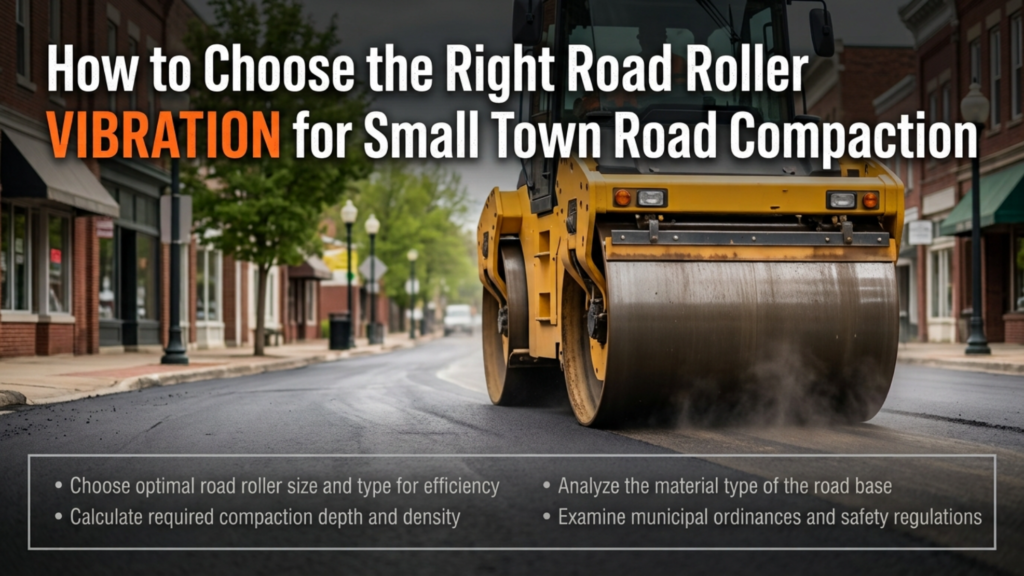
Getting road roller vibration right is often the difference between a small town road that lasts for years and one that develops ruts, cracks, and soft spots within a season. Vibration is what turns loose material into a dense, stable surface, but the wrong settings can just as easily damage the road or leave it poorly compacted. For municipal crews and contractors working on smaller roads, choosing the right vibration comes down to understanding how it works, which system fits the job, and how to match it to your materials and conditions. This guide walks you through why vibration matters, the common types available, how to pair vibration with different road materials, how to select the right roller for small town projects, and the mistakes worth avoiding. By the end, you will know how to compact stronger, longer-lasting roads with confidence.
Why Road Roller Vibration Matters
Vibration is the mechanism that makes modern compaction so effective, and understanding it explains why vibratory rollers dominate road work. When a roller vibrates, it sends rapid downward pulses through the material beneath the drum. These pulses momentarily reduce the friction between particles, allowing them to shift, settle, and lock together far more tightly than static weight alone could achieve. The result is a denser, stronger surface built to carry traffic loads for years.
The core benefit is the removal of air pockets. Loose asphalt, gravel, and base material contain gaps of trapped air that weaken the structure and invite water infiltration, settling, and cracking over time. Vibration collapses those voids and forces particles into closer contact, which directly increases material density. That density is what gives a road its strength and durability, and it is measured and specified for good reason on every quality project.
Higher compaction density delivers several lasting advantages for a small town road:
- Greater load-bearing strength, so the surface resists rutting under repeated traffic.
- Better water resistance, since fewer air voids mean less moisture penetration and freeze-thaw damage.
- Longer service life, reducing the frequency and cost of repairs and repaving.
- A smoother finish, improving ride quality and safety for drivers.
For municipalities working with tight budgets, this matters enormously. A properly compacted road stretches limited maintenance dollars further by delaying the need for costly rework. When you understand that vibration is what drives density, and density is what drives durability, you can appreciate why choosing the right vibration settings deserves careful attention on every project you take on.
Common Types of Road Roller Vibration
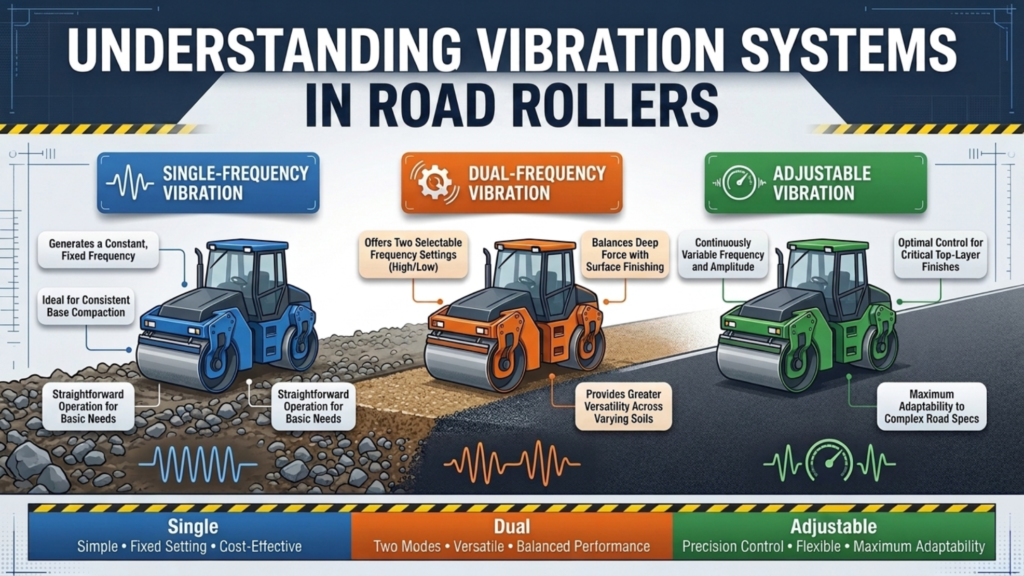
Not all vibratory rollers work the same way, and the vibration system built into a machine shapes how it performs across different tasks. The three most common approaches are single-frequency, dual-frequency, and adjustable vibration systems. Each offers a distinct balance of simplicity, flexibility, and control, and knowing the differences helps you select equipment suited to the roads you actually build.
Single-frequency systems are the most straightforward. They vibrate at one fixed frequency and amplitude, delivering consistent, predictable performance. These machines are simple to operate, easy to maintain, and cost-effective, which makes them a dependable choice for uniform work where the material and depth stay consistent. Dual-frequency systems, by contrast, offer two settings, typically pairing a high-frequency, low-amplitude mode with a low-frequency, high-amplitude mode. This lets an operator switch between deep compaction of thick base layers and gentler finishing of surface layers without changing machines.
Adjustable vibration systems give the most flexibility of all, allowing operators to fine-tune frequency and amplitude across a range of settings. Here is how the three compare at a glance:
- Single-frequency: One fixed setting, simple and economical, best for uniform tasks.
- Dual-frequency: Two selectable modes, balancing deep compaction and surface finishing.
- Adjustable: A full range of settings, offering precise control for varied materials and layer depths.
The right system depends on the variety of work you do. A crew that handles a narrow range of similar roads may find a single-frequency machine perfectly adequate and easier on the budget. A team working across mixed materials, layer thicknesses, and finishing requirements benefits far more from the adaptability of dual-frequency or adjustable systems. Matching the vibration system to the diversity of your projects ensures you get reliable compaction without paying for capability you will never use.
Matching Vibration to Road Materials
The material you are compacting should guide your vibration settings, because asphalt, gravel, and granular base layers each respond differently to frequency and amplitude. Getting this pairing right achieves proper density while protecting the surface, whereas the wrong setting can crush aggregate, damage a finished layer, or leave the road under-compacted. Frequency refers to how many vibrations occur per minute, while amplitude describes how far the drum moves with each pulse, and both work together to determine the compaction effect.
Asphalt generally calls for higher frequency and lower amplitude. The rapid, gentle pulses drive out air and densify the mix without displacing or fracturing the material, which keeps the surface smooth and intact. Pushing high amplitude into a thin asphalt layer risks cracking the mat or crushing the aggregate, so restraint produces the best finish. Granular base and thicker layers, on the other hand, usually benefit from lower frequency and higher amplitude, since the stronger pulses reach deeper to consolidate the full lift.
Gravel and aggregate base layers respond well to firmer compaction that locks the stones tightly together, though the exact setting depends on the layer thickness and the stone size. Keep these general guidelines in mind:
- Asphalt surfaces: Higher frequency, lower amplitude for a dense, smooth finish without damage.
- Granular base layers: Lower frequency, higher amplitude to reach and consolidate deeper material.
- Gravel and aggregate: Firm compaction tuned to layer depth, locking particles together securely.
Always match the setting to both the material and the lift thickness rather than applying one approach everywhere. Thin layers need gentler treatment, while thick lifts require more energy to compact fully. When you tune vibration to the specific material in front of you, you achieve the density the road needs while preserving the quality of the finished surface, which is exactly the balance that separates a durable road from a troubled one.
Selecting the Right Roller for Small Town Road Projects
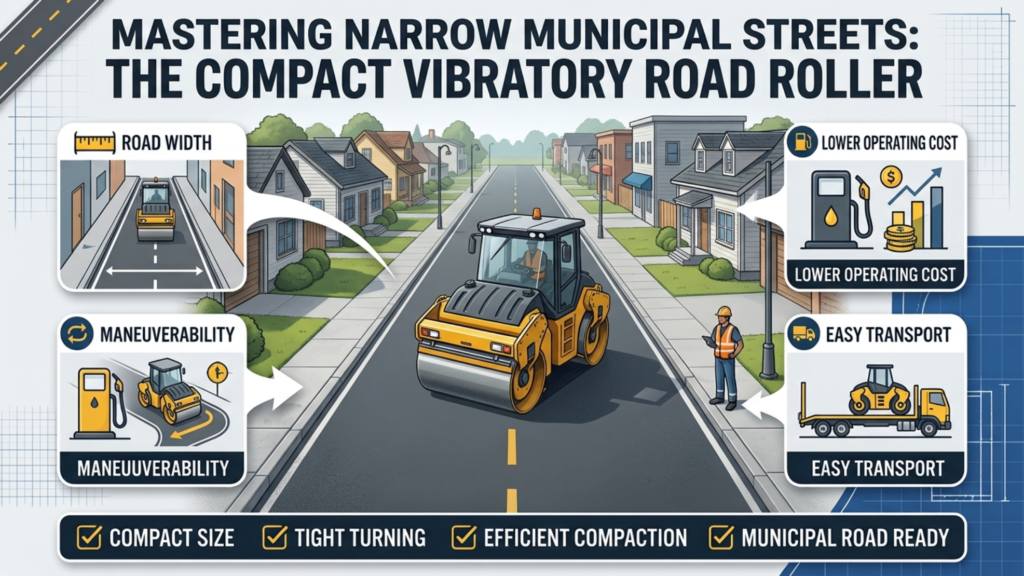
Small municipal roads present a particular set of demands, and the ideal roller balances compaction performance with the practical realities of tighter, more varied work environments. Unlike major highway projects that justify large, heavy machines, small town roads often involve narrower lanes, shorter runs, and obstacles like curbs, driveways, and utility features. The right roller delivers strong compaction while remaining nimble enough to work efficiently in these conditions.
Maneuverability and road width sit at the center of the decision. A machine too wide for the road wastes effort and struggles to compact evenly near edges, while an overly bulky roller cannot navigate the turns, intersections, and confined spaces common to town streets. A more compact, agile roller lets operators follow the road’s line precisely, compact cleanly up to the edges, and reposition easily around obstacles, all of which improve both quality and productivity on smaller jobs.
Beyond size, weigh the factors that shape real-world performance and value. Consider the following when choosing a roller for small town work:
- Project size and scope: Smaller, shorter projects favor compact, easily transported machines over large highway rollers.
- Road width: Match the drum width to the lanes you compact for even coverage without excess bulk.
- Work environment: Account for curbs, tight turns, driveways, and confined access when judging maneuverability.
- Efficiency and operating cost: Right-sized machines use less fuel and cost less to transport and maintain.
The goal is a machine that fits the work rather than the largest roller available. A well-chosen compact vibratory roller with an appropriate vibration system compacts municipal roads thoroughly while keeping fuel, transport, and maintenance costs in check. When you match the roller’s size, drum width, and vibration capability to the specific character of small town roads, you equip your crew to deliver consistent, professional results across the varied conditions these projects reliably present.
Common Mistakes to Avoid During Vibratory Compaction
Even the right roller and settings can produce a poor road if the operator falls into common compaction errors. These mistakes are easy to make and just as easy to prevent once you understand them, and avoiding them is what turns capable equipment into a genuinely durable surface. Three errors stand out as the most frequent culprits behind weak or damaged compaction.
Excessive vibration tops the list. Applying too much amplitude or vibrating a layer that is already compacted can crush aggregate, fracture the surface, and actually loosen material rather than densifying it. This is especially damaging on thin asphalt layers, where over-vibration cracks the mat and ruins the finish. The fix is to match vibration intensity to the material and layer thickness, and to stop vibrating once the target density is reached.
Travel speed and pass count are the other two frequent problems. The most common mistakes to watch for include:
- Excessive vibration: Over-compacting or using too much amplitude, which crushes aggregate and damages the surface.
- Wrong travel speed: Moving too fast leaves gaps and uneven density; moving too slow wastes time and can over-work the material.
- Too few passes: Failing to make enough passes leaves air voids and insufficient density beneath the surface.
Traveling at the correct, steady speed lets each pass do its job, giving the vibration time to work the full layer evenly. Making the right number of passes, guided by the material, layer depth, and manufacturer’s recommendations, ensures the road reaches full density throughout rather than only near the surface. Following sound operating practices, tuning your settings, controlling your speed, and completing adequate passes, delivers the smooth, dense, durable road surface every small town project is aiming for. Discipline in these areas protects both the road and your investment in the equipment that builds it.
Conclusion
Choosing the right road roller vibration for small town road compaction comes down to understanding how vibration builds density, selecting the vibration system that fits your range of work, and tuning your settings to each material you compact. Asphalt, gravel, and granular base layers each demand their own balance of frequency and amplitude, and the right compact, maneuverable roller lets you deliver that compaction cleanly on narrow municipal roads. Avoid the common pitfalls of excessive vibration, incorrect travel speed, and too few passes, and you will produce roads that stay strong and smooth for years. Start by assessing the materials and road widths on your next project, then match your roller and vibration settings accordingly. That single step sets the foundation for durable, cost-effective roads your community can rely on.