
How Extended Arms Change Wheel Loader Dumping Height and Reach
The arms on a wheel loader do more than raise a bucket. They define how high the machine can dump, how far it can place material, and how efficiently it moves through a full workday. Extended arms change all of these figures, opening up taller trucks, deeper hoppers, and wider working areas that a standard configuration cannot reach. Yet longer arms also shift the way the machine balances and handles loads, so the choice deserves careful thought. This guide explains how extended arms affect dumping height and reach, and how to select the right configuration for the work you do.
Extended Arms Increase Dumping Height
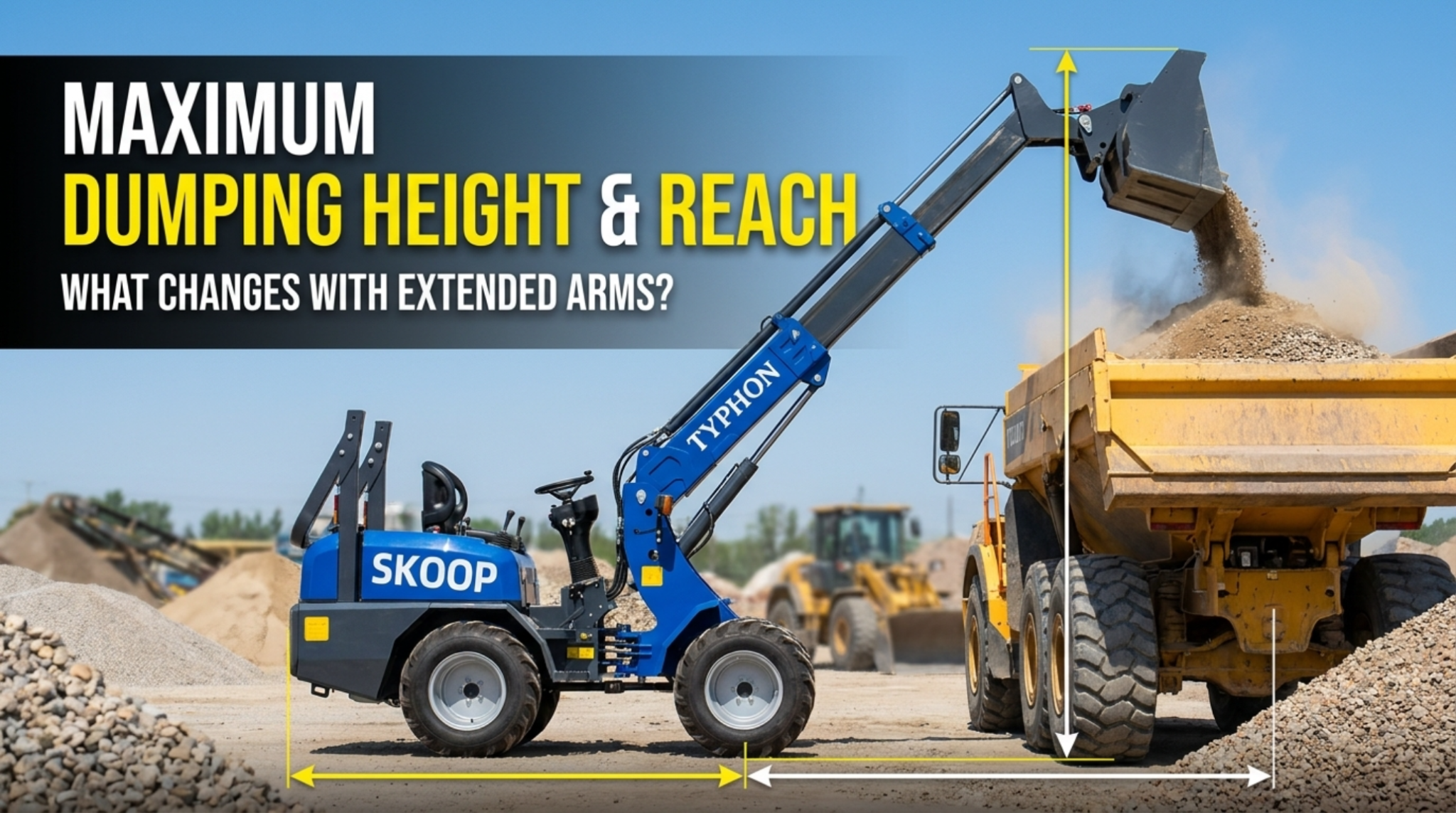
The most immediate benefit of longer loader arms is the added height they bring to the dumping cycle. By extending the lift geometry, the arms raise the bucket higher than a standard configuration allows, which lets the machine clear the sides of taller trucks, hoppers, and containers. When your standard lift height falls short of the receiving point, extended arms bridge that gap and let the loader place material cleanly where it needs to go.
This added height matters most when you load into high-sided equipment. A tall dump truck, an elevated hopper, or a large storage bin all demand clearance that a shorter arm simply cannot provide. Trying to load such targets with insufficient lift height leads to spilled material, contact with the container, and slow, awkward cycles. Extended arms remove that limitation, giving operators the clearance to lift the bucket above the rim and release material inside without strain.
The practical value shows up across several loading situations:
- High-sided trucks: extended arms clear the top rail so the bucket can tip its load inside cleanly.
- Elevated hoppers: added height lets the loader feed material over the edge and toward the center.
- Large containers and bins: the machine reaches receiving points that would otherwise sit out of range.
Keep in mind that dumping height is measured to the point where the bucket releases material, not just to the maximum arm position. As the bucket tilts forward to dump, its leading edge sits below the peak lift height, so the effective clearance is what truly counts. When you evaluate extended arms, confirm that the rated dumping height tops your tallest receiving container with a comfortable margin, so every load lands inside the target rather than on its edge.
Longer Reach Improves Material Placement
Beyond lifting higher, extended arms also move the bucket farther forward when the loader is at full height. This added reach gives operators greater flexibility in where they place material, letting them deposit loads beyond the machine’s normal working envelope. Instead of nosing the loader right up against a truck or pile, an operator can hold a safe distance and still position material accurately, which improves both control and safety on a busy site.
Reach becomes especially valuable when the placement point sits away from where the machine can comfortably park. Loading a truck across an obstacle, feeding a hopper set back from the approach, or spreading material over a wider area all benefit from the extra forward distance. With a longer reach, the operator places the load toward the center of the target rather than dropping everything against the near edge, which produces a more even fill and reduces the need for repeated adjustments.
That added flexibility translates directly into smoother work. When the bucket can extend well forward at full height, operators spend less time inching the machine into position and more time moving material. This reduces wear on the drivetrain from constant repositioning, and it lets crews keep pace on high-volume loading tasks where every cycle counts. Extended reach also helps when working near structures or other equipment, since the operator can keep the machine at a safe standoff distance while still placing material precisely where it belongs. For any job that involves loading beyond arm’s length or filling a target evenly, the extended reach that longer arms provide gives operators a meaningful advantage in both accuracy and efficiency.
Reach Can Change the Loader’s Working Range
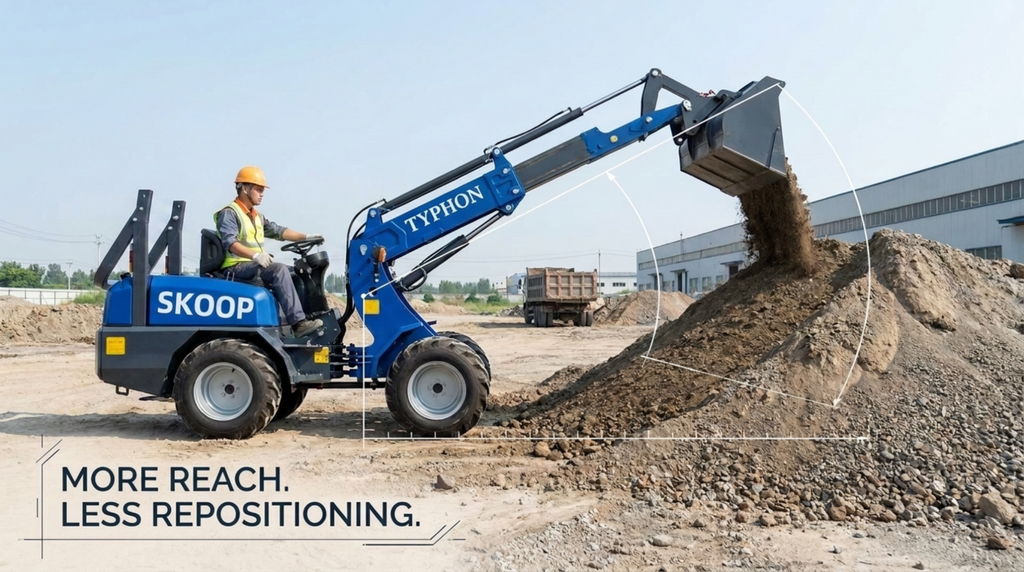
Extended arms do more than improve individual placements. They expand the overall distance between the machine and the dumping point, which reshapes how the loader operates across an entire site. A greater working range means the machine can service targets that sit farther away without having to drive right up to them, and that difference influences how efficiently the whole loading operation runs.
The clearest gain is reduced repositioning. When a loader can reach a truck or hopper from farther back, the operator does not need to shuffle forward and backward as often to line up each pass. This saves time on every cycle, and across a long shift those saved seconds add up to meaningful productivity. It also cuts down on the constant maneuvering that wears on tires, transmission, and the operator, keeping both machine and crew fresher through the day.
A wider working range supports several practical advantages:
- Loading trucks: the machine services the bed from a fixed position, reducing forward and backward shuffling.
- Placing material over an area: extended reach lets the loader spread loads across a wider zone from one spot.
- Working around obstacles: greater distance helps the loader reach past barriers without repositioning.
This expanded range is particularly useful on sites where space is tight or where the machine cannot easily approach the dumping point. Rather than fighting to get close, the operator works from a comfortable, stable position and lets the arms cover the distance. The result is a loading cycle that flows more smoothly, with fewer interruptions and less lost time. When you consider extended arms, think about how the added working range fits your site layout, because reducing repositioning is often where longer arms deliver their greatest day-to-day value.
Extended Arms Affect Load Stability
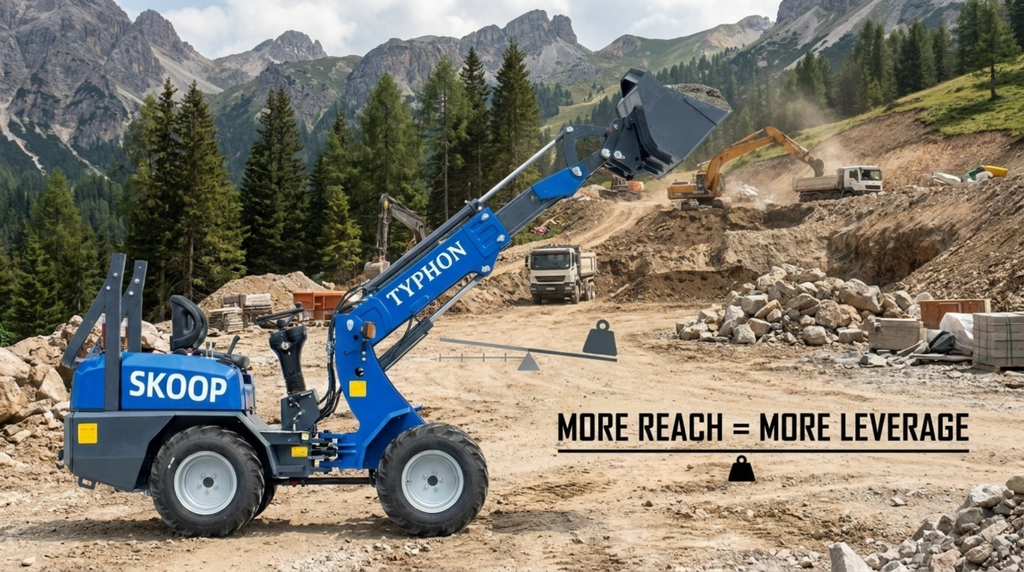
The advantages of extended arms come with an important trade-off that every operator must respect. As the bucket reaches farther forward, the load exerts greater leverage on the machine. Weight held at a distance places more strain on the loader’s balance than the same weight held close in, so a long reach at full height changes how stable the machine feels and how much it can safely carry. Understanding this relationship is essential to working with extended arms confidently and safely.
Leverage is the heart of the matter. When the bucket extends well ahead of the machine, the load acts on a longer lever arm, which increases the tipping force working against the loader. This means the practical lifting capacity at full reach is lower than it would be with the load held closer. An operator who ignores this can overload the machine at extension, risking instability just when the load sits at its most demanding position.
Several factors deserve close attention when working at maximum reach:
- Rated capacity: confirm the load stays within the machine’s safe limit at the reach and height you are using.
- Machine balance: keep the loader properly counterweighted and avoid carrying loads extended for longer than needed.
- Ground conditions: work on firm, level ground, since soft or sloped surfaces reduce stability further.
Handling loads smoothly also matters. Sudden movements, sharp turns, or abrupt stops with the bucket extended and raised can upset the machine’s balance, so operators should move deliberately when a load sits far forward and high. Keeping loads low during travel and extending the arms only when ready to place the material helps maintain stability throughout the cycle. When operators respect the leverage that reach creates and stay within rated limits, extended arms deliver their benefits safely and dependably.
Choose Arm Length for the Application
It is tempting to assume that more reach and greater height are always better, but the right arm configuration depends entirely on the work. Longer arms deliver clear advantages in dumping height and reach, yet they can also reduce lifting capacity at extension, affect stability, and change how the machine maneuvers in tight spaces. The best configuration is the one matched to your actual dumping height and working distance, not simply the longest arm available.
Start by defining what the job truly requires. Measure the height of the tallest trucks, hoppers, or containers you load into, and note the distance you need to reach to place material where it belongs. These two figures set the baseline for the arm length you need. Choosing arms that comfortably meet those requirements, with a sensible margin, gives you the capability the work demands without carrying trade-offs you do not need.
Several considerations should guide the decision together:
- Required dumping height: the arms must clear your tallest receiving point with room to spare.
- Working distance: reach should suit how far material must travel from the machine to the target.
- Lifting capacity: confirm the configuration handles your typical loads safely at the reach and height you use.
- Maneuverability: consider how the arm length affects the machine in the spaces where it will work.
A configuration matched to the application delivers the best overall performance. Arms sized for your real dumping height and reach give you the clearance and flexibility you need while preserving the capacity, stability, and handling that keep work safe and efficient. Rather than chasing maximum reach, weigh these factors against the demands of your site and loads. When the arm length fits the application, the wheel loader performs dependably, cycle after cycle, without compromising on the qualities that matter most to your operation.
Conclusion
Extended arms reshape what a wheel loader can do at the dumping point. They raise the bucket higher for taller trucks and hoppers, extend reach for more accurate material placement, and widen the working range so the machine services more targets with less repositioning. Those gains come with a real trade-off in load stability, since reaching farther increases the leverage acting on the machine, making rated capacity, balance, and ground conditions essential to respect. The smartest choice is not the longest arm available but the configuration matched to your required dumping height, working distance, and typical loads. Measure your tallest receiving points and your reach requirements first, then select arms that meet them with a sensible margin. That balanced approach delivers the height, reach, and dependable performance your work demands.
Frequently Asked Questions
1. How much do extended arms increase a wheel loader’s dumping height?
The exact increase depends on the machine and the arm configuration, but extended arms are designed to raise the bucket higher than a standard setup so the loader can clear taller trucks, hoppers, and containers. The figure that matters most is the rated dumping height, which is measured to the point where the bucket releases material as it tilts forward, not the peak arm position. Since the bucket edge drops below the maximum lift height when it dumps, always compare the rated dumping height against your tallest receiving container and confirm it tops that height with a comfortable margin.
2. Do longer arms reduce a wheel loader’s lifting capacity?
They can, particularly at full reach. When the bucket extends farther forward, the load acts on a longer lever arm, which increases the tipping force working against the machine and lowers the practical lifting capacity at that extended position. This does not mean longer arms are unsafe, only that operators must respect the rated capacity at the specific reach and height they are using. The load that is safe with the bucket held close may exceed the safe limit at full extension. Always check the machine’s rated capacity for your working position before lifting near the limit.
3. When are extended arms worth choosing over a standard configuration?
Extended arms make sense when your standard lift height or reach falls short of the job. If you regularly load high-sided trucks, feed elevated hoppers, or place material beyond the loader’s normal reach, longer arms provide the clearance and forward distance you need. They also help on sites where the machine cannot easily approach the dumping point, since the added range reduces repositioning. If your work involves lower targets and close-in loading, however, a standard configuration may serve better, since it preserves lifting capacity and maneuverability that longer arms can trade away.
4. How do extended arms affect stability during operation?
Extended arms shift how the machine balances because a load held farther forward exerts greater leverage on the loader. This increases the tipping force, especially when the bucket is both extended and raised. To work safely, keep loads within the rated capacity for your reach and height, maintain proper counterweighting, and operate on firm, level ground whenever possible. Move deliberately when a load sits far forward and high, avoiding sudden turns or stops that can upset balance. Keeping loads low during travel and extending the arms only when ready to place material helps maintain stability throughout the cycle.
5. How do I choose the right arm length for my wheel loader?
Match the arm length to your actual dumping height and working distance rather than choosing the longest option available. Measure the height of the tallest trucks, hoppers, or containers you load into, and note how far you need to reach to place material accurately. Those figures set the baseline for the arm length you need. Then weigh the trade-offs, since longer arms can reduce lifting capacity at extension and affect maneuverability in tight spaces. Choose a configuration that meets your height and reach requirements with a sensible margin while preserving the capacity, stability, and handling your work depends on.