Genie Lift vs Scissor Lift: Your Ultimate Guide to Choosing the Right Aerial Work Platform
Imagine a construction site humming with activity, a warehouse bustling with inventory, or a maintenance crew meticulously tending to a towering building. In all these scenarios, one common challenge arises: reaching elevated areas safely and efficiently. This is where aerial work platforms (AWPs) come into play, revolutionizing how we access heights. Among the myriad of options available, two names frequently pop up in discussions: “Genie Lift” and “Scissor Lift.”
While often used interchangeably in casual conversation, these terms refer to distinct types of equipment, each with its unique design, capabilities, and ideal applications. The “Genie Lift” often serves as a colloquial umbrella term for various types of aerial lifts manufactured by Genie, a leading brand in the industry, including boom lifts and material lifts. A “Scissor Lift,” on the other hand, describes a specific type of aerial work platform characterized by its crisscrossing support mechanism. Understanding the fundamental differences between these two is crucial for anyone involved in construction, maintenance, logistics, or any field requiring safe vertical access. Choosing the wrong equipment can lead to inefficiencies, increased costs, and, most importantly, safety hazards.
This comprehensive guide aims to demystify the world of aerial work platforms, specifically focusing on the nuances between what people commonly refer to as a “Genie Lift” (often implying a boom lift or a broader range of Genie products) and a traditional “Scissor Lift.” We’ll explore their core functionalities, delve into their key benefits, provide practical advice on how to get started with selecting the right one, share best practices for operation, and answer your most frequently asked questions. By the end of this article, you’ll be equipped with the knowledge to make informed decisions, ensuring your projects are executed safely, efficiently, and effectively. Let’s elevate your understanding!
1. What is Genie Lift vs Scissor Lift?
To truly understand the distinction, we first need to clarify what each term represents. The phrase “Genie Lift” is often a source of confusion because Genie is a brand, not a specific type of lift. It’s akin to asking for a “Kleenex” when you mean a facial tissue. Genie manufactures a wide array of aerial work platforms, including scissor lifts, boom lifts (articulating and telescopic), telehandlers, and material lifts. When someone says “Genie Lift,” they are most commonly referring to a Genie-branded boom lift or sometimes a material lift, due to the brand’s strong association with these product lines. A “Scissor Lift,” however, describes a specific mechanism of vertical elevation.
Understanding the Genie Lift (as a Boom Lift)
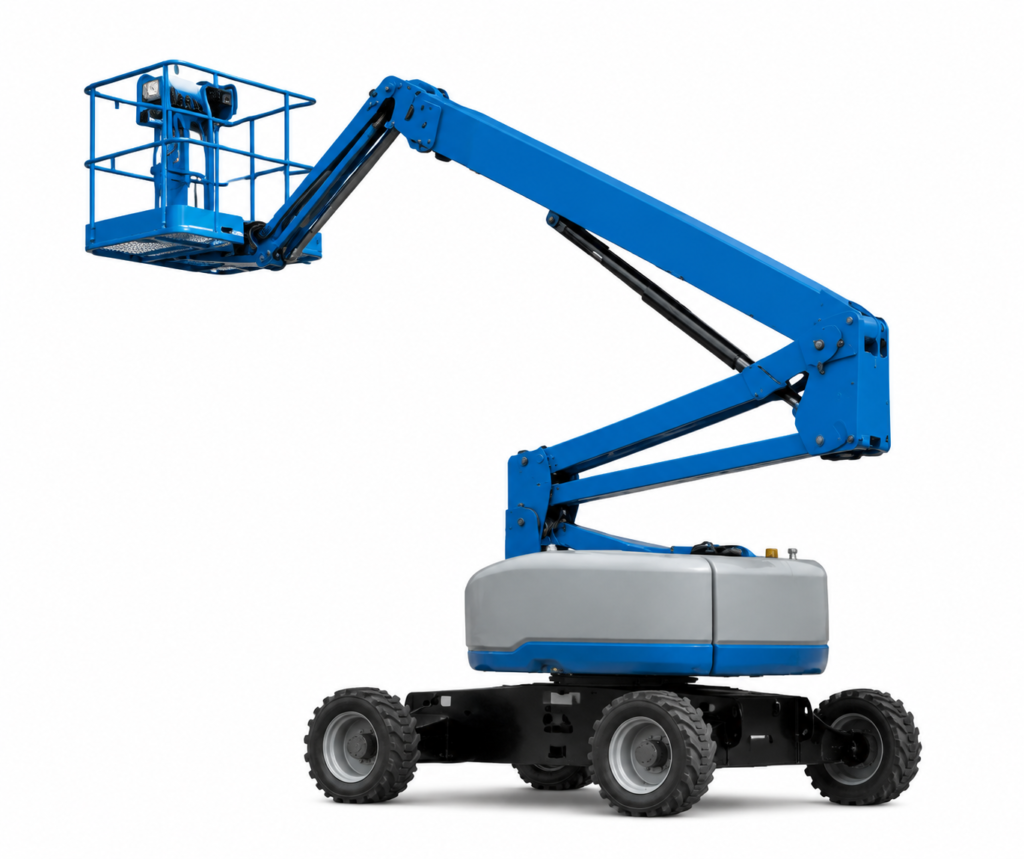
When people refer to a “Genie Lift” in contrast to a scissor lift, they are usually thinking of a boom lift. Boom lifts are characterized by their extendable arm, or “boom,” which can articulate (bend) or telescope (extend straight out) to reach heights and horizontal distances.
Types of Boom Lifts:
- Articulating Boom Lifts (Knuckle Booms): These lifts have multiple sections that “articulate” or bend, allowing the platform to navigate around obstacles and reach over structures. Think of it like a human arm with an elbow and shoulder joint. This flexibility makes them ideal for complex, hard-to-reach areas.
- Example: A maintenance crew needs to repair a light fixture over an assembly line in a factory. An articulating boom lift can reach over the machinery without disturbing operations, providing precise access.
- Telescopic Boom Lifts (Straight Booms): These lifts feature a straight, extendable boom that offers maximum horizontal outreach and greater lifting capacity. They are designed for applications requiring high reach and direct access.
- Example: Steelworkers need to install structural beams on a high-rise building. A telescopic boom lift provides the necessary height and horizontal reach to position the beams accurately.
Key Characteristics of Boom Lifts:
- Reach: Excellent vertical and horizontal outreach.
- Maneuverability: Articulating booms offer superior maneuverability around obstacles.
- Terrain: Often available with rough-terrain capabilities, making them suitable for uneven ground.
- Power: Typically powered by diesel engines for outdoor, heavy-duty use, or electric motors for indoor, quieter operations.
- Platform Size: Generally smaller platforms designed for one or two operators and their tools.
Understanding the Scissor Lift
Types of Scissor Lifts:
- Slab Scissor Lifts (Electric): These are typically electric-powered, compact, and designed for indoor use on flat, finished surfaces. They are quiet, emission-free, and have non-marking tires.
- Example: Electricians installing overhead wiring in a new office building can use a slab scissor lift to work along long stretches of ceiling, carrying their tools and materials on the spacious platform.
- Rough Terrain Scissor Lifts (Diesel/Bi-Energy): These are more robust, often diesel-powered, and equipped with four-wheel drive and larger, lugged tires for navigating uneven outdoor terrain.
- Example: A crew installing siding on a multi-story residential complex on a muddy construction site would benefit from a rough-terrain scissor lift for stable access.
Key Characteristics of Scissor Lifts:
- Reach: Primarily vertical elevation; no horizontal outreach.
- Platform Size: Generally larger work platforms, allowing more workers, tools, and materials.
- Stability: Excellent stability due to their broad base and vertical-only movement.
- Maneuverability: Less agile than boom lifts in terms of navigating around obstacles, but can be very efficient for straight-up access.
- Power: Available in electric (indoor/slab) and diesel/bi-energy (outdoor/rough terrain) versions.
The Core Distinction
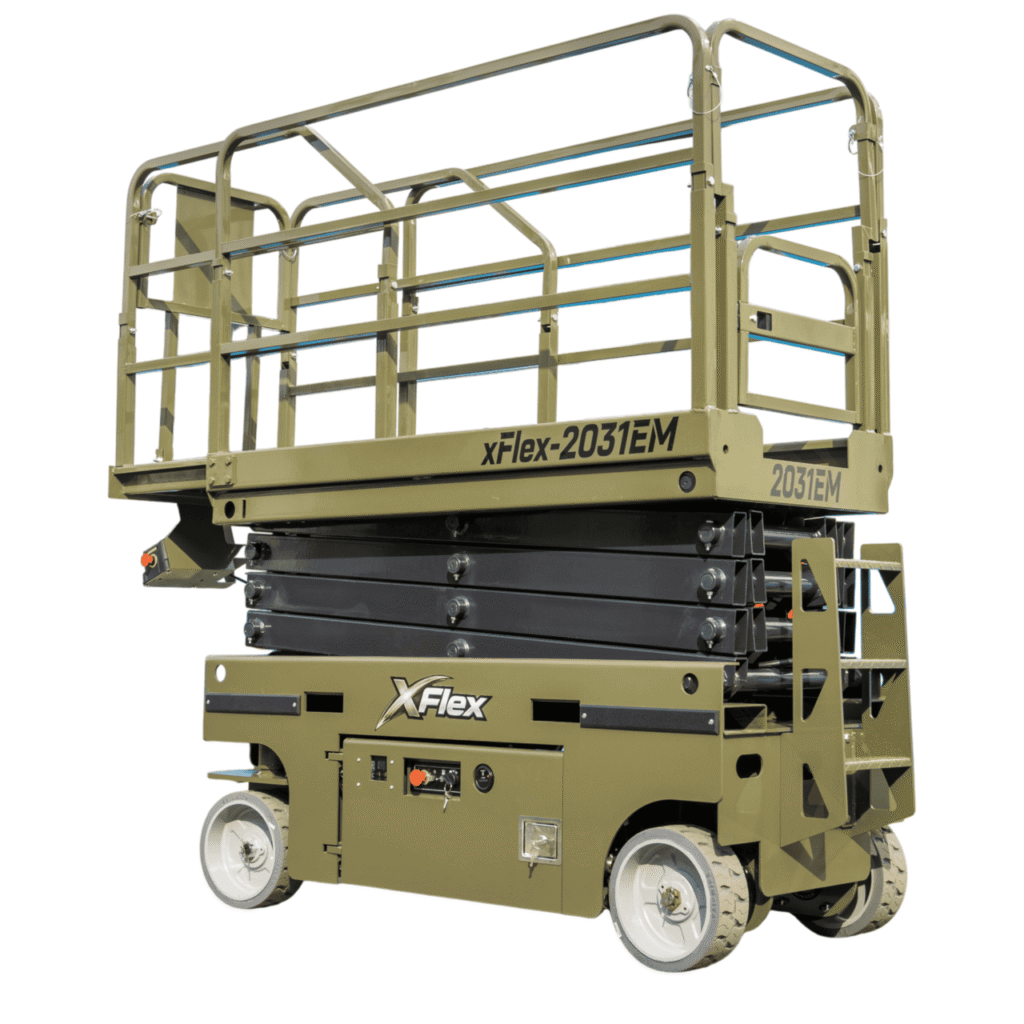
The fundamental difference lies in their reach capability. A scissor lift provides vertical-only elevation with a larger platform, ideal for tasks requiring a stable, spacious workspace directly below the work area. A boom lift (often colloquially called a “Genie Lift”), on the other hand, offers both vertical and horizontal outreach, allowing operators to access areas that are not directly above the base, often with a smaller platform. This distinction dictates their suitability for various tasks and environments.
2. Key Benefits
Understanding the core differences between a “Genie Lift” (referring to a boom lift) and a Scissor Lift allows us to appreciate their respective advantages. Each type of aerial work platform brings a unique set of benefits to the table, making them indispensable for different applications. Choosing the right one can significantly impact project efficiency, safety, and cost-effectiveness.
Benefits of a “Genie Lift” (Boom Lift)
When your project demands reaching over, around, or across obstacles, a boom lift is often the superior choice. Its design offers unparalleled flexibility and reach.
2.1. Superior Reach and Versatility
- Horizontal and Vertical Access: The primary advantage of a boom lift is its ability to extend both vertically and horizontally. This means operators can reach areas that are not directly above the machine’s base, such as over rooftops, across trenches, or around complex machinery.
- Practical Example: During bridge inspection or repair, a boom lift can extend its arm to reach underneath the bridge deck or across multiple lanes of traffic, providing access without needing to position the entire machine directly below the work area.
- Overcoming Obstacles: Articulating boom lifts, with their multiple pivot points, are masters at navigating around obstructions. This makes them invaluable in congested work sites or facilities with permanent fixtures.
- Practical Example: In a factory setting, an articulating boom lift can reach a high-mounted HVAC unit by bending its arm over existing production lines and equipment, avoiding costly shutdowns or dismantling of machinery.
- Rough Terrain Capability: Many boom lifts are designed with robust chassis, four-wheel drive, and oscillating axles, allowing them to operate safely and effectively on uneven, muddy, or sloped outdoor terrain.
- Practical Example: On a large construction site with varying ground conditions, a telescopic boom lift can provide stable access for installing exterior cladding on a building, regardless of the ground’s consistency.
2.2. Enhanced Maneuverability
- Precise Positioning: The controls on boom lifts allow for very precise movements of the platform, enabling operators to position themselves exactly where needed, even in tight spaces or at awkward angles.
- Compact Footprint (for reach): While the boom extends far, the base of the machine can often remain relatively compact, allowing it to be positioned in areas where a larger, wider scissor lift might not fit, especially when horizontal reach is required.
Benefits of a Scissor Lift
2.3. Larger Work Platform and Capacity
- More Space for Workers and Materials: Scissor lifts typically feature a much larger platform compared to boom lifts. This allows multiple workers, along with their tools, equipment, and even materials (like drywall sheets or light fixtures), to be elevated simultaneously.
- Practical Example: A team of two or three painters can work side-by-side on a large wall or ceiling section using a scissor lift, with all their paint cans, brushes, and rollers conveniently on the platform, reducing the need for multiple trips up and down.
- Higher Weight Capacity: Due to their robust, vertically-oriented lifting mechanism, scissor lifts often boast higher weight capacities than boom lifts of comparable reach, making them suitable for heavier loads of materials.
- Practical Example: Installing large glass panels or HVAC ducts requires not only height but also the ability to lift heavy components. A scissor lift can safely elevate the weight of the components plus the workers.
2.4. Stability and Ease of Operation
- Exceptional Stability: The broad, rectangular base and vertical-only movement of a scissor lift provide inherent stability, making it feel very secure for workers at height. This can be particularly reassuring for those new to aerial work platforms.
- Straightforward Operation: Scissor lifts are generally considered simpler to operate than boom lifts, as their movement is restricted to vertical elevation and horizontal driving. This can reduce the learning curve for new operators.
- Practical Example: For tasks like stock picking in a warehouse or general facility maintenance where only vertical access is needed, the simpler controls of a scissor lift allow for quicker training and deployment of staff.
- Indoor Suitability (Slab Scissor Lifts): Electric slab scissor lifts are quiet, produce no emissions, and have non-marking tires, making them ideal for indoor use in finished environments like offices, retail stores, or data centers.
- Practical Example: A retail store undergoing a renovation can use an electric scissor lift to access high shelves, change displays, or install new lighting without disturbing customers with noise or fumes, and without damaging the floor.
2.5. Cost-Effectiveness
- Lower Rental/Purchase Costs: Generally, scissor lifts tend to have lower rental rates and purchase prices compared to boom lifts of similar vertical reach. This makes them a more economical choice when their capabilities align with project needs.
- Simpler Maintenance: With fewer complex hydraulic components and articulation points than boom lifts, scissor lifts often have simpler maintenance requirements, potentially leading to lower long-term operating costs.
In summary, if your work involves reaching over or around obstacles, or requires significant horizontal outreach on varied terrain, a boom lift (often called a “Genie Lift”) is your go-to. If your tasks primarily involve direct vertical access, require a large workspace for multiple personnel and materials, and prioritize stability and ease of use, a scissor lift will be the more efficient and cost-effective solution.
3. How to Get Started
Selecting the right aerial work platform is a critical decision that impacts safety, efficiency, and project budgets. It’s not just about picking the biggest or most powerful machine; it’s about matching the equipment’s capabilities to your specific job requirements. This section will guide you through the process of getting started, from assessing your needs to understanding rental versus purchase options.
3.1. Assess Your Project Needs
Before you even consider specific models, a thorough assessment of your project is paramount. This involves asking a series of detailed questions to define the scope of work and the environment.
3.1.1. Determine Reach Requirements
- Maximum Working Height: What is the highest point you need to reach? Remember to account for the operator’s height and arm reach when calculating the required platform height.
- Maximum Horizontal Outreach (if applicable): Do you need to reach over or around obstacles? If so, measure the horizontal distance from the machine’s potential base position to the furthest point of work. This is a key differentiator between boom lifts and scissor lifts.
- Actionable Advice: Always add a safety margin to your measurements. It’s better to have slightly more reach than not enough.
3.1.2. Evaluate Work Area and Terrain
- Indoor vs. Outdoor:
- Indoor: Are you working on finished floors (e.g., concrete, tile, carpet)? Electric slab scissor lifts or electric boom lifts with non-marking tires are usually required to prevent damage and avoid emissions.
- Outdoor: Is the ground paved, gravel, dirt, muddy, or uneven? Rough-terrain scissor lifts or diesel boom lifts with four-wheel drive and robust tires will be necessary. Consider slopes and grades.
- Space Constraints: How much room do you have to maneuver the lift? Consider doorways, aisles, overhead obstructions, and the overall footprint of the machine.
- Practical Example: In a narrow warehouse aisle, a compact electric scissor lift might be the only feasible option, whereas a large telescopic boom lift would be impossible to operate.
- Obstacles: Are there permanent fixtures, machinery, or structural elements that need to be navigated around? This directly influences whether an articulating boom lift is needed over a straight vertical lift.
3.1.3. Consider Platform Capacity and Size
- Number of Workers: How many people need to be on the platform at one time?
- Weight of Tools and Materials: What is the combined weight of all equipment, tools, and materials that will be lifted? Ensure the lift’s platform capacity exceeds this total.
- Platform Dimensions: Do you need a large platform for multiple workers and bulky items (scissor lift), or will a smaller platform suffice for one or two operators with hand tools (boom lift)?
3.1.4. Power Source Requirements
- Electric: Ideal for indoor, quiet, emission-free operation. Requires access to charging facilities.
- Diesel/Gas: Suitable for outdoor, heavy-duty, rough-terrain applications. Offers longer run times but produces emissions and noise.
- Bi-Energy: Offers the flexibility of both electric and diesel power, useful for projects that transition between indoor and outdoor environments.
3.2. Rental vs. Purchase
Once you have a clear understanding of your needs, the next decision is whether to rent or purchase the equipment.
3.2.1. When to Rent
- Infrequent Use: If you only need an aerial lift for specific projects a few times a year.
- Short-Term Projects: For jobs lasting days or weeks, renting is almost always more cost-effective.
- Varying Equipment Needs: If different projects require different types or sizes of lifts, renting allows you to select the optimal machine each time without a large capital investment.
- Reduced Maintenance Burden: Rental companies handle maintenance, repairs, and compliance inspections.
- Access to Latest Technology: Rental fleets are often updated, giving you access to newer, more efficient models.
- Actionable Advice: When renting, always clarify the rental period, delivery/pickup fees, insurance requirements, and what is included in the rental agreement (e.g., fuel, basic safety checks).
3.2.2. When to Purchase
- Frequent, Consistent Use: If your business regularly uses the same type of aerial lift for daily or weekly operations.
- Long-Term Projects: For ongoing work where the equipment will be used for months or years.
- Specific Customization Needs: If you require a highly specialized lift that rental companies might not stock.
- Tax Benefits: Ownership can offer depreciation and other tax advantages.
- Immediate Availability: Owning means the equipment is always on hand, eliminating rental coordination.
- Actionable Advice: Consider the total cost of ownership, including initial purchase price, maintenance, repairs, storage, insurance, and eventual resale value. Factor in operator training and certification costs.
3.3. Training and Certification
Regardless of whether you rent or purchase, proper training and certification are non-negotiable. OSHA (Occupational Safety and Health Administration) and other regulatory bodies mandate that all operators of aerial work platforms be properly trained and certified.
- Operator Training: This typically includes classroom instruction on safety regulations, machine components, pre-operation inspections, hazard recognition, and safe operating procedures, followed by hands-on practical training.
- Fall Protection: Training on fall protection equipment (harnesses, lanyards) and their proper use is essential, especially for boom lifts.
- Refresher Training: Regular refresher training is often required or highly recommended to ensure operators maintain proficiency and stay updated on safety protocols.
- Actionable Advice: Invest in comprehensive training for all operators. A well-trained operator is the most crucial safety feature of any aerial lift. Many rental companies or equipment dealers offer training programs.
By meticulously assessing your project needs and understanding the implications of renting versus purchasing, you can confidently navigate the initial stages of acquiring the right aerial work platform. Remember, safety and efficiency are paramount, and the right preparation sets the foundation for both.
4. Best Practices
Operating aerial work platforms, whether a “Genie Lift” (boom lift) or a Scissor Lift, requires strict adherence to safety protocols and operational best practices. The elevated nature of the work inherently carries risks, but with proper planning, training, and execution, these risks can be significantly mitigated. This section outlines essential best practices to ensure safe and efficient operation.
4.1. Pre-Operation Inspection (Walk-Around)
Before every shift or use, a thorough pre-operation inspection is mandatory. This “walk-around” check identifies potential malfunctions or hazards before they become critical.
- Visual Inspection:
- Tires and Wheels: Check for proper inflation, damage, and wear. Ensure lug nuts are tight.
- Fluid Levels: Verify hydraulic fluid, engine oil, fuel, and coolant levels are adequate.
- Structural Components: Look for dents, cracks, welds, or damage to the boom, chassis, and platform.
- Hoses and Cables: Inspect for leaks, chafing, kinks, or damage.
- Safety Decals and Manuals: Ensure all safety decals are present and legible, and the operator’s manual is on board.
- Platform and Guardrails: Check that guardrails are secure and the platform floor is free of debris.
- Functional Checks:
- Controls: Test all operating controls (drive, steer, lift, extend, rotate) from both ground and platform control stations.
- Emergency Controls: Verify emergency stop buttons, emergency lowering systems, and horn are functional.
- Brakes: Test service brakes and parking brake.
- Lights and Alarms: Check all lights, beacons, and alarms are working.
- Safety Devices: Ensure limit switches, outriggers/stabilizers (if applicable), and tilt sensors are operational.
- Actionable Advice: If any issues are found during the pre-operation inspection, do not operate the lift. Report the issue immediately and tag the machine out of service until repairs are completed by a qualified technician. Document all inspections.
4.2. Site Assessment and Preparation
A thorough site assessment is crucial to identify potential hazards and prepare the work area.
- Ground Conditions:
- Stability: Ensure the ground is firm, level, and capable of supporting the weight of the lift and its load. Avoid soft spots, trenches, or unstable surfaces.
- Obstructions: Identify and clear any ground-level obstructions (debris, tools, materials) that could impede movement or cause a tip-over.
- Slopes: Understand the maximum allowable slope for the specific lift model.
- Overhead Hazards:
- Power Lines: Maintain the minimum safe approach distance (MSAD) from all power lines, as specified by OSHA and the manufacturer. This is a leading cause of fatalities.
- Overhead Structures: Identify beams, pipes, ductwork, or other structures that could be struck by the platform or boom.
- Traffic and Pedestrians:
- Barricades: Use cones, barricades, and warning signs to clearly define the work zone and prevent unauthorized access.
- Spotters: When operating in congested areas or with limited visibility, use a trained spotter to guide the operator.
- Weather Conditions:
- Wind: Do not operate lifts in high winds (typically above 28 mph, but always check the manufacturer’s specifications).
- Rain/Snow/Ice: Be aware of reduced traction and slippery surfaces.
- Actionable Advice: Conduct a job hazard analysis (JHA) or a pre-task plan before starting work. Communicate all identified hazards and mitigation strategies to the entire work crew.
4.3. Safe Operation Procedures
- Personal Protective Equipment (PPE):
- Fall Protection: For boom lifts, a full-body harness and a lanyard attached to an approved anchor point in the platform are mandatory. For scissor lifts, while fall arrest isn’t always required by OSHA for guardrail-equipped platforms, many companies still mandate harnesses as an extra precaution. Always follow company policy and manufacturer guidelines.
- Other PPE: Hard hats, safety glasses, high-visibility clothing, and safety footwear are standard.
- Platform Capacity: Never exceed the manufacturer’s rated load capacity for the platform (number of personnel + weight of tools/materials). Overloading can lead to instability and tip-overs.
- Maintain Clearances: Always maintain safe distances from other equipment, structures, and personnel.
- Level Surface: Ensure the lift is on a level surface before elevating the platform. Most lifts have tilt sensors that will prevent elevation if the machine is not level.
- No Stunt Driving: Avoid sudden starts, stops, or turns, especially when the platform is elevated. Drive slowly and smoothly.
- No Climbing on Guardrails: Never stand on guardrails or use ladders/scaffolding on the platform to gain extra height. This severely compromises stability.
- Lower Before Moving: Always lower the platform to the stowed position before driving the lift, unless the manufacturer specifically permits driving with the platform elevated at a reduced speed and height.
- Emergency Procedures: Operators must be familiar with all emergency controls and procedures, including emergency lowering, engine shutdown, and what to do in case of a power outage or hydraulic failure.
- Actionable Advice: Never operate an aerial lift if you are feeling unwell, fatigued, or under the influence of any substance that could impair judgment or reaction time. Always have a rescue plan in place in case an operator becomes incapacitated at height.
4.4. Post-Operation and Maintenance
Proper care extends beyond active operation to ensure the longevity and safety of the equipment.
- Secure the Lift:
- Park the lift on a firm, level surface.
- Lower the platform completely.
- Turn off the engine/power, remove the key, and engage the parking brake.
- Chock the wheels if parked on an incline.
- Cleanliness: Keep the lift clean, especially the platform, controls, and hydraulic components.
- Scheduled Maintenance: Adhere strictly to the manufacturer’s recommended maintenance schedule. This includes regular inspections, lubrication, fluid changes, and component checks.
- Record Keeping: Maintain detailed records of all inspections, maintenance, and repairs. This is crucial for compliance and troubleshooting.
- Actionable Advice: Designate a qualified person to oversee maintenance and ensure all service is performed by certified technicians. Regular preventative maintenance is far more cost-effective than emergency repairs and significantly enhances safety.
By consistently implementing these best practices, you create a safer working environment, extend the lifespan of your equipment, and contribute to the overall success of your projects. Safety is not just a rule; it’s a culture.
5. Frequently Asked Questions
Navigating the world of aerial work platforms can bring up many questions. Here, we address some of the most common inquiries regarding “Genie Lifts” (boom lifts) and Scissor Lifts, offering clear and concise answers to help you make informed decisions.
Q1: What is the main difference between a “Genie Lift” (boom lift) and a Scissor Lift?
A1: The main difference lies in their reach capability. A Scissor Lift provides vertical-only elevation, meaning the platform goes straight up and down directly above its base. It’s ideal for tasks requiring a stable, spacious workspace at height. A “Genie Lift” (boom lift), on the other hand, features an extendable arm (boom) that can move both vertically and horizontally. This allows it to reach over or around obstacles and access areas that are not directly above the machine’s base, offering greater versatility in complex environments.
Q2: Which type of lift is safer: a boom lift or a scissor lift?
A2: Both boom lifts and scissor lifts are inherently safe when operated correctly, maintained properly, and used within their design limits. However, the risks associated with each can differ. Scissor lifts, with their larger, more stable platforms and vertical-only movement, are generally perceived as having a lower risk of tip-over when used on level ground. Boom lifts, due to their extended reach and articulation, require more careful operation to avoid tip-overs, especially when extending horizontally or on uneven terrain. The most critical factor for safety in both types is proper operator training, adherence to safety protocols, and regular equipment maintenance.
Q3: Can a scissor lift be used outdoors on uneven ground?
A3: Yes, but it depends on the type of scissor lift. Rough-terrain scissor lifts are specifically designed for outdoor use on uneven or challenging ground. They typically feature four-wheel drive, larger lugged tires, and often automatic leveling systems to maintain stability. Slab scissor lifts (electric models) are designed for indoor, flat, finished surfaces and should not be used on uneven outdoor terrain, as this can compromise their stability and lead to dangerous situations. Always check the manufacturer’s specifications for ground conditions.
Q4: Do I need special certification to operate a “Genie Lift” or a Scissor Lift?
A4: Yes, absolutely. OSHA (Occupational Safety and Health Administration) and similar regulatory bodies globally mandate that all operators of aerial work platforms (MEWPs/AWPs), including both boom lifts and scissor lifts, must be properly trained and certified. This training covers safe operating procedures, pre-operation inspections, hazard recognition, and emergency protocols. It’s not just a legal requirement but a critical safety measure to prevent accidents and injuries.
Q5: What kind of tasks are each lift best suited for?
A5:
- Scissor Lifts are best for:
- Tasks requiring direct vertical access and a large workspace.
- Indoor maintenance (e.g., changing light bulbs, HVAC repair, electrical work).
- Warehouse operations (e.g., stock picking, inventory management).
- Exterior finishing on buildings (e.g., siding, painting, window installation) on relatively flat ground.
- Any job where multiple workers and materials need to be elevated together.
- “Genie Lifts” (Boom Lifts) are best for:
- Tasks requiring horizontal outreach or the ability to reach over obstacles.
- Construction (e.g., steel erection, facade work on complex buildings).
- Tree trimming or utility line maintenance.
- Bridge inspection and repair.
- Working on uneven, sloped, or rough outdoor terrain.
- Any job where precise positioning in hard-to-reach areas is critical.
Q6: How do I choose between renting and buying?
A6:
- Rent if: Your usage is infrequent, for short-term projects, if your equipment needs vary by project, or if you want to avoid maintenance costs and have access to the latest models.
- Buy if: You have consistent, frequent use for the same type of lift, for long-term projects, if you require specific customizations, or if you want to leverage potential tax benefits of ownership. Consider the total cost of ownership (purchase price, maintenance, storage, insurance) versus rental costs.
Q7: What are the key safety considerations for both types of lifts?
A7: Key safety considerations include:
- Pre-operation inspections: Always perform a thorough check before use.
- Site assessment: Identify and mitigate hazards like uneven ground, overhead power lines, and traffic.
- Operator training and certification: Ensure all operators are qualified.
- Proper PPE: Especially fall protection (harness and lanyard for boom lifts).
- Never exceed capacity: Adhere strictly to weight and personnel limits.
- Maintain clearances: Keep safe distances from obstructions.
- Weather conditions: Do not operate in high winds or severe weather.
- Emergency procedures: Operators must know how to respond to emergencies.
By understanding these common questions and their answers, you’ll be better equipped to make informed decisions and ensure safe, efficient operations with your aerial work platform.
Conclusion
Navigating the world of aerial work platforms, particularly when faced with terms like “Genie Lift” and “Scissor Lift,” can initially seem complex. However, as we’ve explored, the distinction is clear and crucial for making the right equipment choice. A Scissor Lift excels in providing stable, spacious vertical access for tasks directly above its base, ideal for large workforces and materials on level ground, often indoors. A “Genie Lift” (typically referring to a boom lift), with its articulating or telescopic arm, offers unparalleled versatility in reaching over, around, and across obstacles, making it indispensable for complex, high-reach tasks on varied terrain.
The decision between these two powerful tools hinges entirely on a meticulous assessment of your project’s specific needs: the required height and outreach, the work environment, platform capacity, and budget. There’s no single “better” option; only the right option for the job at hand. By understanding their unique benefits, adhering to stringent safety protocols, and ensuring all operators are properly trained and certified, you can maximize efficiency, enhance safety, and ultimately achieve project success.
Choosing the correct aerial work platform is not just about getting the job done; it’s about getting it done safely, efficiently, and cost-effectively. Empower yourself with knowledge, prioritize safety above all else, and select the lift that truly elevates your operations.