How Weather Conditions Affect Skid Steer Performance
Weather has a direct, measurable effect on how your skid steer runs, and ignoring it costs you in traction, uptime, and repair bills. Rain, heat, cold, snow, and shifting conditions each challenge the machine in a different way, and the operators who account for them get more work done with fewer breakdowns. This guide breaks down how five common weather situations affect skid steer performance and gives you practical steps to keep the machine productive in each one. You will learn how to protect traction in mud, manage heat and cold, work safely on snow and ice, and guard the equipment against the wear that changing conditions bring.
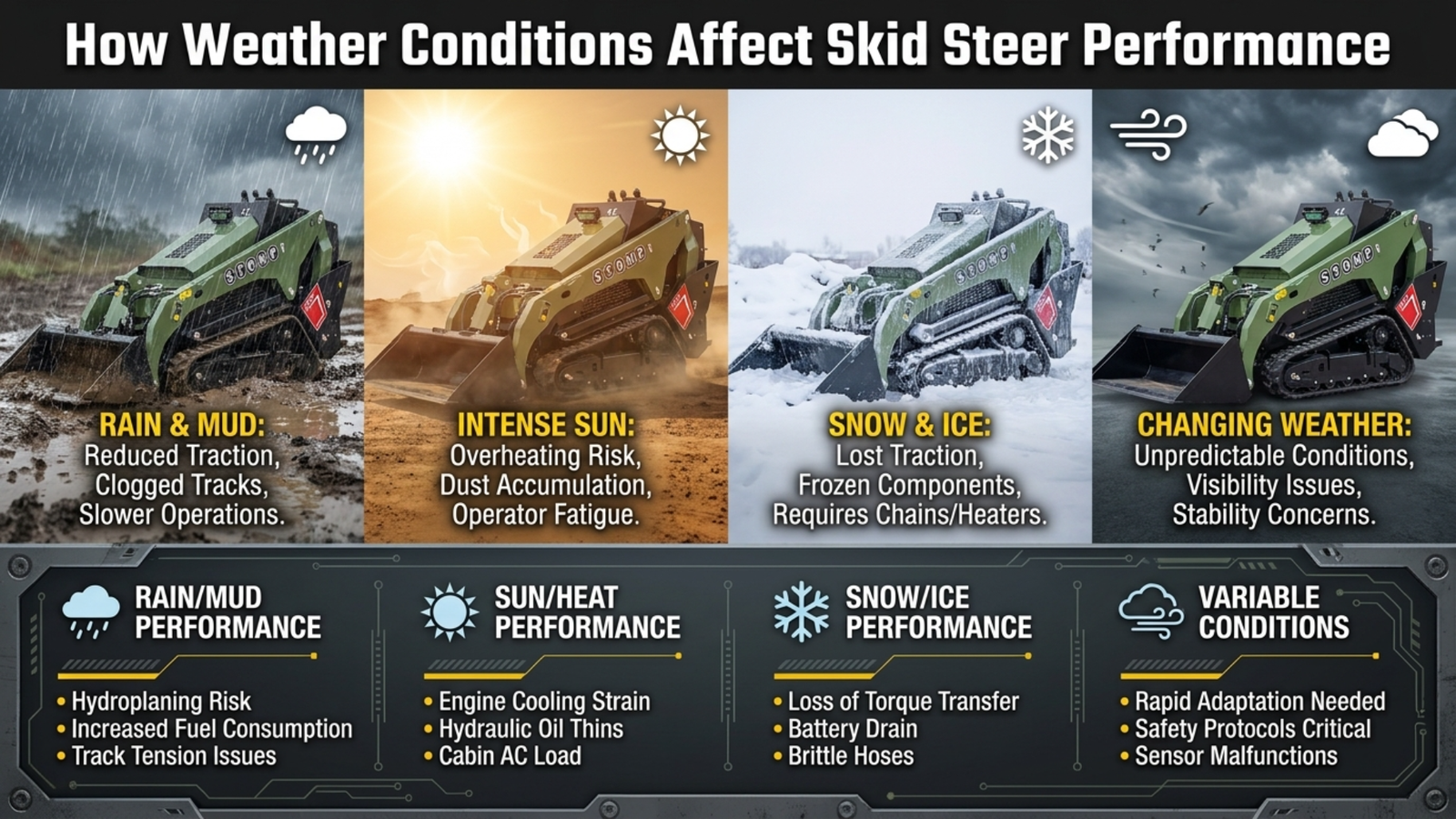
How Rain and Mud Impact Skid Steer Traction
Wet ground is one of the fastest ways to lose control of a skid steer. When rain saturates the soil, tires or tracks struggle to bite, and that loss of grip shows up immediately in how the machine moves, steers, and carries a load. On slick, muddy terrain the wheels spin instead of pulling forward, turns become unpredictable, and a heavy load in the bucket can shift the machine’s balance enough to bog it down or slide it sideways. The result is slower work, spinning tires that dig ruts, and a real risk of getting stuck.
Traction depends heavily on what you have on the machine. Tires and tracks each behave differently in the mud, so choosing the right setup for the conditions makes a noticeable difference:
- Tracks spread weight over a larger surface area, so they float better on soft ground and resist sinking.
- Aggressive-tread or mud-specific tires clear packed soil and bite harder than worn, general-purpose treads.
- Worn or smooth tires should be replaced before a wet season, since they lose grip fast on saturated ground.
Beyond equipment, how you operate matters just as much. Move at a steady, controlled pace rather than gunning the throttle, since wheel spin only worsens traction and tears up the ground. Keep loads lower to hold the center of gravity down, avoid sharp turns that break traction on slick surfaces, and approach grades cautiously where mud can send the machine sliding. Where possible, work from firmer ground and plan your travel paths to skirt the worst of the muck. With the right tires or tracks and a careful, deliberate operating style, you can keep a skid steer stable and productive even when the job site turns to mud.
Managing Skid Steer Performance in Extreme Heat
High temperatures push a skid steer’s systems to their limits, and the engine, hydraulics, and cooling components bear the brunt of it. When ambient heat climbs, the engine works harder to stay within its operating range, hydraulic fluid thins and loses some of its ability to transfer power cleanly, and the cooling system fights a constant battle to shed heat. Left unmanaged, that strain leads to overheating, reduced performance, and accelerated wear on expensive components. Hot-weather failures often strike at the worst possible moment, in the middle of a demanding job when the machine is already running hard.
The cooling system is your first line of defense, so keep it clean and working at full capacity. Dust, chaff, and debris clog radiator fins and screens quickly on a busy site, and a blocked radiator cannot dissipate heat the way it needs to. Clean the cooling package regularly, check coolant levels often, and make sure airflow around the engine bay stays unobstructed. A few minutes of cleaning can prevent hours of downtime and a costly repair.
Fluids and routine maintenance carry the rest of the load in extreme heat. Confirm that hydraulic fluid and engine oil are at proper levels and rated for high-temperature operation, since thin or degraded fluid struggles to protect components when temperatures spike. Watch the temperature gauge throughout the shift and give the machine short breaks during the hottest hours rather than running it flat out nonstop. Avoid prolonged, maximum-effort work when the heat peaks if the task allows, and let the engine idle down to cool before shutdown. By staying ahead of cooling maintenance, managing fluids carefully, and pacing the workload, you keep the machine efficient and dependable even when the temperature soars.
Cold Weather Effects on Engine and Hydraulic Systems
Cold weather changes how a skid steer behaves before you even climb into the cab. Low temperatures thicken engine oil and hydraulic fluid, which makes the machine sluggish to start and slow to respond until everything warms up. A battery that performs fine in mild conditions loses a significant share of its cranking power in the cold, so hard starts and dead batteries become common complaints once temperatures drop. Push the machine too soon, before the fluids have warmed and thinned, and you risk straining the hydraulic system and the components that depend on smooth flow.
Preparation is what separates a reliable cold-weather machine from a frustrating one. Getting ahead of the temperature drop keeps starts smooth and operation dependable:
- Use cold-rated fluids, switching to engine oil and hydraulic fluid with the proper low-temperature viscosity for your climate.
- Check the battery and keep it fully charged, replacing any battery that shows weakness before winter arrives.
- Store the machine warm when possible, inside a shed or heated space so fluids and the battery stay closer to operating temperature.
- Use block heaters or glow plugs as equipped to ease cold starts and reduce strain on the engine.
Just as important is how you bring the machine up to speed once it starts. Give the engine and hydraulics time to warm before demanding heavy work, cycling the hydraulic functions gently to circulate fluid and let it thin to its working consistency. A few minutes of warm-up protects the pump, seals, and cylinders from the added stress that thick, cold fluid creates. Rushing straight into a hard task on a cold machine invites sluggish response and premature wear. When you prepare the fluids, protect the battery, and allow a proper warm-up, your skid steer starts reliably and works smoothly through the coldest stretches of the year.
Adjusting Operation for Snow, Ice, and Frozen Ground
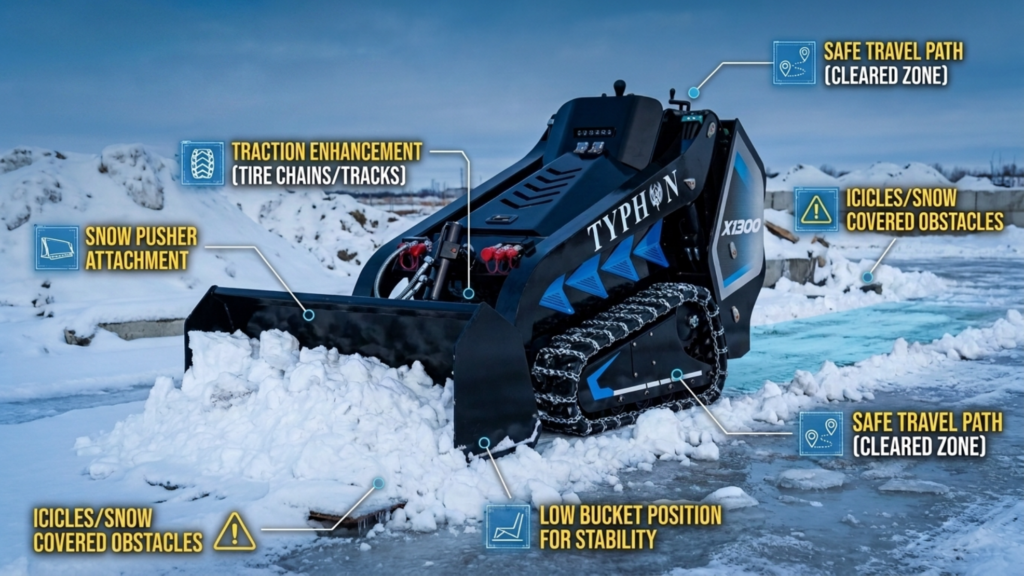
Snow and ice create some of the most hazardous conditions a skid steer operator faces. Slick surfaces rob the machine of traction, reduce steering control, and make stopping distances longer and less predictable. Frozen ground adds its own challenge, turning soft soil rock-hard and making digging or grading far more difficult. On top of that, snow can hide obstacles, drop-offs, and uneven terrain that would be obvious in clear weather, so the risk of an accident or a stuck machine climbs sharply when the ground is white and slippery.
The right attachments transform how well a skid steer handles winter work. Instead of forcing a general-purpose setup to cope, match the tool to the conditions. Snow buckets and pushers move accumulation efficiently, angle blades clear paths with control, and snow blower attachments handle heavy drifts. For traction, tracks or tire chains give the machine a much stronger bite on packed snow and ice than standard tires alone, and that added grip translates directly into safer, more productive operation.
Technique carries the rest of the load once the machine is equipped. Keep your speed low and steady, since sudden acceleration or braking breaks traction fast on ice and can send the machine sliding. Make gradual turns rather than sharp ones, keep loads low to hold stability, and give yourself extra room to stop. Plan your movements before you make them, thinking through where you will push snow, where you will turn, and where hidden hazards might lie beneath the surface. Approach slopes with particular caution, since even a gentle grade becomes treacherous under ice. By combining the correct attachments with slow, deliberate operation and careful planning, you keep control of the machine and get winter work done without putting the operator or the equipment at risk.
Protecting Your Skid Steer During Changing Weather Conditions
Weather rarely holds steady, and the constant swing between wet and dry, hot and cold puts extra strain on a skid steer. Repeated cycles of moisture, temperature change, and freezing accelerate wear on seals, hoses, electrical connections, and metal surfaces, and that wear adds up faster than many owners expect. Rust, cracked seals, corroded terminals, and degraded fluids all trace back to a machine that rides out changing conditions without extra attention. The good news is that a bit of consistent care keeps these problems from turning into downtime and expensive repairs.
Regular inspections are the foundation of weather protection, because they catch small issues before conditions make them worse. Walk around the machine often and check the areas most vulnerable to the elements:
- Seals and hoses for cracks, brittleness, or leaks that moisture and temperature swings tend to worsen.
- Fluids for the right levels and condition, since water contamination and viscosity changes follow weather shifts.
- Electrical connections for corrosion or looseness that dampness and cold can bring on.
- Tires, tracks, and undercarriage for wear and packed debris that trap moisture against the machine.
Storage and seasonal preparation protect the machine when it is not working. Whenever possible, keep the skid steer under cover or indoors to shield it from rain, snow, and sun that break down components over time. Clean off mud, salt, and debris after wet or wintry use, since these accelerate corrosion when left to sit. Ahead of each season, prepare the machine deliberately, switching to the right fluids, checking the battery and cooling system, and servicing any parts stressed by the previous stretch of weather. By staying disciplined about inspections, storing the machine properly, and preparing for each season before it arrives, you extend the life of your skid steer and keep it ready to work no matter what the forecast brings.
Conclusion
Weather will always shape how your skid steer performs, but it does not have to catch you off guard. Wet ground calls for the right tires or tracks and a careful hand, extreme heat demands clean cooling and close attention to fluids, and cold weather rewards proper preparation and a patient warm-up. Snow and ice require the correct attachments paired with slow, deliberate operation, while the constant swing of changing conditions makes regular inspections and smart storage essential. Match your equipment and habits to the conditions in front of you, stay ahead of maintenance, and your skid steer will deliver reliable, productive work through every season. Take a few minutes to review your machine against the forecast, and you will spend far less time dealing with breakdowns and far more time getting the job done.