How to Choose the Right Scissor Lift Working Height
Choosing the right scissor lift working height is one of the most important steps before buying or renting a scissor lift. Many buyers only look at the machine size or price, but working height decides whether the lift can actually reach the job safely.
A scissor lift is designed to move workers, tools, and light materials vertically. It is commonly used for warehouse work, ceiling repair, electrical installation, painting, cleaning, HVAC work, signage installation, building maintenance, and construction access.
The problem is simple: if the lift is too short, workers may stretch, climb, or use unsafe methods to reach the work area. If the lift is too tall, it may cost more, take up more space, and become harder to move indoors.
The best scissor lift is not always the tallest one. The right choice depends on your actual work height, ceiling height, floor condition, platform capacity, machine width, and whether the lift will be used indoors, outdoors, or on rough terrain.
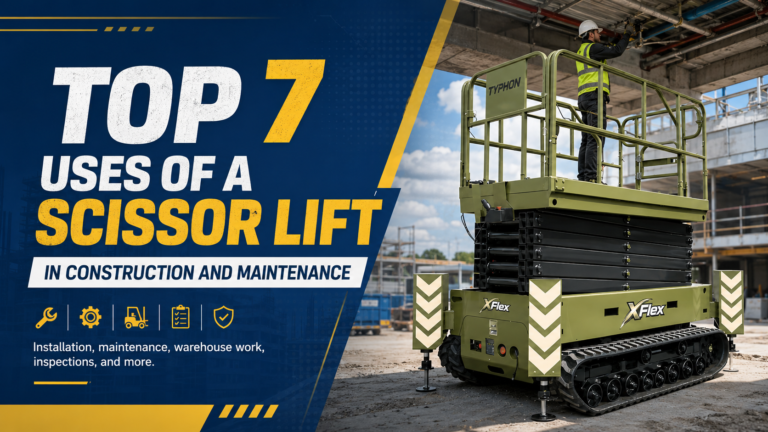
For challenging jobsites, buyers may also need to consider tracked scissor lifts, outriggers, gradeability, and all-terrain stability. A model like the TYPHON XFLEX-4068ET Electric Tracked Scissor Lift is designed for buyers who need high vertical reach on uneven ground where standard wheeled lifts may not perform well.
What Does Scissor Lift Working Height Mean?
Scissor lift working height means the maximum height a worker can usually reach while standing on the platform.
It is not always the same as platform height.
Most manufacturers estimate working height by adding around 6 feet to the platform height. This is because an average worker standing on the platform can reach above their head.
For example:
| Platform Height | Approx. Working Height |
|---|---|
| 19 ft | 25 ft |
| 26 ft | 32 ft |
| 32 ft | 38 ft |
| 40 ft | 46 ft |
| 45 ft | 51 ft |
So, if a lift has a 26 ft platform height, the working height may be around 32 ft.
This is important because some buyers confuse platform height with working height. If you need to reach a 30 ft ceiling, you may not need a 30 ft platform height. You may need a lift with around 24–26 ft platform height, depending on the task.
Working Height vs Platform Height
Before choosing a scissor lift, understand these two terms clearly.
Platform height is the height of the platform floor from the ground when fully raised.
Working height is the estimated height a person can reach while standing on that platform.
Here is the simple difference:
- Platform height = where your feet stand
- Working height = where your hands can reach
For example, a 19 ft scissor lift usually means the platform rises about 19 ft. The working height may be about 25 ft.
This difference matters when comparing machines. Some sellers advertise platform height, while others focus on working height. Always check which number is being shown.
If you choose based on the wrong number, you may end up with a lift that is too short for the job.
Why Choosing the Right Height Matters
Choosing the right scissor lift working height affects safety, productivity, cost, and machine usability.
A lift that is too short can create unsafe working habits. Workers may try to stand on rails, stretch too far, use ladders on the platform, or move into unstable positions. These are dangerous and should be avoided.
A lift that is too tall may also create problems. Larger scissor lifts are usually heavier, wider, more expensive, and harder to move in tight spaces. They may not fit through doors or narrow warehouse aisles. They may also need stronger floor support.
The right working height helps workers:
- Reach the job safely
- Work without stretching too much
- Carry tools and materials properly
- Stay stable on the platform
- Reduce setup time
- Avoid unnecessary machine cost
- Move easier through the jobsite
For indoor work, the right height also helps avoid hitting ceilings, lights, sprinkler pipes, beams, and overhead obstacles.
For outdoor work, height is only one part of the decision. The machine must also handle the surface. A lift that reaches high but cannot stay stable on rough ground is not the right choice.
Common Scissor Lift Working Heights
Scissor lifts come in many sizes. The most common working height range is usually from around 20 ft to over 50 ft.
19 ft Platform Height / Around 25 ft Working Height
This is one of the most common sizes for indoor work. It is useful for warehouses, retail stores, schools, offices, and indoor maintenance.
Best for:
- Ceiling lights
- Indoor electrical work
- Warehouse shelves
- Painting low commercial walls
- General maintenance
- Narrow indoor access
This size is popular because it is compact and easier to move.
26 ft Platform Height / Around 32 ft Working Height
This is a good middle-size option. It gives more reach than a 19 ft lift while still being manageable for many indoor and light construction jobs.
Best for:
- Larger warehouses
- Commercial buildings
- HVAC work
- Ceiling repair
- Signage installation
- Indoor construction
32 ft Platform Height / Around 38 ft Working Height
This size is useful when the job requires higher indoor access or outdoor work on buildings.
Best for:
- Tall warehouse ceilings
- Building maintenance
- Exterior wall work
- Construction finishing
- Large facility repairs
40 ft Platform Height / Around 46 ft Working Height
A 40 ft platform height is usually used for larger construction and industrial jobs. These lifts are bigger and need more space.
Best for:
- Outdoor construction
- Industrial buildings
- High wall work
- Steel structure work
- Large commercial maintenance
45 ft+ Platform Height / Around 50 ft+ Working Height
These are taller machines for bigger sites. They are usually not the best choice for tight indoor spaces unless the building is large enough.
Best for:
- High exterior work
- Large construction sites
- Warehouses with very high ceilings
- Industrial maintenance
- Large-scale installation work
How to Measure the Height You Need
Before choosing a scissor lift, measure the actual work area. Do not guess.
Start by asking this question:
What height does the worker need to reach with their hands?
That is your target working height.
For example, if workers need to repair lights at 28 ft, you need a scissor lift with a working height of at least 28 ft. A 26 ft platform height lift may give around 32 ft working height, so it may be enough.
Here is a simple step-by-step method:
- Measure the height of the work point
- Check whether the worker needs to reach above, forward, or slightly sideways
- Add extra space for tools and movement
- Check ceiling obstacles
- Compare platform height and working height
- Choose a lift with a small safety margin
- Avoid choosing a machine that is too short
For example:
If your ceiling is 24 ft and workers need to repair lights at that height, a 19 ft platform height lift with around 25 ft working height may be enough.
But if the worker needs to reach above ductwork, pipes, or beams, you may need more height.
Indoor Scissor Lift Height Guide
Indoor scissor lifts are commonly used on flat concrete floors. These jobs usually need electric scissor lifts because they are quiet and produce no exhaust fumes.
For indoor work, height is important, but machine width and turning radius also matter.
A tall lift is useless if it cannot enter the building or move through the workspace.
Best Heights for Indoor Maintenance
For simple indoor maintenance, a 19 ft or 26 ft platform height is usually enough.
Good for:
- Light repair
- Electrical work
- Ceiling tiles
- Indoor signs
- Warehouse lighting
- Small facility maintenance
Best Heights for Warehouses
Warehouses may need taller lifts depending on shelf height and ceiling height.
For normal warehouse aisles, compact electric scissor lifts are often better. For high-rack warehouses, a taller lift may be needed.
Before choosing, check:
- Aisle width
- Shelf height
- Ceiling height
- Floor load rating
- Turning space
- Door clearance
- Platform extension needs
Best Heights for Indoor Construction
Indoor construction may need 26 ft, 32 ft, or 40 ft platform height depending on the building.
For drywall, ceiling, HVAC, electrical, and sprinkler work, workers need enough height to reach overhead systems comfortably.
Do not choose a lift that barely reaches the ceiling. Workers need room to move their arms and tools.
Outdoor and Rough Terrain Scissor Lift Height Guide
Outdoor work is different from indoor work. The ground may be uneven, soft, muddy, gravel-covered, sloped, or undeveloped. Because of this, working height is not the only thing to check.
For outdoor scissor lifts, you should also check:
- Ground condition
- Tire or track system
- Gradeability
- Wind rating
- Platform capacity
- Machine weight
- Stability system
- Outriggers
- Rough terrain ability
A regular wheeled scissor lift may work well on flat concrete or paved ground. But it may struggle on mud, gravel, soft soil, or uneven terrain.
For rougher outdoor jobsites, tracked scissor lifts can be more useful because crawler tracks spread the machine’s weight across a larger ground contact area. This helps with traction and reduces the chance of getting stuck on soft surfaces.
Best Heights for Outdoor Construction
Outdoor construction often needs taller lifts, such as 32 ft, 40 ft, or higher. These machines help workers reach building exteriors, steel frames, roof edges, signs, high wall areas, and installation points.
For high-reach outdoor work, buyers should consider not only the working height but also the machine’s stability system. A lift with outriggers can provide better support before raising the platform.
Best Heights for Exterior Maintenance
For building maintenance, choose the lift based on the height of the wall, roofline, sign, window, or equipment being serviced.
Do not only measure the building height. Measure the exact work point.
Best Heights for Rough Terrain Jobsites
Rough terrain scissor lifts should be chosen based on both working height and ground stability.
A tall lift on poor ground can be risky. Make sure the machine is designed for the surface before working at height.
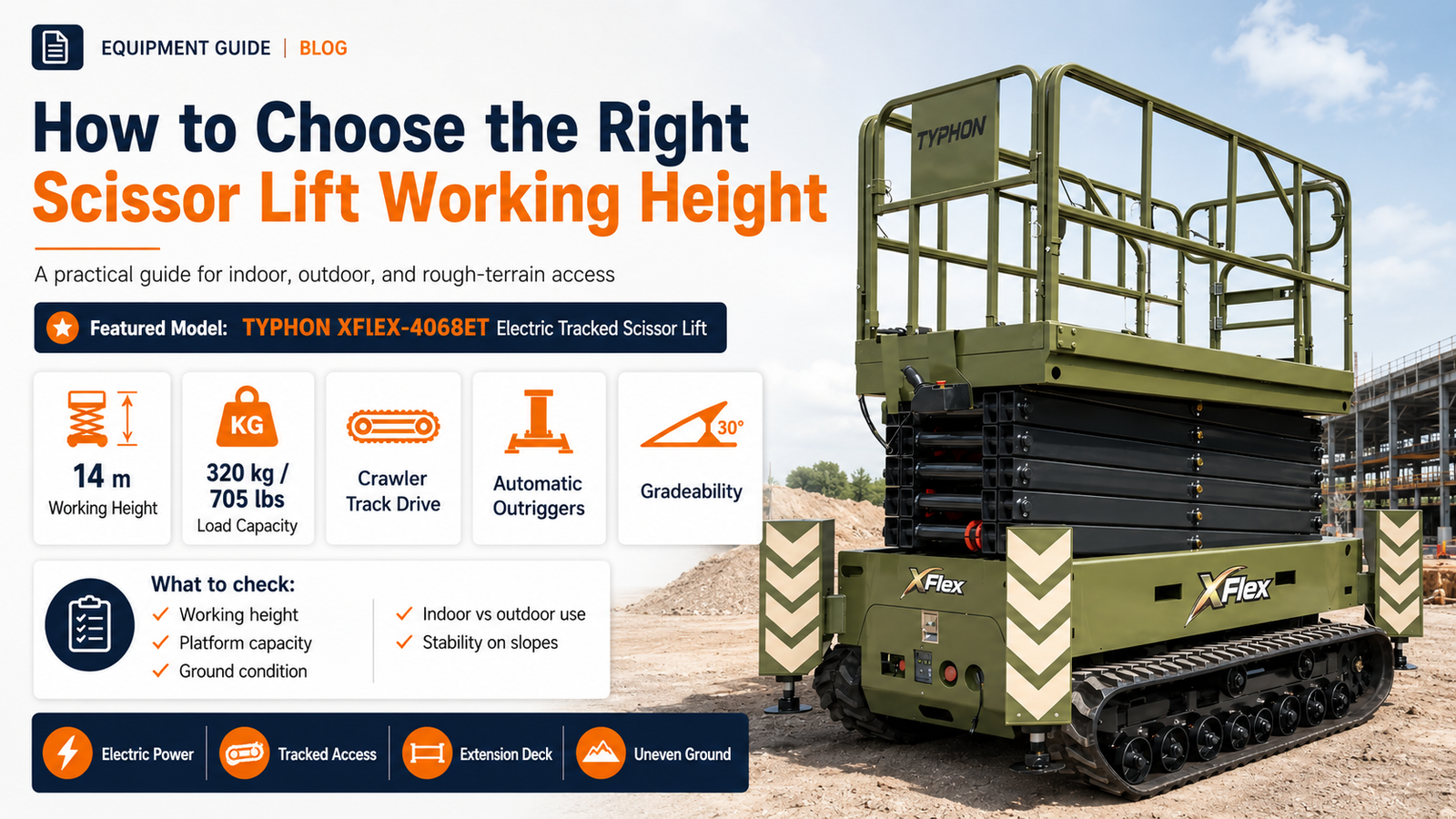
This is where a tracked electric scissor lift like the TYPHON XFLEX-4068ET can be useful for buyers who need strong vertical reach on uneven ground.
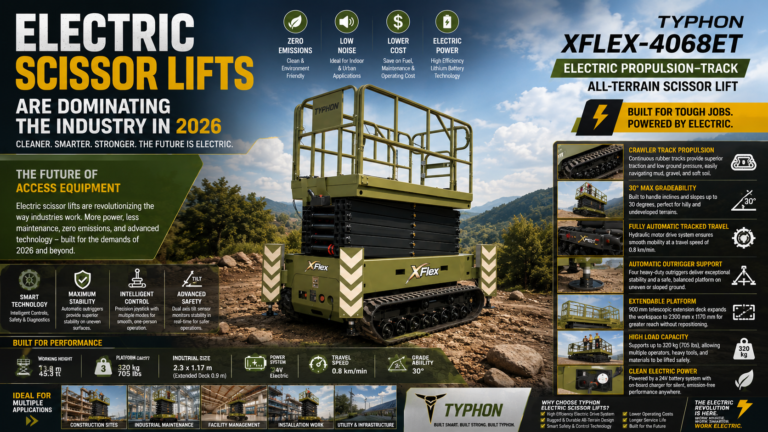
Featured Model: TYPHON XFLEX-4068ET Electric Tracked Scissor Lift
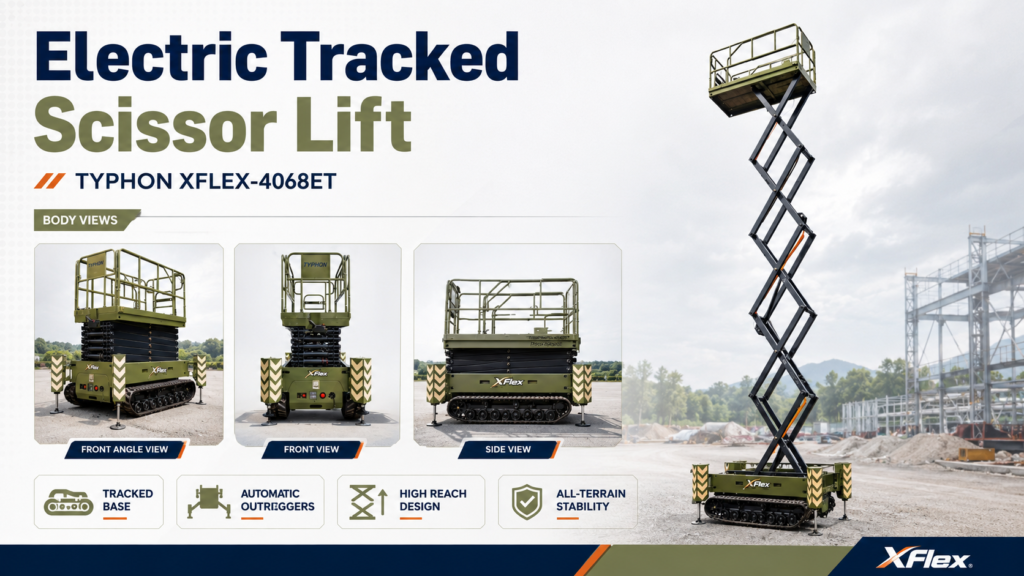
The TYPHON XFLEX-4068ET Electric Tracked Scissor Lift is designed for high-reach access on challenging jobsites. It is built for users who need a scissor lift that can work beyond smooth indoor floors and paved surfaces.
This model offers a 14 m maximum working height, which is about 45.9 ft, making it suitable for high maintenance, construction, installation, and outdoor access tasks.
It also supports a 320 kg load capacity, equal to about 705 lbs. This allows the platform to carry operators, tools, and work materials at the same time.
Why the XFLEX-4068ET Fits Rough Terrain Work
The XFLEX-4068ET uses a crawler track propulsion system instead of standard wheels. These continuous rubber tracks provide better traction on uneven or soft ground.
This is useful for:
- Muddy jobsites
- Gravel areas
- Soft soil
- Sloped ground
- Undeveloped construction areas
- Outdoor maintenance sites
- Large installation projects
Crawler tracks also reduce ground pressure compared with small wheels. This helps the machine move more confidently in areas where wheeled lifts may struggle.
14 m Working Height for High-Reach Jobs
A 14 m working height gives operators access to high areas without needing scaffolding for many tasks.
This height can be useful for:
- Building exterior work
- Facility maintenance
- Ceiling and roofline access
- Large-scale installation
- Electrical work
- Signage installation
- Construction finishing
- Outdoor inspection work
For buyers comparing scissor lift working height, this model is a strong fit when the job requires around 45 ft of reach and the ground is not perfectly flat.
Automatic Outrigger Support for Better Stability
One of the most important features of the TYPHON XFLEX-4068ET is its automatic outrigger support system.
The machine uses four heavy-duty outriggers to improve stability before lifting. This helps create a safer and more balanced platform on uneven or sloped ground.
This is important because working height becomes more sensitive as the platform rises. The higher the platform goes, the more important stability becomes.
Automatic outriggers are especially useful for outdoor users who work on jobsite surfaces that are not perfectly level.
30° Maximum Gradeability
The XFLEX-4068ET has a 30° maximum gradeability, which means it is designed to travel on slopes and uneven jobsite conditions better than many basic scissor lifts.
This makes it useful for:
- Hilly construction areas
- Outdoor maintenance sites
- Rough ground access
- Undeveloped landscapes
- Sloped work zones
Gradeability is not the same as lifting on a slope. Operators should still use the stabilizer system correctly and follow safety rules before elevating the platform.
Electric Power for Cleaner Operation
The XFLEX-4068ET uses a 24V battery system with an on-board charger. This gives the machine clean electric operation with low noise and no direct exhaust emissions during use.
This can be helpful for:
- Outdoor jobsites that need quieter equipment
- Specialized indoor environments
- Facility maintenance
- Areas where diesel exhaust is not preferred
- Worksites that want cleaner equipment options
Electric drive also makes the machine more suitable for certain jobs where noise and fumes need to be reduced.
Extendable Platform for Better Access
This model includes a 900 mm telescopic extension deck, which expands the working platform to 2300 mm x 1170 mm.
In US measurements, that is approximately:
- 35.4 inches extension deck
- 90.6 inches x 46.1 inches expanded platform size
The extension deck helps operators reach difficult areas without repositioning the full machine every time.
This is useful when working around small obstacles, wall edges, installation points, or areas where the lift cannot be placed directly below the work.
Intelligent Control System
The TYPHON XFLEX-4068ET includes an intelligent control system with joystick operation. The system supports driving, lifting, and stabilizer deployment.
This helps support efficient one-person operation. The operator can control the machine from the platform with better precision.
The dual axis tilt sensor also helps monitor unsafe operating angles. This gives operators important feedback and helps reduce tipping risk.
TYPHON XFLEX-4068ET Key Specifications
| Specification | Detail |
|---|---|
| Model | TYPHON XFLEX-4068ET |
| Machine Type | Electric tracked scissor lift |
| Maximum Working Height | 14 m / approx. 45.9 ft |
| Load Capacity | 320 kg / approx. 705 lbs |
| Drive Type | Electric tracked drive |
| Track Type | Continuous rubber crawler tracks |
| Gradeability | 30° maximum |
| Travel Speed | 0.8 km/min |
| Platform Extension | 900 mm / approx. 35.4 in |
| Expanded Platform Size | 2300 mm x 1170 mm / approx. 90.6 in x 46.1 in |
| Stability System | Four automatic outriggers |
| Control System | Joystick control with driving, lifting, and stabilizer modes |
| Safety Feature | Dual axis tilt sensor |
| Power System | 24V battery system with on-board charger |
| Category | Scissor Lifts |
Platform Size, Load Capacity, and Reach
Working height is important, but it is not the only specification.
A scissor lift also needs enough platform space and load capacity for the job.
Platform Size
A larger platform gives workers more room for tools, materials, and movement.
This is useful for:
- Painting
- Drywall work
- Electrical installation
- HVAC work
- Sign installation
- Ceiling repair
Some scissor lifts include an extension deck. This allows workers to reach slightly forward without moving the whole machine.
This is useful when working over small obstacles or when the machine cannot be placed directly under the work point.
The XFLEX-4068ET is a good example because its 900 mm extension deck gives extra reach while keeping the vertical scissor lift structure.
Load Capacity
Load capacity includes everything on the platform:
- Workers
- Tools
- Materials
- Equipment
- Extension deck load
Do not overload the lift. A lift may reach the correct height, but if it cannot carry the required weight, it is not the right machine.
For example, two workers with heavy tools, wiring, panels, or installation materials may need a higher platform capacity.
The XFLEX-4068ET supports up to 320 kg / 705 lbs, which can fit multiple operators and work materials, depending on the job and safety limits.
Horizontal Reach
A scissor lift mainly moves straight up and down. It does not provide the same side reach as a boom lift.
If the job is not directly above the machine, a scissor lift may not be the best choice.
For work that needs more side reach, a boom lift may be better. But for short forward access, an extension deck can help reduce repositioning.
Mistakes to Avoid When Choosing Working Height
Many buyers and renters make the same mistakes when choosing a scissor lift.
Mistake 1: Confusing Platform Height and Working Height
This is the most common mistake. Always check whether the listed height is platform height or working height.
Mistake 2: Choosing a Lift That Barely Reaches
Do not choose a lift that only reaches the job by a small amount. Workers need space to use tools safely.
Mistake 3: Ignoring Door and Aisle Width
A lift may have the right height but may not fit through the building. Always check machine width and stowed height.
Mistake 4: Ignoring Ground Conditions
A standard electric scissor lift is not made for rough outdoor ground. For dirt, gravel, mud, soft soil, or uneven surfaces, choose a rough terrain or tracked model.
Mistake 5: Forgetting Load Capacity
Height does not matter if the platform cannot safely carry the workers and materials.
Mistake 6: Using a Scissor Lift When a Boom Lift Is Needed
Scissor lifts are best for vertical access. If the work requires reaching over obstacles or far to the side, a boom lift may be safer and more useful.
Mistake 7: Ignoring Stability Systems
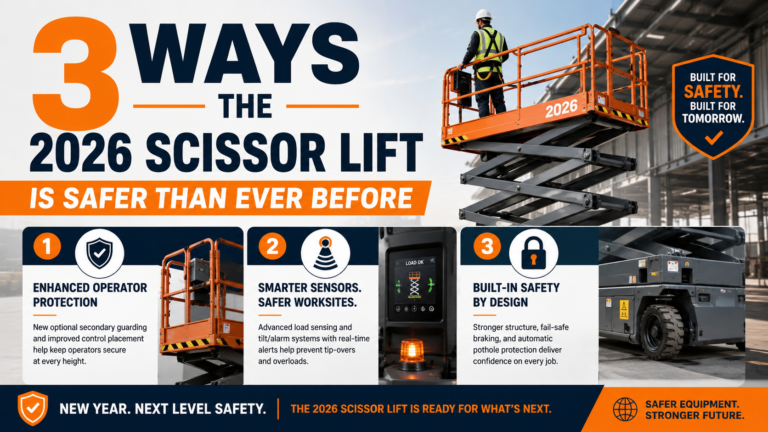
For rough outdoor work, outriggers, tilt sensors, and ground support systems matter. A high working height needs a stable base.
This is one reason a model like the TYPHON XFLEX-4068ET includes automatic outriggers and a dual axis tilt sensor.
Final Buying Tips
When choosing the right scissor lift working height, start with the work, not the machine.
Ask these questions:
- How high is the work point?
- Is the job indoors or outdoors?
- Is the floor flat, rough, soft, muddy, or sloped?
- How many workers will be on the platform?
- What tools and materials will they carry?
- Does the lift need to pass through doors?
- Is there enough space to turn?
- Are there overhead obstacles?
- Does the job need vertical reach only, or side reach too?
- Is an extension deck needed?
- Are outriggers needed for stability?
- Should the machine be wheeled or tracked?
For indoor maintenance, a compact electric scissor lift with around 19 ft to 26 ft platform height is often enough.
For larger warehouses, construction sites, and exterior work, you may need 32 ft, 40 ft, or higher.
For rough terrain or undeveloped jobsites, consider a tracked model with strong stability features. The TYPHON XFLEX-4068ET Electric Tracked Scissor Lift is a strong example because it combines 14 m working height, 705 lb load capacity, crawler track propulsion, automatic outriggers, and clean electric power.
The best scissor lift is the one that reaches the work safely, fits the jobsite, carries the needed load, and gives workers enough space to do the job properly.
Conclusion
Choosing the right scissor lift working height is not just about picking the tallest machine. It is about matching the lift to the job.
Platform height, working height, ceiling height, ground condition, load capacity, machine width, platform size, and stability features all matter.
A lift that is too short can create safety problems. A lift that is too large can waste money and become hard to move. A lift that has enough height but poor ground stability may not be safe for outdoor use.
For smooth indoor floors, a compact electric scissor lift may be enough. For outdoor or rough terrain jobs, a tracked scissor lift with outriggers may be the better choice.
The TYPHON XFLEX-4068ET fits buyers who need high vertical reach, electric operation, tracked mobility, and better support on uneven ground. With its 14 m maximum working height, 320 kg load capacity, automatic outrigger support, and crawler track system, it is built for more demanding access work where standard wheeled lifts may not be enough.
Before buying or renting, measure the work height carefully, check the machine specifications, and choose a lift that gives enough reach without creating unnecessary risk, size, or cost.