Warehouse Scissor Lift vs Forklift: Which Is Right?
The wrong lift choice quietly drains your facility every single day. You can staff the shift right and lay out the racks smartly, but if you send a forklift to do a scissor lift’s job, or the reverse, you lose time, burn labor, and add risk on every task. These two machines look like they overlap, yet they solve very different problems. Pick the wrong one, and you pay for it on every pick, stock, and repair.
The right choice, on the other hand, improves efficiency from the moment work begins. Employees spend less time repositioning equipment, materials move more smoothly through the facility, and elevated tasks are completed with the proper level of safety and stability. Understanding where each machine excels helps you invest in equipment that supports faster operations, lower operating costs, and a more productive workplace.
Many facility managers default to the machine they already own, then force it to handle work it was never built for. That’s a costly habit. Choosing the right equipment starts with understanding where each machine performs best.
- When a scissor lift is the right call, and when it isn’t
- When a forklift wins, and where it falls short
- The facility factors that decide the choice for you
How the Two Machines Actually Differ
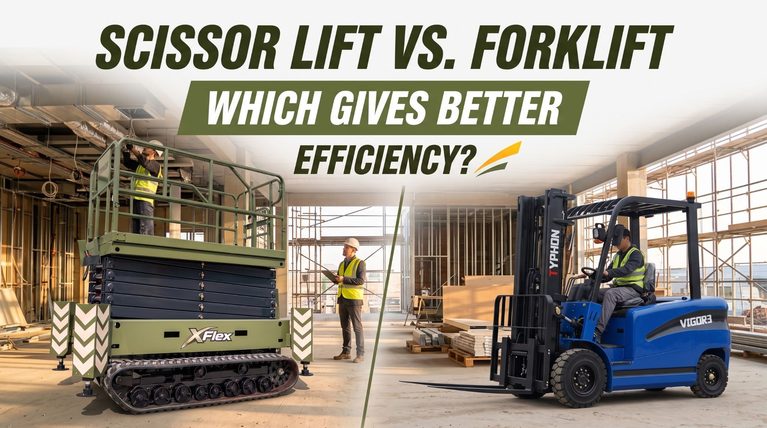
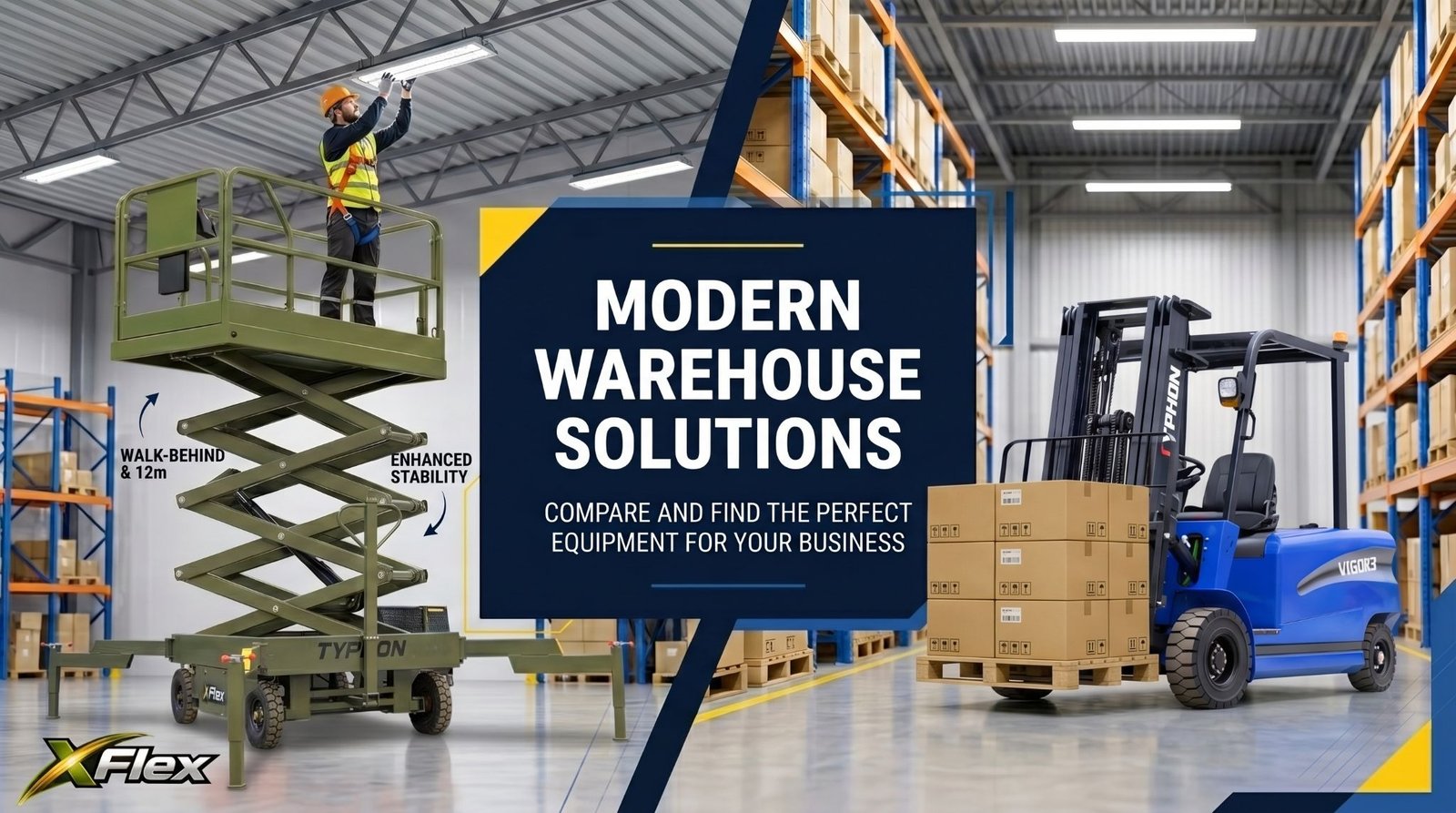
Before you choose, you need to understand what each machine is built to do. A scissor lift and a forklift both move things vertically, but that’s where the similarity ends. One lifts people and light material straight up; the other carries heavy loads and sets them down at height.
The biggest difference is how each machine is designed to perform its work. A scissor lift provides a stable, elevated platform so workers can safely complete tasks overhead without constantly repositioning equipment. A forklift, by contrast, is built for material handling, using forks and a mast to lift, transport, stack, and unload pallets or other heavy loads. Choosing the right machine depends less on how high you need to go and more on whether your priority is safe worker access or efficient load movement.
What a Scissor Lift Is Built For
A scissor lift raises a large, stable platform straight up using crossed, folding supports. It’s built to lift workers, and the tools or light stock they carry, to elevated work areas. Think order picking from high shelves, changing warehouse lighting, servicing HVAC, or running maintenance along the ceiling line.
The platform gives workers room to move and a guardrail to work behind, which makes elevated tasks safer and steadier. Most electric models run quiet and clean indoors, so they suit facilities with sensitive air quality or tight aisles. The trade-off is simple: a scissor lift goes up and down, not far and fast.
If your work happens at height and stays in one spot, this is the machine that earns its keep. It turns a wobbly ladder job into a stable, repeatable task.
What a Forklift Is Built For
A forklift is a horizontal-and-vertical hauler. It slides forks under a pallet, lifts the load, carries it across the floor, and stacks it on a rack. Its whole design centers on moving heavy, palletized freight quickly from point A to point B and up into storage.
Where a scissor lift lifts people, a forklift lifts products, often thousands of pounds at a time. It shines at loading trucks, feeding production lines, and cycling inventory in and out of tall racking. The trade-off is that a forklift is a poor and unsafe platform for elevated human work; it’s a load mover, not a workstation in the sky.
Match the forklift to volume and weight. When freight has to move constantly and stack high, nothing replaces it.
When Each Machine Is the Right Choice
Understanding the machines is only the first step. The next is matching the equipment to the work you need to accomplish. The easiest way to make the right decision is to focus on what you’re actually lifting: people or products. That single question eliminates much of the confusion because each machine is engineered around a completely different purpose.

A scissor lift is the better choice when workers need a stable platform for jobs such as maintenance, electrical work, painting, inspections, or warehouse stock access. A forklift is the better option when the task involves moving, loading, unloading, or stacking heavy materials quickly and efficiently. While both machines can raise something off the ground, they are designed with different priorities, and using the correct one improves productivity, safety, and overall jobsite efficiency.
When a Scissor Lift Wins
Reach for a scissor lift whenever the job puts a person at height for extended, hands-on work. Stocking and picking from tall shelves, inspecting sprinkler systems, painting, or repairing overhead equipment all favor the stable platform. Workers stand safely, keep both hands free, and stay put as long as the task takes.
Here’s the real reason it matters: a scissor lift replaces the makeshift solutions that cause falls, such as ladders balanced on pallets, or people riding forklift forks. That last practice is dangerous and widely prohibited. The Centers for Disease Control and Prevention links falls from elevation to a large share of serious workplace injuries, which is exactly the risk a proper platform is designed to remove.
Choose a scissor lift when the work is stationary, elevated, and hands-on. If a task keeps a worker up high for more than a few minutes, this machine is almost always the safer, faster answer.
When a Forklift Wins
Reach for a forklift when the job is about moving weight, not lifting people. High-volume loading docks, pallet cycling, truck unloading, and tall rack storage all demand a forklift’s power and speed. If material has to travel across the floor and climb into racking all day, this is your machine.
Try this test: if the primary verb is “carry” or “stack,” you want a forklift. It handles heavy, repetitive freight movement that would overwhelm any platform lift. A scissor lift simply can’t transport a loaded pallet across a warehouse, and that’s not what it’s for.
Choose a forklift when throughput, load weight, and horizontal distance drive the task. The heavier and more frequent the loads, the more clearly it wins.
Facility Factors That Decide the Call
Sometimes the task alone doesn’t settle the decision. Your building layout, available space, floor conditions, and daily workload all influence which machine will perform best. A machine that excels in one facility may be inefficient or even impractical in another, so it’s important to evaluate the environment where it will be used rather than focusing only on its specifications.

Factors such as aisle width, ceiling height, door clearance, floor load capacity, and the frequency of lifting tasks all affect the right choice. A scissor lift may be ideal for facilities that require safe, repeated access to elevated work areas, while a forklift is often the better investment where heavy materials need to be transported and stacked throughout the day. Considering these operational factors helps you choose equipment that delivers real productivity instead of paying for features you’ll rarely use.
Space, Aisles, and Ceiling Height
Measure your building before you commit to a machine. Narrow aisles, low ceilings, and tight turning zones can rule out a standard forklift or a wide scissor lift before the task ever enters the picture. A machine that can’t maneuver is just expensive floor clutter.
Ceiling height sets your vertical ceiling, literally. If you store and pick well above head height, confirm both machines can reach your top shelf with margin. For tight, high-density layouts, a compact electric scissor lift or a narrow-aisle forklift often beats a full-size machine that can’t turn where you need it.
Walk the space with a tape measure, not a guess. Note aisle widths, door heights, and the tallest rack, then rule out anything that won’t fit and move freely.
Workload, Frequency, and Floor Surface
Match the machine to how often, and how hard, you’ll run it. A scissor lift used for occasional maintenance has different demands than a forklift cycling pallets every minute of every shift. High-frequency freight work rewards a forklift built for duty cycles; intermittent elevated work rewards a platform lift you can park between jobs.
Floor surface matters more than most buyers expect. Smooth, level concrete suits standard electric machines, while uneven or outdoor-adjacent surfaces may demand rough-terrain equipment and change your options entirely. Running the wrong drive type on the wrong floor wears the machine and risks tipping.
Conclusion
The choice comes down to one honest question: are you lifting people to work at height, or moving heavy loads across your floor? A scissor lift is your dedicated elevated workstation: stable, safe, and built for hands-on tasks up high. A forklift is your workhorse hauler: fast, strong, and built to carry and stack freight all day. Most busy facilities eventually need both, because they solve problems that rarely overlap.
Start by listing the tasks that actually eat your team’s time. If your people spend hours on ladders or waste effort improvising elevated work, a scissor lift will pay you back in safety and speed. If pallets pile up at the dock or product moves too slowly into storage, a forklift is where your money belongs. Let the pattern of your daily work, not habit or convenience, point to the answer.
Then measure your space, study your workload, and check your floor before you sign anything. The best equipment isn’t the most powerful or the most versatile on paper; it’s the machine that fits your building and matches the work you do every shift. Get that match right, and both safety and productivity climb together. Take an afternoon to audit your real tasks this week, and you’ll know exactly which machine your facility needs next.