The Strategy of Positioning for High Wind Workdays For Scissor Lift
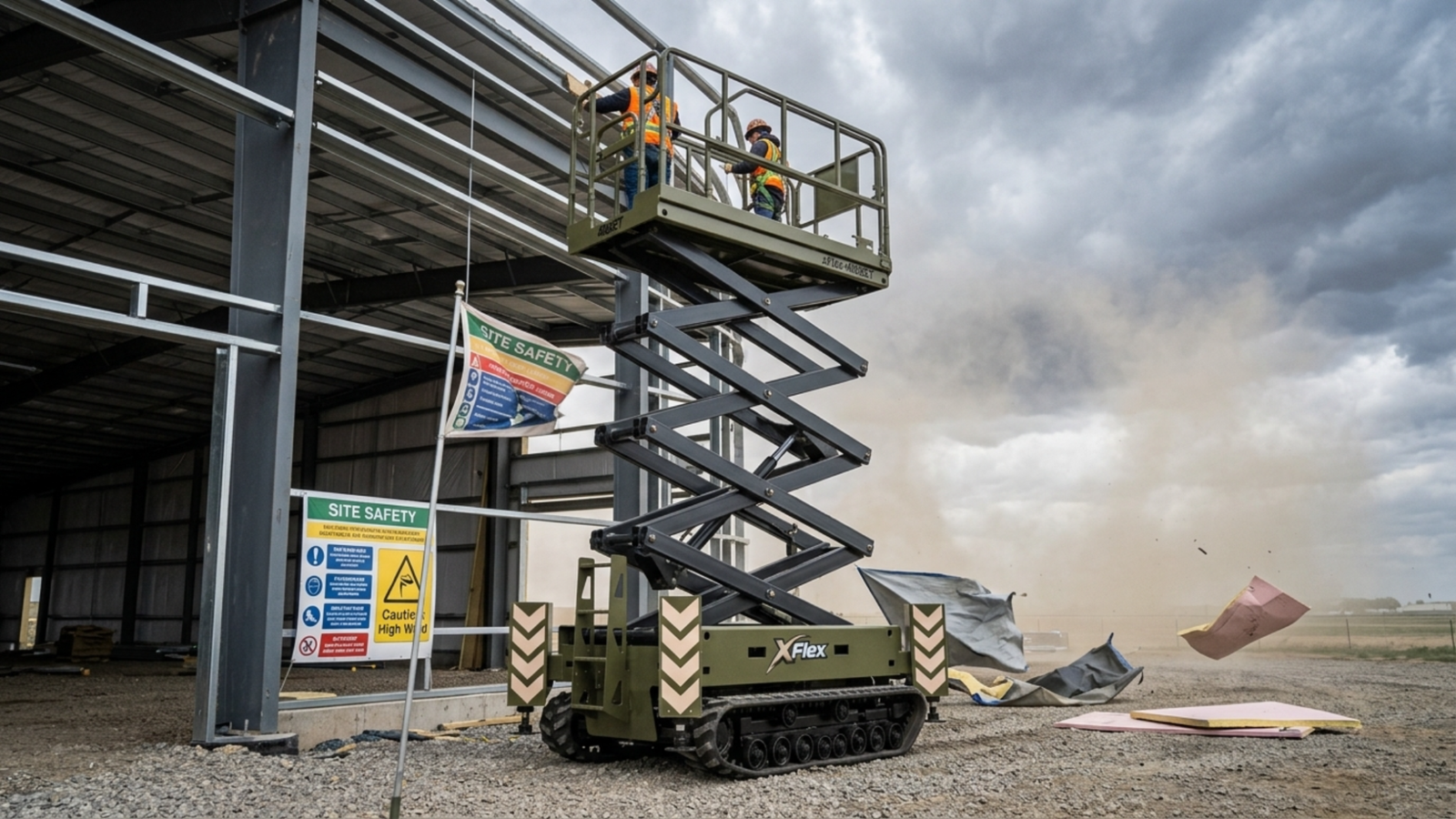
One of the most underappreciated hazards on elevated job sites is wind. Conditions at ground level are frequently calm and moderate. However, wind behavior rapidly and unpredictably changes after a platform is lifted to a height. Airflow becomes unstable, gusts intensify, and structures start to affect wind direction. These modifications can put a lot of strain on aerial lifts and raise the possibility of instability, particularly if operators are unprepared.
Many incidents involving boom lifts and scissor lifts are linked to poor positioning in windy conditions rather than mechanical failure. The machine itself is usually functioning correctly, but environmental forces exceed what was anticipated during setup. This is why understanding how to position a lift properly in high wind situations is essential for safe operation.
Checking weather reports is only one aspect of safe wind operation. To lessen exposure to powerful gusts, it necessitates real-time monitoring, accurate interpretation of wind behavior at heights, and thoughtful machine positioning. Operators can make minor changes that greatly increase stability when they comprehend how wind interacts with topography, structures, and the lift itself.
The practical placement techniques that lower risk in windy circumstances are the main subject of this tutorial. It covers how to manage goods safely at heights, avoid amplified wind zones, reduce drag through proper orientation, obey manufacturer wind restrictions, and make controlled judgments when conditions change during operation.
Know Your Lift’s Wind Limit
Every aerial lift is designed with a specific maximum wind speed rating. This limit is set by the manufacturer after testing the machine under controlled conditions to determine how much wind force it can safely withstand. It is clearly listed in the operator manual and often displayed on safety decals near the control panel or platform. This number is not flexible, and exceeding it increases the risk of instability or tip over.
One of the most common safety issues in the field is relying on judgment instead of measurement. Wind conditions at ground level rarely reflect what is happening at elevation. Even a light breeze on the surface can intensify significantly once the platform is raised. Gusts can also vary rapidly, making conditions unpredictable within seconds.
To avoid guesswork, operators should use a handheld wind meter to measure actual wind speed at the working height. This provides accurate data instead of assumptions and helps ensure decisions are based on real conditions. Measurements should be taken before lifting and repeated periodically if work continues for extended periods.
The rule is straightforward. If wind speed meets or exceeds the manufacturer’s limit, the lift must remain unused until conditions improve. Continuing operation in excessive wind places unnecessary stress on the machine and increases the likelihood of sudden movement or loss of control. Safety depends on respecting these limits consistently, not interpreting them differently based on task urgency.
Watch Out for Wind Tunnels
Wind speed alone does not define risk on a job site. The surrounding environment can significantly increase wind force through a phenomenon commonly known as wind tunneling. This occurs when air is funneled between structures, causing it to accelerate and become stronger than in open areas nearby.
At height, this effect becomes even more pronounced. A location that feels safe at ground level can become unstable once a lift enters an elevated airflow corridor. The most common problem areas include narrow passages, building corners, and open gaps between large structures where air pressure is forced to compress and speed up.
Operators often underestimate this effect because conditions appear normal during setup. However, once the platform is raised into these zones, the sudden increase in wind force can cause unexpected movement or sway. This creates a higher risk of loss of control, especially when working near load limits or extended boom positions.
Understanding site layout before lifting is critical. Operators and supervisors should evaluate the surrounding environment and identify areas where wind may accelerate. Whenever possible, positioning the lift on the sheltered side of a structure reduces exposure to direct wind flow. Buildings can act as effective windbreaks when used strategically.
Common wind tunnel zones include:
- Narrow gaps between tall buildings where air is compressed
- Long open corridors or alleys that channel wind direction
- Building corners where wind wraps and accelerates suddenly
- Open spaces between large warehouses or industrial structures
Avoiding these zones whenever possible improves stability and reduces unexpected movement at height.
Angle Your Lift for Less Drag
The orientation of an aerial lift plays a major role in how it responds to wind. A platform exposes a surface area to moving air, and the larger this surface is, the greater the force applied by the wind. When the platform faces directly into strong gusts with its widest side, it behaves much like a sail, catching wind and increasing instability.
A simple adjustment in positioning can significantly reduce this effect. By rotating the platform so that the narrowest side faces the wind, the exposed surface area is reduced. This lowers the drag force acting on the lift and helps maintain better control at height. Even small changes in angle can noticeably improve stability during gusty conditions.
This principle is similar to how a sailboat is controlled. When a sail is fully exposed to the wind, it generates maximum force and movement. When it is trimmed or angled, the force is reduced and control improves. The same concept applies to aerial platforms exposed to wind.
Proper angling also reduces sudden sway and vibration, especially during intermittent gusts. Instead of the wind pushing directly against a broad surface, it flows more smoothly across the structure, reducing resistance. This allows operators to focus on their task without constant correction from machine movement.
In practice, operators should assess wind direction before positioning the lift and make small adjustments to orientation before elevation begins. Repositioning after reaching height is possible but less efficient and may introduce additional risk. Planning orientation early ensures safer and more stable working conditions throughout the task.
Don’t Carry Large Sheets Up High
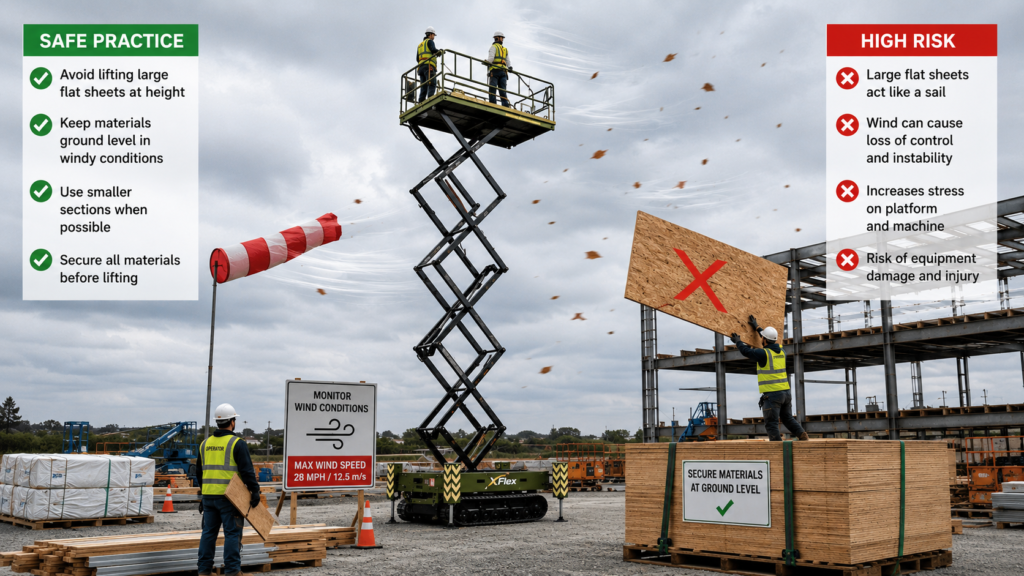
Material choice becomes a major safety factor when working at height in windy conditions. Flat and wide items such as plywood, drywall sheets, metal panels, and signage behave very differently once they are lifted above ground level. These materials create a large surface area that interacts with wind in the same way a sail does. Even a moderate gust can generate enough force to shift the operator’s balance or push the platform sideways.
The risk increases sharply with height. At ground level, wind speed is usually lower and more stable due to surrounding obstacles. As elevation increases, wind becomes stronger and more unpredictable. A sheet that feels manageable while standing on the ground can suddenly become difficult to control once it is raised into stronger airflow. The problem is not just handling the material, but the way wind transfers force through it into the machine itself.
Large sheets also create leverage. When wind catches a wide surface, it does not only move the material, it transfers that force to the lift structure. This can lead to unwanted sway, increased stress on the platform, and in extreme cases, loss of stability. Operators must account for this interaction before lifting any bulky load.
Safe handling practices during windy conditions include:
- Keep large flat materials at ground level until wind conditions improve
- Break down oversized materials into smaller, manageable sections when possible
- Secure loose sheets using straps, bands, or proper storage racks
- Delay lifting operations when wind intensity increases or becomes unpredictable
- Position materials so they present minimal surface area to wind exposure
Careful planning of material movement reduces unnecessary risk. It is always safer to adjust the work sequence than to attempt lifting unstable loads in unsafe wind conditions. A short delay or change in method is significantly less costly than equipment damage or injury caused by loss of control at height.
Have a Clear Lowering Plan
Wind conditions can change quickly during elevated work, sometimes without warning. A safe operation is not only about starting in acceptable conditions but also about knowing exactly how to respond when conditions begin to worsen. A clear and practiced lowering plan ensures that operators can react quickly and safely when wind speeds approach unsafe levels.
The first priority is timely action. Waiting too long to respond to rising wind increases the risk of instability while the platform is still elevated. Operators should begin lowering procedures as soon as wind conditions approach the machine’s rated limit. This proactive approach reduces stress on both the operator and the equipment and helps maintain full control throughout the descent.
Equally important is maintaining control during lowering. Movements should be smooth and deliberate, avoiding sudden adjustments that could amplify instability. At the same time, the area beneath and around the lift must remain clear. Ground personnel should be aware of the lowering process and positioned at a safe distance to avoid exposure to moving equipment or falling objects.
Proper parking location is also part of the lowering plan. Once the platform is fully lowered, the machine should be moved to a stable, level surface whenever possible. Ideally, this location should also provide some natural wind protection, such as the lee side of a building or other structure. Leaving equipment exposed in open areas can still present risk if wind conditions continue to strengthen.
A well-prepared lowering plan includes:
- Identifying a safe descent and parking location before starting work
- Beginning lowering procedures as soon as wind approaches safe limits
- Ensuring all ground personnel are clear of the descent area
- Parking on firm, level, and sheltered ground after completion of work
Having these steps clearly defined in advance turns a potentially dangerous situation into a controlled and predictable response.
Conclusion
Safe operation on high wind workdays depends on preparation, awareness, and disciplined execution. Wind is not a static condition, and its impact becomes significantly stronger at height, where even small changes in airflow can affect stability. Operators who understand how wind interacts with equipment and materials are far better equipped to manage these risks effectively.
Key safety practices include measuring real wind speed instead of estimating, avoiding areas where wind is amplified by structures, adjusting platform orientation to reduce drag, controlling the handling of large or flat materials, and having a clear plan for lowering the lift when conditions change. Each of these actions plays a direct role in reducing exposure to instability and maintaining control of the machine.
None of these practices slow down operations in a meaningful way when applied correctly. In fact, they often improve efficiency by preventing interruptions caused by unsafe conditions or emergency responses. Consistent use of these strategies reduces the likelihood of accidents, protects equipment from damage, and helps maintain a safer and more predictable work environment.
Reviewing current site practices and strengthening weak points in wind safety procedures can make a significant difference. Even one improved habit, consistently applied, can reduce risk and prevent serious incidents on future high wind workdays.