Key Features to Look for in a Modern Scissor Lift
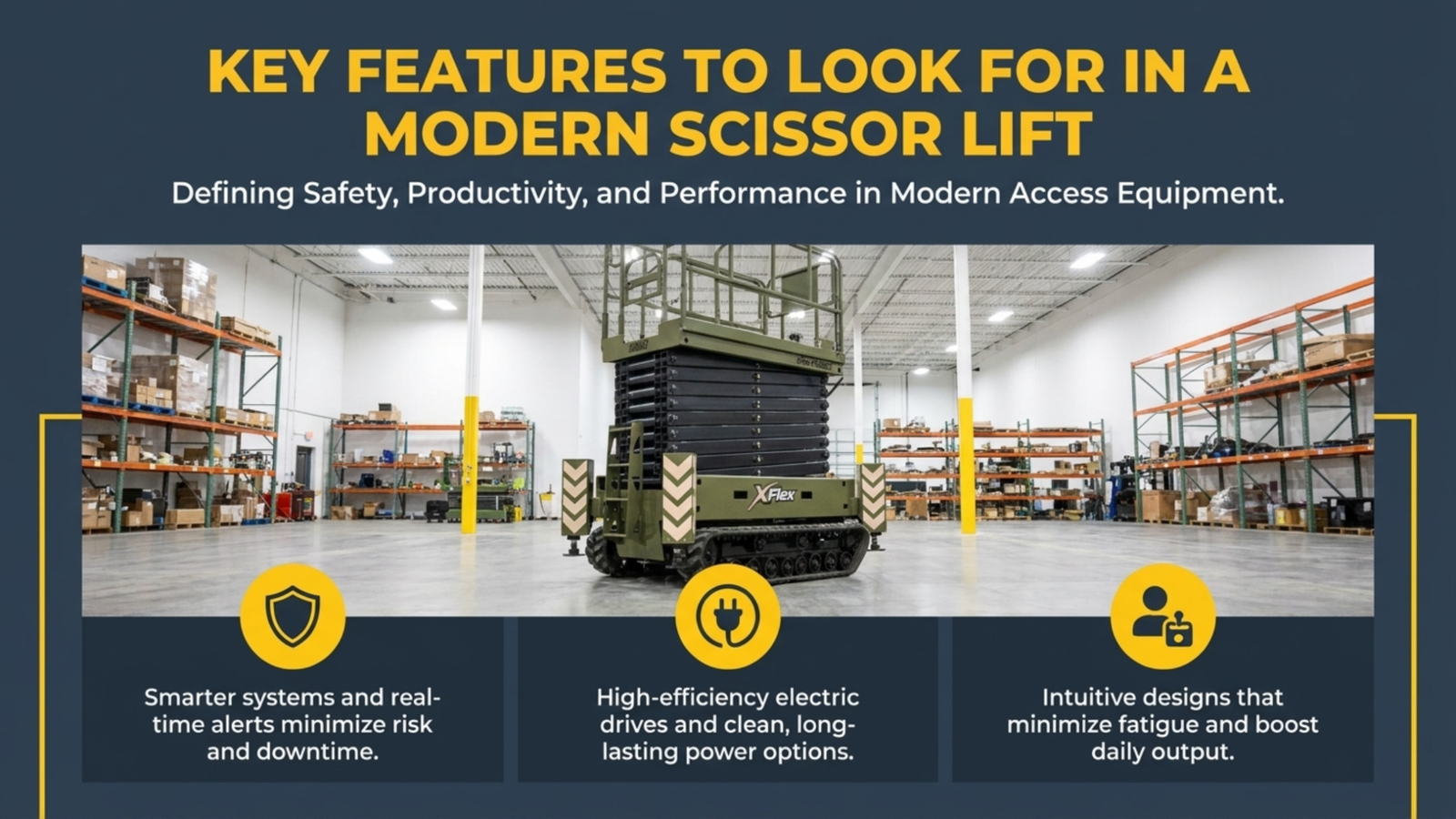
A scissor lift is a serious investment, and the right machine can shape how safely and efficiently your team works at height for years to come. Whether you manage a warehouse, run a construction site, or handle facility maintenance, the features built into a scissor lift directly affect productivity, safety, and your operating costs. Modern machines offer far more than a simple platform that goes up and down. They bring smarter safety systems, better drive performance, cleaner power options, and onboard technology that helps you stay ahead of problems before they cause downtime. Knowing what to look for helps you match the machine to the job rather than settling for whatever happens to be available. This guide walks through five key features that separate a capable, dependable scissor lift from one that holds your work back, giving you a practical framework for your next purchase or rental decision.
1. Platform Capacity and Working Height
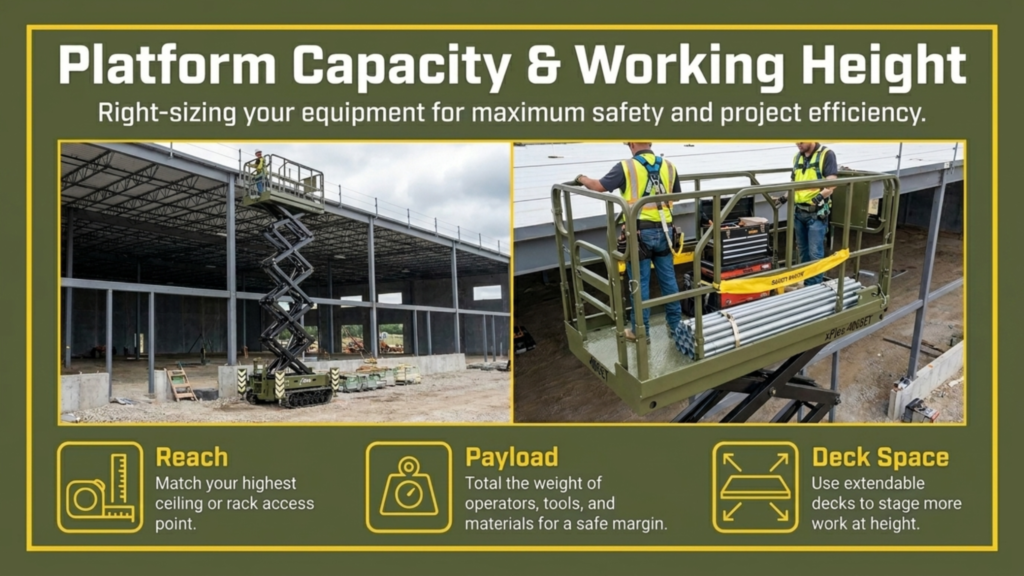
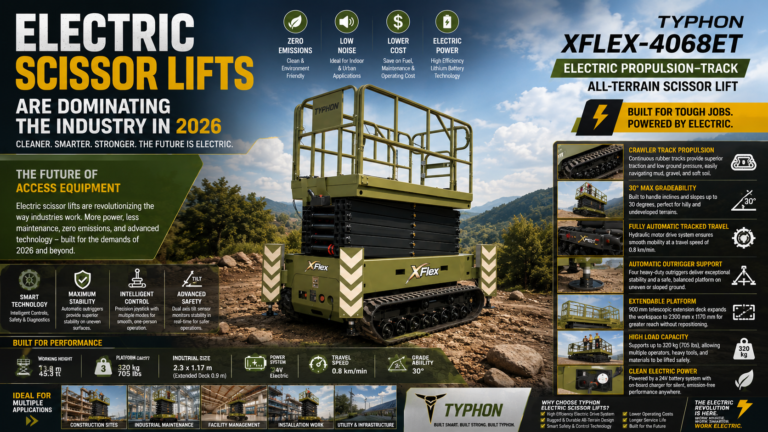
The first thing to evaluate in any scissor lift is whether it offers the working height and platform capacity your tasks actually demand. Working height tells you how high operators can reach, and it must account for the tallest point you need to access, whether that means ceiling-mounted equipment, upper-level racking, or elevated structural work. Choosing a lift that falls short forces awkward workarounds or a second machine you should not have needed, while a lift with too much reach for a low-ceiling space wastes money and complicates storage. Matching the height to your real environment keeps the machine practical and productive.
Platform capacity matters just as much, because it determines how much weight the lift can safely carry, including operators, tools, and materials. Underestimating this figure is a common and dangerous mistake, since an overloaded platform compromises stability and safety. You need to add up the combined weight of everyone and everything that will ride on the platform, then choose a capacity that handles your heaviest realistic load with a comfortable margin.
Platform size also deserves attention, especially for jobs that require multiple workers or bulky materials. Many modern lifts include extendable decks that expand the working area without sacrificing stability, letting crews reach farther and stage more materials at height. When you align working height, capacity, and platform size with the specific demands of your work, operators can safely reach elevated areas while carrying everything they need, completing tasks in fewer trips and with less strain.
2. Advanced Safety Features
Safety should sit at the center of any scissor lift decision, because working at height carries real risk and the right protective systems make a measurable difference. Modern scissor lifts come equipped with safety features engineered to protect operators and improve overall jobsite safety, and understanding these systems helps you compare machines on what matters most. A lift that looks capable on paper but lacks robust safety technology is a liability waiting to surface, while a well-protected machine gives operators the confidence to work efficiently and securely throughout long shifts.
Today’s machines integrate a range of safeguards that work together to prevent accidents and respond quickly when something goes wrong. When evaluating safety, look closely at the following features:
- Overload protection that detects excessive weight and prevents operation until the load is corrected
- Tilt sensors that warn operators or halt movement when the machine sits on unstable or uneven ground
- Emergency lowering systems that bring the platform down safely if primary power fails
- Secure guardrails and gates that meet current standards and prevent falls from the elevated platform
- Pothole protection that limits the chassis clearance when the platform is raised, improving stability
Beyond the hardware, consider how intuitive these systems are for operators to understand and use. Safety features only deliver their full value when crews know how they work and trust them in daily operation. Clear alarms, simple emergency controls, and visible indicators all contribute to a safer worksite. Prioritizing a scissor lift with comprehensive, well-designed safety systems protects your people, reduces the risk of costly incidents, and supports the compliance standards your operation must meet.
3. Maneuverability and Drive Performance
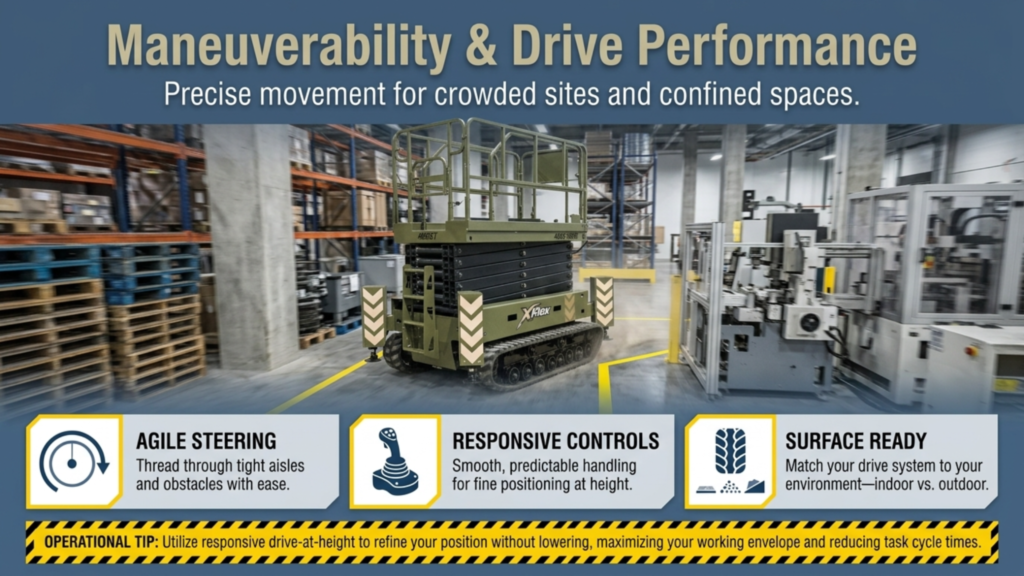
A scissor lift spends as much time moving around a site as it does lifting, so maneuverability and drive performance have a major impact on daily productivity. A high-quality machine should move easily through tight spaces, navigate around obstacles, and position itself precisely where the work needs to happen. Smooth, responsive controls let operators make fine adjustments without overcorrecting, which matters enormously in crowded warehouses and busy construction sites where space is limited and other equipment and workers share the floor. A lift that handles awkwardly wastes time and raises the risk of collisions.
Steering and turning ability deserve particular attention when you compare models. A tight turning radius lets operators thread through narrow aisles and reposition without constant back-and-forth shuffling, while stable driving performance keeps the machine planted and predictable even on slightly uneven surfaces. Some machines offer the ability to drive at partial elevation, which speeds up work that requires frequent repositioning at height, though this should always be done within the manufacturer’s safe operating limits.
Ground conditions also shape which drive system suits your needs. Smooth indoor floors call for different capabilities than rough outdoor terrain, and choosing a machine matched to your environment prevents the frustration of a lift that struggles where you need it most. Models built for tougher ground offer greater clearance and traction, while compact electric units excel on finished indoor surfaces. When you select a scissor lift with strong maneuverability and dependable drive performance suited to your conditions, operators work faster, move more confidently, and complete jobs with less wasted effort across every shift.
4. Power Source and Energy Efficiency
The power source behind a scissor lift influences far more than how it runs; it affects operating costs, jobsite suitability, and even where you can safely use the machine. The choice typically comes down to electric or engine-powered models, and each fits particular environments. Electric scissor lifts run quietly, produce no emissions, and suit indoor work where air quality and noise matter, making them the standard choice for warehouses, retail spaces, and facility maintenance. Engine-powered models, whether diesel or dual-fuel, deliver the power and endurance needed for demanding outdoor and rough-terrain applications where charging access is limited.
Energy efficiency has become a defining feature of modern machines, and it pays dividends across the working life of the equipment. Electric lifts increasingly use advanced battery systems that provide longer operating times on a single charge, reducing interruptions and keeping crews productive through full shifts. Lower energy consumption translates directly into reduced operating costs, and quieter, emission-free operation often opens up worksites where older machines simply could not run. For operations focused on sustainability, the environmental benefits of efficient electric models add further value.
When weighing power options, think carefully about where and how you will use the machine most often. An electric lift that excels indoors may struggle outdoors on soft ground, while an engine-powered unit is impractical in an enclosed space. Consider charging infrastructure, expected runtime, fuel availability, and the typical conditions of your sites. Matching the power source and efficiency profile to your real working environment ensures reliable performance, controls your long-term costs, and keeps the machine suited to the demands you place on it every day.
5. Maintenance, Durability, and Smart Technology
Durability and ease of maintenance determine how long a scissor lift serves you and how much it costs to keep running, making them essential considerations for anyone focused on long-term value. A well-built machine with quality components withstands the daily wear of demanding worksites, resisting the damage that pulls equipment out of service. When evaluating durability, look at build quality, the reputation of the manufacturer, and how the machine holds up under the conditions you expect. A rugged, dependable lift protects your investment and keeps work moving, while a fragile machine becomes a recurring source of frustration and expense.
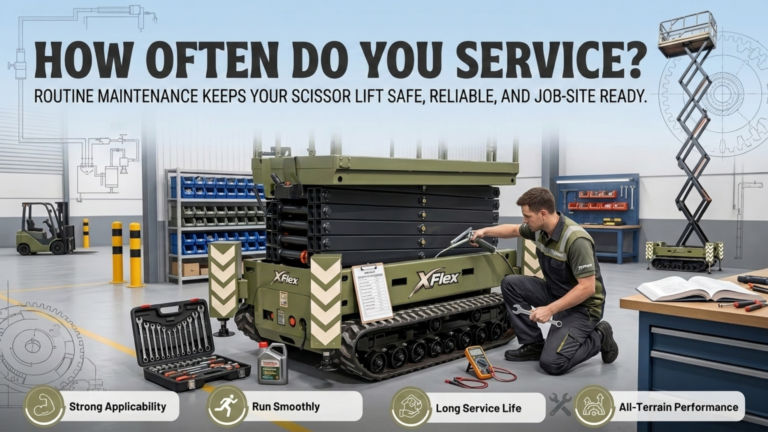
Ease of maintenance matters just as much as raw toughness, because even the best machine needs regular care. Accessible service points, straightforward routine maintenance, and readily available parts all reduce the time and cost of keeping a lift in top condition. A machine that is difficult to service spends more time idle and drives up labor costs, so practical maintenance design pays for itself over the equipment’s life.
Smart technology has transformed how modern scissor lifts are maintained and managed. Many machines now include onboard diagnostics and monitoring systems that track performance, flag developing issues, and alert you to maintenance needs before they become breakdowns. These systems help you move from reactive repairs to planned, preventive care, cutting unplanned downtime and extending machine life. Telematics features can also track usage, location, and operating hours across a fleet, giving managers the data they need to schedule service and make smarter decisions. Choosing a lift that combines durability, easy maintenance, and intelligent monitoring keeps your equipment reliable and your operation running smoothly.
Conclusion
Choosing the right modern scissor lift comes down to matching the machine’s features to the real demands of your work. The five areas covered here work together: platform capacity and working height that fit your tasks, advanced safety systems that protect your team, strong maneuverability and drive performance that keep work flowing, an efficient power source suited to your environment, and the durability and smart technology that minimize downtime over the long haul. Weakness in any one area can undermine the others and hold your operation back. Start by assessing the specific conditions of your sites and the tasks your crews perform most often, then compare each machine against those needs with safety and reliability as your priorities. Take the time to make an informed, deliberate choice, and you will gain a dependable scissor lift that keeps your people safe, controls your costs, and helps your projects stay on schedule shift after shift.