
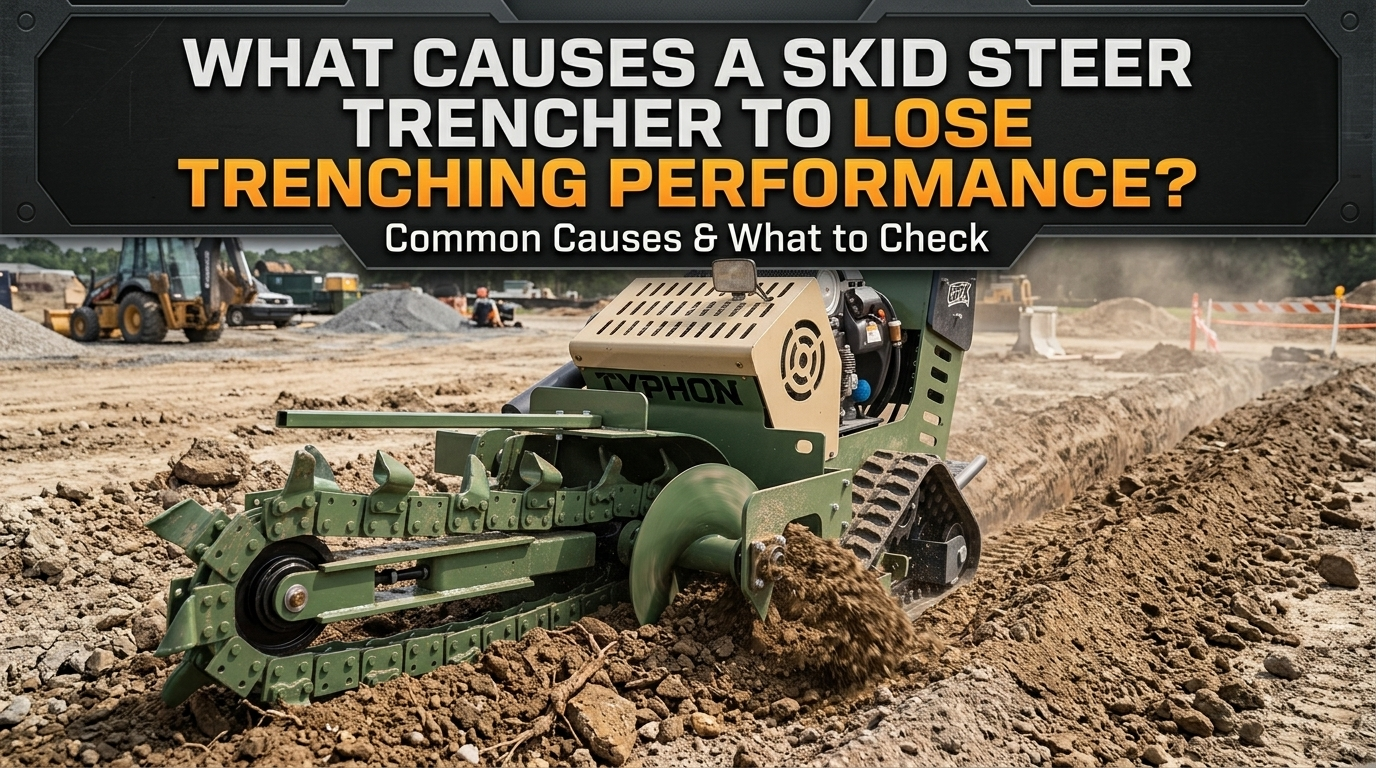
What Causes a Skid Steer Trencher to Lose Trenching Performance?
A skid steer trencher is built to cut clean, consistent trenches with confidence, so when its performance starts to slip, the change is easy to feel. The chain slows, the cutting takes longer, and trenches that once came easily begin to fight back. When that happens, the cause usually traces to a handful of common issues, and knowing what to look for helps you restore the machine’s performance quickly rather than pushing through a problem that only gets worse.
This guide explains what causes a skid steer trencher to lose trenching performance across five practical areas. You will learn how low hydraulic flow or pressure undermines cutting force, how worn digging components slow the work, how incorrect chain speed reduces productivity, how difficult soil raises resistance, and how poor maintenance and material buildup interfere with operation. By the end, you will know exactly where to look when your trencher stops performing the way it should.
Low Hydraulic Flow or Pressure
Insufficient hydraulic flow or pressure is one of the most common reasons a skid steer trencher loses performance, and for good reason. The trencher has no engine of its own, relying entirely on the host machine’s hydraulic system to power its digging action. Flow drives the speed of the digging chain, while pressure supplies the force needed to cut through resistance. When either falls short of what the trencher motor requires, the attachment cannot deliver the digging force and chain speed it was built to provide, and cutting performance drops noticeably.
Several problems within the hydraulic system can cause this shortfall. A worn pump gradually loses its ability to move fluid at the required rate, so the flow reaching the trencher motor declines over time. Restricted lines, whether from kinks, internal damage, or blockages, limit how freely fluid travels to the attachment and choke off the supply it depends on. Broader hydraulic system issues, including low fluid levels, worn valves, or internal leaks, can also prevent the system from delivering the flow and pressure the trencher needs.
The result of any of these problems is a trencher that cannot reach its expected performance. The chain may turn too slowly, the digging force may fade under load, and the machine may struggle with ground it once handled easily. When you notice this kind of decline, the hydraulic system is one of the first places to check. Confirming that the host machine supplies adequate flow and pressure, and that the pump, lines, and fluid are in good condition, is a practical first step toward restoring the cutting power the trencher is designed to deliver.
Worn or Damaged Digging Components
The digging components do the actual work of breaking through the soil, so their condition has a direct effect on how well the trencher cuts. Dull teeth, worn cutting chains, or damaged digging parts make it far harder to break through the ground efficiently, and the drop in performance can be gradual enough that operators may not notice until the machine is clearly struggling. Sharp, sound components slice into the soil cleanly, while worn ones scrape and drag, forcing the trencher to work harder for a poorer result.
Teeth are the first place wear shows up. As the cutting teeth dull, they lose the sharp edges that bite into the ground, so instead of cutting cleanly, they wear at the soil and demand more force to make progress. A worn cutting chain compounds the problem, since a chain that has stretched or lost its integrity cannot present the teeth to the soil the way it should. Damaged digging parts, whether bent, cracked, or broken, further reduce the trencher’s ability to cut consistently and can place added strain on the rest of the mechanism.
Regular inspection and timely replacement of worn components are the surest way to maintain consistent trenching performance. Checking the teeth, chain, and digging parts on a routine basis lets you catch wear before it seriously affects the cut, while replacing components that have reached the end of their service life restores the clean, efficient cutting the machine is meant to deliver. Rather than pushing a trencher with dull, worn parts and accepting slower, harder work, keeping the digging components in good condition keeps the trencher cutting the way it should. That attention protects both your productivity and the surrounding parts of the digging mechanism.
Incorrect Chain Speed
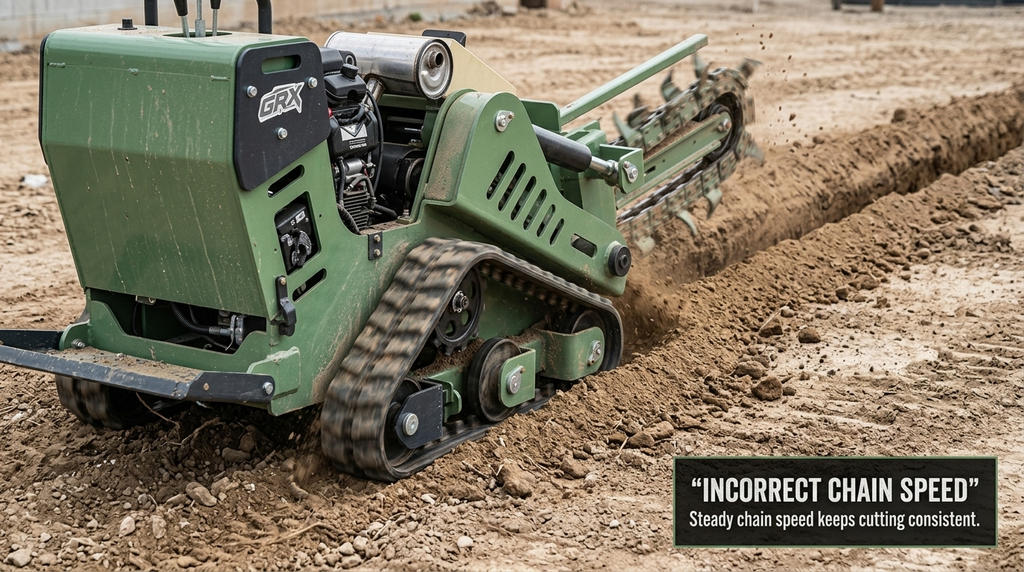
The digging chain needs to operate at an appropriate speed for the soil and cutting conditions, and when that speed is wrong, trenching performance suffers even if every other part of the machine is sound. Chain speed is what carries the cutting teeth through the soil, so getting it right is central to how efficiently the trencher works. Different ground calls for the chain to move at a speed suited to the material, and a mismatch between the two can undermine an otherwise capable machine.
When the chain moves too slowly or inconsistently, both trenching productivity and cutting performance decline. A chain that runs too slowly does not carry the teeth through the soil at a productive pace, so the trench takes longer to cut and the operation loses efficiency. Inconsistent chain movement is equally troublesome, since a chain that surges and slows rather than holding a steady speed cannot cut cleanly or predictably. The trench ends up taking more time and effort than it should, and the quality of the cut can suffer along the way.
Getting chain speed right means matching it to the conditions in front of you. The reason inconsistent speed often points to another problem is that the chain relies on steady hydraulic flow to hold its pace, so erratic movement can signal a flow issue worth investigating. When the chain runs at an appropriate, consistent speed for the soil, the teeth cut steadily, the trench progresses at a productive rate, and the machine delivers the performance it was designed for. Paying attention to how the chain is running, and whether its speed suits the ground you are cutting, helps you keep trenching productivity where it belongs.
Difficult or Changing Soil Conditions
Soil conditions have an enormous influence on trenching performance, and ground that is harder or more demanding than usual can slow even a well-maintained trencher. Hard clay, compacted ground, rocks, roots, and wet soil all place significantly more resistance on the machine than soft, workable earth. When the trencher meets that resistance, it has to work harder to cut through, and the pace of the work naturally slows to reflect the tougher conditions.
Each type of difficult ground challenges the trencher in its own way:
- Hard clay and compacted ground, which resist the cutting chain and demand more force to break through
- Rocks, which present solid obstacles that the chain must work around or through, slowing progress and stressing the digging components
- Roots, which grip and resist cutting, requiring sustained power to work past them
- Wet soil, which can cling to the chain and digging mechanism, adding to the effort and interfering with clean cutting
Performance may also vary when ground conditions are substantially different from those the machine was set up to handle. A trencher configured for softer soil will naturally struggle when it hits hard, rocky, or heavily rooted ground, and the drop in performance in those conditions is often a reflection of the material rather than a fault in the machine. Recognizing this helps you set realistic expectations and respond appropriately, whether by adjusting your approach, checking that the hydraulic system can maintain performance under the added load, or confirming the machine is suited to the ground you are cutting. When you understand how demanding soil affects the trencher, you can tell the difference between a genuine problem and the natural effect of tough conditions, which keeps your trenching work grounded in what the ground actually allows.
Poor Maintenance and Material Buildup
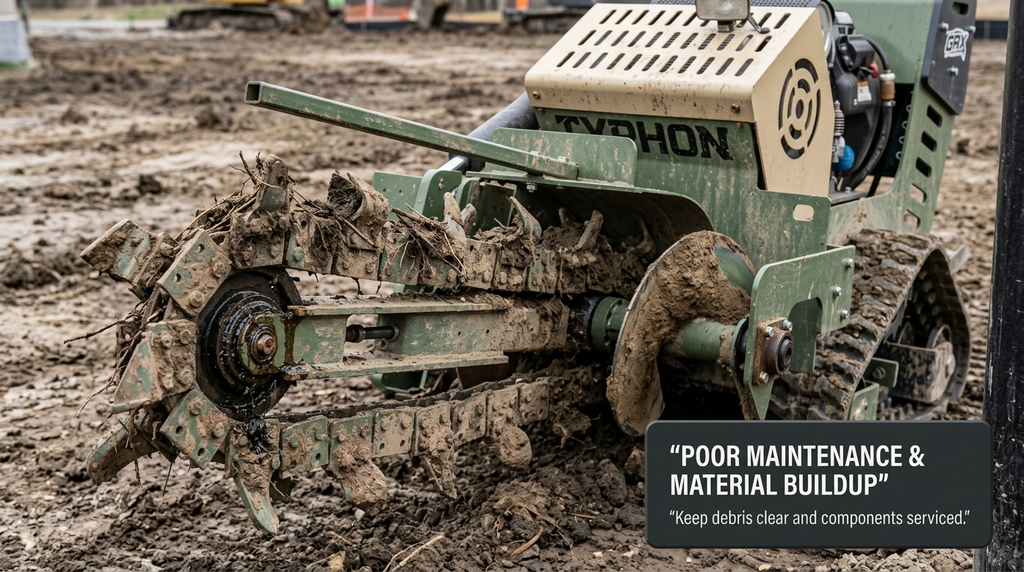
Poor maintenance and material buildup quietly undermine trenching performance in ways that are easy to overlook but simple to prevent. Debris around the chain, sprocket, or digging mechanism can interfere with normal operation, packing into spaces where the components need to move freely and adding drag that slows the cut. Soil, roots, and other material can accumulate during trenching, and when that buildup is left unchecked, it hampers the very parts responsible for cutting cleanly through the ground.
Beyond debris, a range of neglected maintenance issues can each contribute to reduced performance:
- Neglected lubrication, which allows friction and wear to build at moving points, reducing efficiency and shortening component life
- Loose components, which can shift or vibrate during operation, disrupting the smooth movement the trencher depends on
- Clogged hydraulic filters, which restrict fluid flow through the system and can starve the trencher of the flow it needs
- General wear left unaddressed, which accumulates across the machine and gradually pulls down overall performance
Any one of these issues can chip away at how well the trencher cuts, and together they can turn a capable machine into a frustrating one. Clogged hydraulic filters deserve particular attention, since restricted flow affects the trencher’s power directly, tying maintenance neglect back to the hydraulic performance the attachment relies on.
The good news is that these problems are among the most preventable causes of lost performance. Keeping the chain, sprocket, and digging mechanism clear of debris, lubricating the machine as required, tightening loose components, and servicing hydraulic filters on schedule all help the trencher run the way it should. Consistent, straightforward maintenance keeps the machine cutting reliably and prevents the slow decline that neglect invites, protecting both your productivity and the working life of the equipment.
Conclusion
A skid steer trencher can lose performance for several reasons, and knowing them makes troubleshooting far more straightforward. Low hydraulic flow or pressure reduces the digging force and chain speed the attachment depends on, while worn or damaged digging components make cutting harder than it should be. Incorrect chain speed cuts into productivity, difficult or changing soil places heavier demands on the machine, and poor maintenance combined with material buildup quietly undermines reliable operation. Most of these causes are identifiable and fixable once you know where to look.
When your trencher stops cutting the way it used to, work through these areas methodically. Check the hydraulic flow and pressure, inspect the teeth and chain, confirm the chain speed suits the ground, account for the soil conditions, and keep the machine clean and well maintained. When you address these factors consistently, you keep the trencher cutting cleanly, efficiently, and dependably. Reach out to discuss how to keep your skid steer trencher performing at its best.
Frequently Asked Questions
1. Why has my skid steer trencher suddenly lost digging power?
A sudden loss of digging power most often points to a hydraulic issue, since the trencher relies entirely on the host machine’s hydraulic system for its cutting force and chain speed. Flow drives how fast the digging chain turns, while pressure supplies the force needed to cut through resistance, so when either falls short of what the trencher motor requires, digging power drops noticeably. Several hydraulic problems can cause this. A worn pump gradually loses its ability to move fluid at the required rate, restricted lines from kinks or blockages choke off the supply reaching the attachment, and broader issues such as low fluid levels, worn valves, or internal leaks can all prevent the system from delivering adequate flow and pressure. Beyond the hydraulics, a sudden change can also come from hitting much tougher ground or from a clogged hydraulic filter that restricts flow through the system. When you notice a drop in power, start by checking that the host machine supplies adequate flow and pressure, then confirm the pump, lines, fluid level, and filters are in good condition. Working through these systematically usually reveals the cause and points you toward restoring the cutting power the trencher is designed to deliver.
2. How do I know when the digging teeth or chain need replacing?
The clearest sign that your digging teeth or chain need attention is a gradual decline in cutting efficiency, where the trencher works harder yet cuts more slowly than it once did. As cutting teeth dull, they lose the sharp edges that bite into the ground, so instead of slicing cleanly they scrape and drag, demanding more force to make progress. A regular visual inspection tells you a great deal here. Look for teeth that appear rounded, flattened, or visibly worn rather than sharp, since these no longer cut effectively. Check the chain as well for signs of stretching, wear, or loss of integrity, because a chain that has stretched cannot present the teeth to the soil the way it should. Damaged digging parts that are bent, cracked, or broken also call for replacement, as they reduce cutting consistency and can strain the rest of the mechanism. The practical approach is to inspect the teeth, chain, and digging parts on a routine basis so you catch wear before it seriously affects the cut. Replacing components that have reached the end of their service life restores clean, efficient cutting, whereas pushing a trencher with dull, worn parts only means slower, harder work and added stress on the surrounding components.
3. What is the right chain speed for trenching, and why does it matter?
The right chain speed is one suited to the soil and cutting conditions in front of you, since the chain speed is what carries the cutting teeth through the ground. Different materials call for the chain to move at a pace matched to the conditions, and getting that match right is central to efficient trenching. Chain speed matters because it directly affects both productivity and cutting quality. When the chain moves too slowly, it does not carry the teeth through the soil at a productive rate, so the trench takes longer to cut and the operation loses efficiency. Inconsistent chain movement is equally problematic, because a chain that surges and slows rather than holding a steady speed cannot cut cleanly or predictably, which affects both the pace and the quality of the trench. It is worth noting that inconsistent chain speed often signals another underlying issue, since the chain relies on steady hydraulic flow to hold its pace. Erratic movement can therefore point to a flow problem worth investigating. When the chain runs at an appropriate, consistent speed for the ground, the teeth cut steadily, the trench progresses at a productive rate, and the machine delivers the performance it was built for.
4. Why does my trencher struggle in certain soil conditions?
Your trencher struggles in certain soils because some ground places far more resistance on the machine than soft, workable earth. Hard clay and compacted ground resist the cutting chain and demand more force to break through. Rocks present solid obstacles that the chain must work around or through, slowing progress and stressing the digging components. Roots grip and resist cutting, requiring sustained power to work past them, and wet soil can cling to the chain and digging mechanism, adding to the effort and interfering with a clean cut. When the trencher meets this kind of resistance, it naturally works harder and cuts more slowly, and that slower pace often reflects the difficulty of the ground rather than a fault in the machine. Performance can also vary when conditions differ substantially from those the trencher was set up to handle, since a machine configured for softer soil will struggle when it hits hard, rocky, or heavily rooted ground. Recognizing this helps you distinguish a genuine problem from the natural effect of tough conditions. When you understand how demanding soil affects the trencher, you can respond appropriately, whether by adjusting your approach or by confirming the hydraulic system can maintain performance under the added load, keeping your expectations grounded in what the ground actually allows.
5. How can regular maintenance prevent loss of trenching performance?
Regular maintenance prevents loss of trenching performance by addressing the small issues that quietly build into bigger ones. Debris around the chain, sprocket, or digging mechanism packs into spaces where components need to move freely and adds drag that slows the cut, so keeping these areas clear is a simple but valuable habit. Neglected lubrication allows friction and wear to build at moving points, reducing efficiency and shortening component life, while loose components can shift or vibrate during operation and disrupt the smooth movement the trencher depends on. Clogged hydraulic filters deserve particular attention, because they restrict fluid flow through the system and can starve the trencher of the flow it needs to cut with full power, tying maintenance directly to hydraulic performance. General wear left unaddressed accumulates across the machine and gradually pulls down overall performance. The encouraging part is that these are among the most preventable causes of lost performance. Keeping the chain, sprocket, and digging mechanism clear of debris, lubricating the machine as required, tightening loose components, and servicing hydraulic filters on schedule all help the trencher run the way it should. Consistent, straightforward maintenance keeps the machine cutting reliably and prevents the slow decline that neglect invites, protecting both your productivity and the working life of the equipment.