What Is a Scissor Lift Used For? (Complete 2026 Guide)
Have you ever looked up at construction workers effortlessly reaching towering heights, or seen maintenance crews performing tasks high above the ground, and wondered how they do it safely and efficiently? Chances are, you’ve witnessed a scissor lift in action. These versatile pieces of equipment are ubiquitous in modern industries, playing a crucial role in countless operations that require elevated access. Far from being a niche tool, the scissor lift is a workhorse, a staple on job sites, in warehouses, and even at event venues worldwide.
But what exactly is a scissor lift, and what makes it so indispensable? This isn’t just a simple platform; it’s an engineered marvel designed for stability, reach, and safety. If you’ve ever been curious about the mechanics behind their impressive vertical reach, the diverse range of tasks they facilitate, or the sheer variety of models available, you’ve come to the right place. This comprehensive 2026 guide will demystify the scissor lift, exploring its fundamental design, its myriad applications across various sectors, and why it remains a preferred choice for elevated work. Whether you’re a professional considering a purchase, a student learning about industrial equipment, or simply someone intrigued by the world of machinery, prepare to elevate your understanding of this essential piece of equipment. Let’s delve into the world of scissor lifts and uncover their remarkable utility.
What is a Scissor Lift? Understanding Its Design and Functionality
A scissor lift, at its core, is a mobile elevated work platform (MEWP) designed to lift workers and equipment vertically. Unlike boom lifts that extend outward and then upward, scissor lifts primarily offer vertical elevation. The defining characteristic that gives it its name is the crisscrossing, accordion-like mechanism that supports the work platform. This “scissor” mechanism consists of linked, folding supports that extend and contract, pushing the platform straight up into the air.
The beauty of this design lies in its simplicity and stability. As the scissor legs extend, they provide a broad, stable base, allowing the platform to ascend smoothly and safely. Most scissor lifts are equipped with a spacious platform, often featuring guardrails, that can accommodate multiple workers, their tools, and materials. This makes them ideal for tasks requiring a larger workspace at height, as opposed to the more confined baskets of boom lifts.
Key Components and How They Work:
- Platform: The primary workspace where operators and materials are positioned. It typically has guardrails for safety and a non-slip surface. Many platforms can extend outwards slightly, offering a bit more reach over obstacles.
- Scissor Mechanism: The intricate system of interconnected metal supports that expand and contract. This is the heart of the lift’s vertical movement.
- Base/Chassis: The foundation of the lift, housing the engine (electric or internal combustion), hydraulic system, controls, and wheels. The base provides stability and mobility.
- Hydraulic System: The power behind the lift. Hydraulic cylinders, filled with fluid, push and pull the scissor arms, causing the platform to rise or descend. A pump generates the necessary pressure.
- Controls: Operators manage the lift’s movement (up, down, forward, backward, steering) from a panel on the platform itself, and often from a ground-level control panel as well for added safety and convenience.
- Power Source: Scissor lifts can be powered by various means:
- Electric (Battery-powered): Ideal for indoor use due to zero emissions and quieter operation. Common in warehouses, retail, and indoor construction.
- Diesel/Gasoline: Suited for outdoor, rugged terrain, and heavy-duty applications where power and run time are critical.
- Bi-Energy: Offers the flexibility of both electric and internal combustion engines, allowing for indoor and outdoor use.
Types of Scissor Lifts:
While the basic principle remains the same, scissor lifts come in various forms to suit different environments and tasks:
- Slab Scissor Lifts: These are typically electric-powered, have non-marking tires, and are designed for smooth, flat surfaces like concrete slabs in warehouses or finished indoor spaces. They are compact and maneuverable.
- Rough Terrain Scissor Lifts: Equipped with robust diesel engines, four-wheel drive, and aggressive, lugged tires, these lifts are built to tackle uneven, muddy, or sloped outdoor construction sites. They often have higher weight capacities and larger platforms.
- Narrow Scissor Lifts: Specifically designed to fit through standard doorways or tight aisles, sacrificing some platform space for increased maneuverability in confined areas.
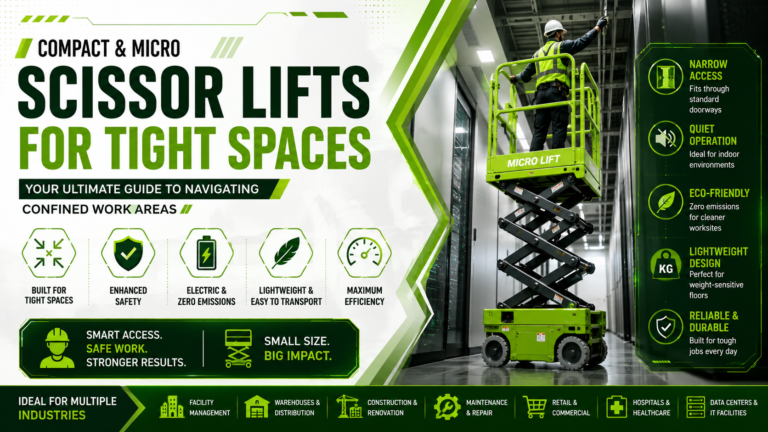
- Compact Scissor Lifts: Smaller versions of slab lifts, ideal for very tight spaces and lighter tasks, often used for facility maintenance or retail display changes.
Understanding these fundamental aspects of a scissor lift’s design and operation is the first step in appreciating its immense value across numerous industries. It’s not just a machine that goes up; it’s a carefully engineered solution for safe and efficient elevated access.
Key Benefits of Utilizing a Scissor Lift
The widespread adoption of scissor lifts across diverse industries isn’t accidental; it’s a direct result of the significant advantages they offer over traditional methods of elevated access. When compared to ladders, scaffolding, or even other types of MEWPs, scissor lifts present a compelling case for efficiency, safety, and versatility.
1. Enhanced Safety: Safety is paramount on any job site, and scissor lifts are designed with this in mind. They provide a stable, guarded platform that significantly reduces the risk of falls compared to ladders. The guardrails enclose the work area, and the platform’s large size allows workers to maintain a comfortable and secure stance. Many models include safety features like emergency stop buttons, tilt sensors, overload protection, and descent alarms. Unlike scaffolding, which requires time-consuming assembly and disassembly, a scissor lift is ready to operate quickly, minimizing exposure to potential risks associated with setup. This inherent stability and integrated safety features make them a preferred choice for tasks at height, contributing to a safer work environment and reducing accident rates.
2. Increased Efficiency and Productivity: Time is money, and scissor lifts are champions of efficiency. Their ability to quickly and smoothly raise workers and materials to the desired height dramatically speeds up tasks. Instead of repeatedly climbing ladders or dismantling and reassembling scaffolding, operators can simply drive the lift into position, ascend, complete the work, and move to the next spot. The spacious platform allows multiple workers to collaborate simultaneously, and the capacity to carry tools and materials in one trip eliminates the need for constant trips up and down. This streamlined workflow translates directly into higher productivity, allowing projects to be completed faster and within budget. For example, installing overhead lighting in a large warehouse becomes a matter of minutes per fixture rather than an hour with ladders.
3. Versatility Across Applications: One of the most compelling benefits of a scissor lift is its remarkable versatility. As we’ll explore in detail, these machines are not confined to a single industry or task. From construction and industrial maintenance to retail, film production, and even aviation, their ability to provide stable vertical access makes them invaluable. Whether it’s painting a high ceiling, installing HVAC ducts, retrieving inventory from tall shelves, cleaning windows, or setting up stage lighting for an event, there’s a scissor lift model suited for the job. The availability of electric models for indoor use and rough-terrain models for outdoor challenges further enhances their adaptability, making them a truly multi-purpose piece of equipment.
4. Cost-Effectiveness: While the initial investment or rental cost of a scissor lift might seem significant, its long-term cost-effectiveness is undeniable. By improving safety, reducing labor hours, and accelerating project timelines, scissor lifts often pay for themselves quickly. The reduction in potential accident-related costs (medical bills, insurance claims, lost work time) alone can be substantial. Furthermore, their durability and relatively low maintenance requirements contribute to a favorable total cost of ownership. For businesses that frequently perform elevated work, owning or renting a scissor lift can be a far more economical solution than continuously hiring specialized crews or relying on less efficient, more labor-intensive methods. The ability to complete tasks faster with fewer personnel directly impacts the bottom line.
5. Ease of Operation and Maneuverability: Modern scissor lifts are designed for intuitive operation. With user-friendly controls, even novice operators can quickly learn to maneuver and operate the lift safely after proper training. Many models feature proportional controls, allowing for precise positioning and smooth movement. Their compact footprint, especially for slab and narrow models, allows them to navigate tight spaces, narrow aisles, and crowded job sites where larger equipment might struggle. This ease of use and maneuverability minimizes setup time and allows workers to position themselves exactly where needed, further contributing to efficiency.
In summary, the scissor lift is more than just a lifting device; it’s a strategic asset that enhances safety, boosts productivity, offers unparalleled versatility, and proves to be a cost-effective solution for a wide array of elevated tasks. Understanding these core benefits is key to appreciating why they are such an integral part of modern industrial and commercial operations.
How to Get Started with Scissor Lift Usage
Embarking on the journey of using a scissor lift, whether for a one-off project or regular operations, requires a structured approach focused on safety, efficiency, and legal compliance. It’s not simply a matter of hopping on and pressing a button. Proper preparation, training, and adherence to best practices are crucial for a successful and accident-free experience.
1. Assess Your Needs and Choose the Right Lift: The first and most critical step is to accurately assess the requirements of your task. Ask yourself:
- What is the maximum working height required? (Remember, working height is typically platform height plus 6 feet/1.8 meters for an average person’s reach).
- What is the maximum weight capacity needed? (Consider workers, tools, and materials).
- What type of terrain will the lift operate on? (Smooth indoor slab, rough outdoor ground, sloped surfaces?). This will determine if you need an electric slab lift or a rough-terrain model.
- Are there any space constraints? (Narrow doorways, tight aisles, overhead obstacles?). This will influence the lift’s width and overall dimensions.
- What is the power source availability? (Do you need electric for indoor, or diesel for outdoor without power access?).
- How long will you need the lift? (This will help decide between renting or purchasing).
Based on these answers, you can select the most appropriate type and model of scissor lift. For example, if you’re changing lightbulbs in a retail store, a compact electric slab lift might be perfect. If you’re installing steel beams on a muddy construction site, a diesel rough-terrain scissor lift with four-wheel drive would be essential. Consulting with a reputable rental company or dealer can provide expert guidance in this selection process.
2. Obtain Proper Training and Certification: Operating a scissor lift without proper training is not only dangerous but also illegal in most jurisdictions. OSHA (Occupational Safety and Health Administration) in the US, and similar regulatory bodies globally, mandate that all operators of MEWPs, including scissor lifts, must be trained and certified. This training typically covers:
- Machine-specific knowledge: Understanding the controls, features, and limitations of the specific lift model.
- Safe operating procedures: Pre-operation inspection, proper setup, safe movement, emergency procedures, and shutdown.
- Hazard recognition: Identifying potential risks like overhead power lines, unstable ground, drop-offs, and pinch points.
- Fall protection: When and how to use personal fall arrest systems (PFAS) if required by the manufacturer or specific job site conditions (though many scissor lifts do not require a harness if the guardrails are sufficient).
- Relevant regulations: Understanding local, state, and federal safety standards.
Training can be provided by certified instructors, often through rental companies, equipment dealers, or specialized training organizations. Upon successful completion, operators receive a certification card, which should be kept on hand while operating the equipment.
3. Conduct a Thorough Pre-Operation Inspection: Before every shift or use, a comprehensive pre-operation inspection (often called a “walk-around inspection”) is mandatory. This critical step ensures the lift is in safe working order and helps identify any potential mechanical issues before they become hazards. The inspection should include checking:
- Fluid levels: Hydraulic fluid, engine oil, coolant (for combustion engines).
- Tires: Proper inflation, condition, and lug nut tightness.
- Controls: Functionality of all platform and ground controls, including emergency stop buttons.
- Safety devices: Guardrails, gates, horn, alarms, lights, tilt sensors, and limit switches.
- Structural integrity: No visible damage, cracks, dents, or missing parts on the platform, scissor arms, or chassis.
- Decals and manuals: Ensure all safety decals are legible and the operator’s manual is on board.
- Battery charge: For electric lifts.
Any identified deficiencies must be reported immediately, and the lift should not be used until repairs are made by a qualified technician.
4. Plan Your Work Area and Site Preparation: Before moving the lift, survey the work area for potential hazards:
- Overhead obstructions: Power lines, pipes, beams, lighting fixtures. Maintain safe clearance distances.
- Ground conditions: Ensure the surface is firm, level, and capable of supporting the lift’s weight. Avoid soft spots, potholes, or excessive slopes. Use outriggers or stabilizers if provided and necessary.
- Traffic and personnel: Barricade the work area to prevent unauthorized access and protect ground personnel.
- Weather conditions: Do not operate in high winds, heavy rain, lightning, or icy conditions.
- Proximity to other equipment: Maintain safe distances from other machinery and vehicles.
5. Understand and Adhere to Load Capacities: Never exceed the manufacturer’s rated load capacity for the platform. This includes the combined weight of personnel, tools, and materials. Overloading can lead to instability, mechanical failure, and serious accidents. Always distribute the load evenly on the platform.
By meticulously following these steps, from initial assessment and proper training to diligent pre-operation checks and site planning, you can ensure that your experience with a scissor lift is as safe and productive as possible. Remember, safety is a continuous commitment, not a one-time event.
Best Practices for Safe and Efficient Scissor Lift Operation
Operating a scissor lift effectively goes beyond simply knowing how to use the controls; it involves a commitment to safety, adherence to established protocols, and a proactive approach to potential hazards. Implementing best practices not only protects operators and those around them but also maximizes the efficiency and longevity of the equipment.
1. Always Perform a Pre-Operation Inspection: As emphasized in the “How to Get Started” section, this is non-negotiable. Before each shift or use, conduct a thorough walk-around inspection. Check tires, fluid levels, controls, safety devices, structural integrity, and ensure all decals and manuals are present and legible. Documenting these inspections can also be a valuable record for maintenance and compliance. Never operate a lift with known defects.
2. Understand and Respect Load Capacities: Overloading is a leading cause of scissor lift accidents. Always know the maximum weight capacity of your specific lift model (found on the data plate) and never exceed it. This includes the combined weight of all personnel, tools, and materials on the platform. Distribute the load evenly to maintain stability. Remember that platform extensions also have their own specific load limits.
3. Maintain a Safe Work Zone: Before elevating, ensure the ground area around the lift is clear of personnel, debris, and other equipment. Use cones, barricades, or tape to establish a clear perimeter. Be especially vigilant when operating near public areas or busy construction sites. Always look up, down, and around before moving or elevating to check for overhead obstructions, ground hazards, and other workers.
4. Ensure Level and Stable Ground Conditions: Scissor lifts are designed to operate on firm, level surfaces. Never operate on soft ground, uneven terrain, or excessive slopes unless the lift is specifically designed for rough terrain and equipped with stabilizers/outriggers that are properly deployed. Even a slight incline can significantly reduce stability, especially when elevated. Always check the lift’s tilt sensor and ensure it’s within acceptable limits.
5. Watch for Overhead Obstructions and Power Lines: Before raising the platform, scan the area above for power lines, pipes, beams, lighting fixtures, and other potential hazards. Maintain the minimum safe approach distance (MSAD) from power lines as specified by OSHA or local regulations – this is often significantly more than you might think. Contact with live power lines can be fatal.
6. Never Operate in Adverse Weather Conditions: High winds, heavy rain, lightning, ice, or snow can severely compromise the stability and safety of a scissor lift. Most manufacturers specify maximum wind speeds for safe operation (often around 28 mph or 12.5 m/s). If weather conditions deteriorate, lower the platform and cease operations.
7. Use Fall Protection When Required: While many scissor lifts with full guardrails do not require a personal fall arrest system (PFAS), always consult the manufacturer’s manual and your company’s safety policy. If a PFAS is required, ensure it is properly worn, inspected, and attached to an approved anchor point on the platform. Never tie off to adjacent structures.
8. Keep All Body Parts Inside the Platform: Always keep your feet, legs, arms, and head within the confines of the platform and its guardrails. Never lean over the guardrails, use ladders or scaffolding on the platform to gain extra height, or attempt to reach beyond the platform’s edge. This can lead to loss of balance and falls.
9. Avoid Unauthorized Modifications or Repairs: Never modify a scissor lift or attempt repairs unless you are a qualified and authorized technician. Unauthorized alterations can compromise the lift’s structural integrity, safety features, and operational stability, potentially leading to catastrophic failure.
10. Follow Manufacturer’s Guidelines and Training: The operator’s manual is your primary resource for safe operation. Always refer to it for specific operating instructions, maintenance schedules, and safety warnings for your particular model. Continual training and refresher courses are also vital to keep skills sharp and knowledge up-to-date.
11. Proper Shutdown and Storage: When finished, lower the platform completely, turn off the engine/power, remove the key, and engage the parking brake. Store the lift in a secure, designated area, protected from unauthorized use and environmental elements.
By integrating these best practices into every aspect of scissor lift operation, you create a culture of safety and efficiency that benefits everyone on the job site and ensures the equipment performs optimally for its intended lifespan.
What Is a Scissor Lift Used For? Real-World Applications and Use Cases
The versatility of the scissor lift is truly remarkable, making it an indispensable tool across a vast spectrum of industries. Its ability to provide stable, elevated access for multiple workers and materials has revolutionized how many tasks are performed, enhancing both safety and efficiency. Let’s explore some of the most common and impactful applications.
1. Construction and Building Maintenance
This is perhaps the most obvious and widespread application. Scissor lifts are a staple on construction sites, both during the initial build and for ongoing maintenance.
- Structural Work: For installing steel beams, framing, and other structural components at various heights. Rough terrain scissor lifts are often preferred here due to uneven ground.
- Exterior Finishing: Painting, siding installation, window fitting, and facade work on multi-story buildings.
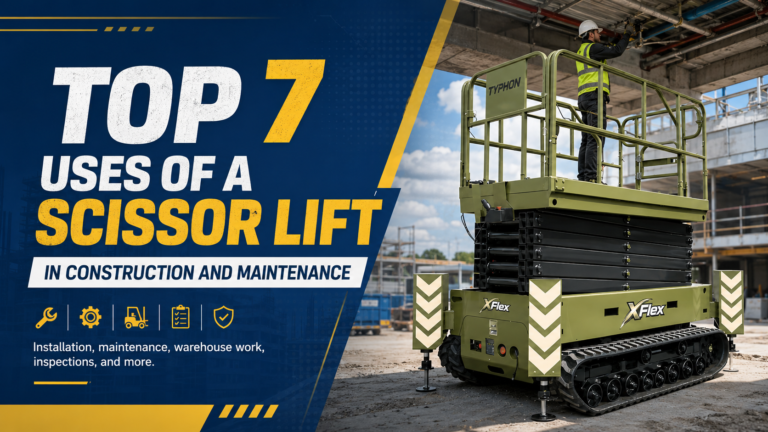
- Interior Finishing: Installing drywall, ceiling tiles, lighting fixtures, HVAC ductwork, sprinkler systems, and electrical conduits in large commercial or industrial buildings. Slab scissor lifts are ideal for indoor, finished surfaces.
- Roofing: Assisting with material transport and worker access for roof repairs or installation.
- Insulation: Installing insulation in high ceilings or walls.
- Building Inspections: Facilitating close-up inspections of building exteriors, roofs, and large interior spaces.
- Window Cleaning: Providing stable platforms for professional window cleaners on commercial buildings.
Example: Imagine a new shopping mall under construction. Electric slab scissor lifts are used inside to install vast stretches of ceiling grids and lighting. Simultaneously, outside, diesel rough-terrain scissor lifts are helping crews attach exterior cladding to the building’s facade.
2. Warehousing and Logistics
In the world of storage and distribution, vertical space is gold, and scissor lifts are key to maximizing its use.
- Inventory Management: Reaching high shelves for stocking, retrieving, or organizing inventory in tall warehouse racks.
- Order Picking: Efficiently picking items from elevated storage locations, especially for large or bulky goods.
- Rack Installation and Repair: Assisting with the assembly, maintenance, and repair of towering storage racks.
- Facility Maintenance: Changing high-bay lights, cleaning overhead structures, and performing general repairs in large warehouses or distribution centers.
Example: A large e-commerce fulfillment center uses narrow electric scissor lifts to navigate tight aisles and retrieve customer orders from shelves 20 feet high, significantly speeding up the picking process compared to forklifts with cages or manual climbing.
3. Industrial and Manufacturing Facilities
From factories to processing plants, scissor lifts are crucial for maintenance, installation, and operational tasks.
- Machine Maintenance: Providing access for technicians to perform repairs, inspections, or adjustments on large machinery and production lines that are elevated or have high components.
- Overhead Crane Maintenance: Assisting with the inspection and repair of overhead cranes and their tracks.
- Pipe and Duct Installation: Installing and maintaining complex networks of pipes, ventilation ducts, and electrical wiring in industrial settings.
- Cleaning and Painting: Accessing high areas for industrial cleaning or painting of factory walls and ceilings.
Example: In an automotive manufacturing plant, a scissor lift is used to access the underside of an overhead conveyor system for routine lubrication and inspection, ensuring the production line runs smoothly.
4. Retail and Commercial Spaces
Scissor lifts help maintain the aesthetic and functional aspects of retail environments.
- Merchandising and Display Setup: Arranging high-level displays, signage, and decorative elements in large retail stores, showrooms, or shopping malls.
- Signage Installation: Installing and maintaining indoor and outdoor signs.
- Lighting Maintenance: Changing light bulbs, repairing light fixtures, and adjusting track lighting in stores, convention centers, and offices.
- Seasonal Decorating: Putting up and taking down holiday decorations in large commercial spaces.
Example: Before the holiday season, a department store utilizes a compact scissor lift to hang elaborate decorations from its high atrium ceiling, creating an inviting atmosphere for shoppers.
5. Event Management and Entertainment
The entertainment industry relies heavily on elevated access for setup and production.
- Stage Setup: Installing lighting rigs, sound equipment, backdrops, and scenery for concerts, theatrical productions, and conferences.
- Venue Maintenance: Cleaning, repairing, and setting up equipment in sports arenas, theaters, and convention centers.
- Film and Television Production: Providing camera platforms, lighting positions, and access for crew members during filming.
- Trade Show Booth Assembly: Assisting with the construction of tall and intricate trade show displays.
Example: At a major music festival, scissor lifts are used day and night to assemble the massive main stage, hoisting speakers, LED screens, and intricate lighting arrays into position.
6. Aviation and Aerospace
For maintaining aircraft and airport facilities, precision and safety are paramount.
- Aircraft Maintenance: Providing stable platforms for technicians to work on various parts of an aircraft, such as wings, tails, and engines, for inspections, repairs, and cleaning.
- Hangar Maintenance: Maintaining lighting, ventilation systems, and overhead structures within large aircraft hangars.
Example: An airline maintenance crew uses a specialized scissor lift with a non-marking platform to safely access the tail section of a commercial airliner for a routine inspection, ensuring flight safety.
7. Agriculture (Specialized Models)
While less common than other industries, specialized rough-terrain scissor lifts find use in certain agricultural applications.
- Orchard Maintenance/Harvesting: Some orchards use narrow, rough-terrain scissor lifts for pruning tall fruit trees or for harvesting at height.
Example: In a large apple orchard, a specially adapted scissor lift allows workers to efficiently prune the upper branches of mature trees, improving fruit yield and tree health.
This extensive list merely scratches the surface of what a scissor lift is used for. Its fundamental design, offering stable vertical elevation and a generous workspace, makes it an incredibly adaptable tool, continually finding new applications as industries evolve and new challenges arise. For any task requiring safe, temporary elevated access, a scissor lift is often the go-to solution.
Frequently Asked Questions About Scissor Lifts
Understanding the basics of scissor lifts often leads to more specific questions. Here, we address some of the most common inquiries to further enhance your knowledge.
Q1: What is a scissor lift used for?
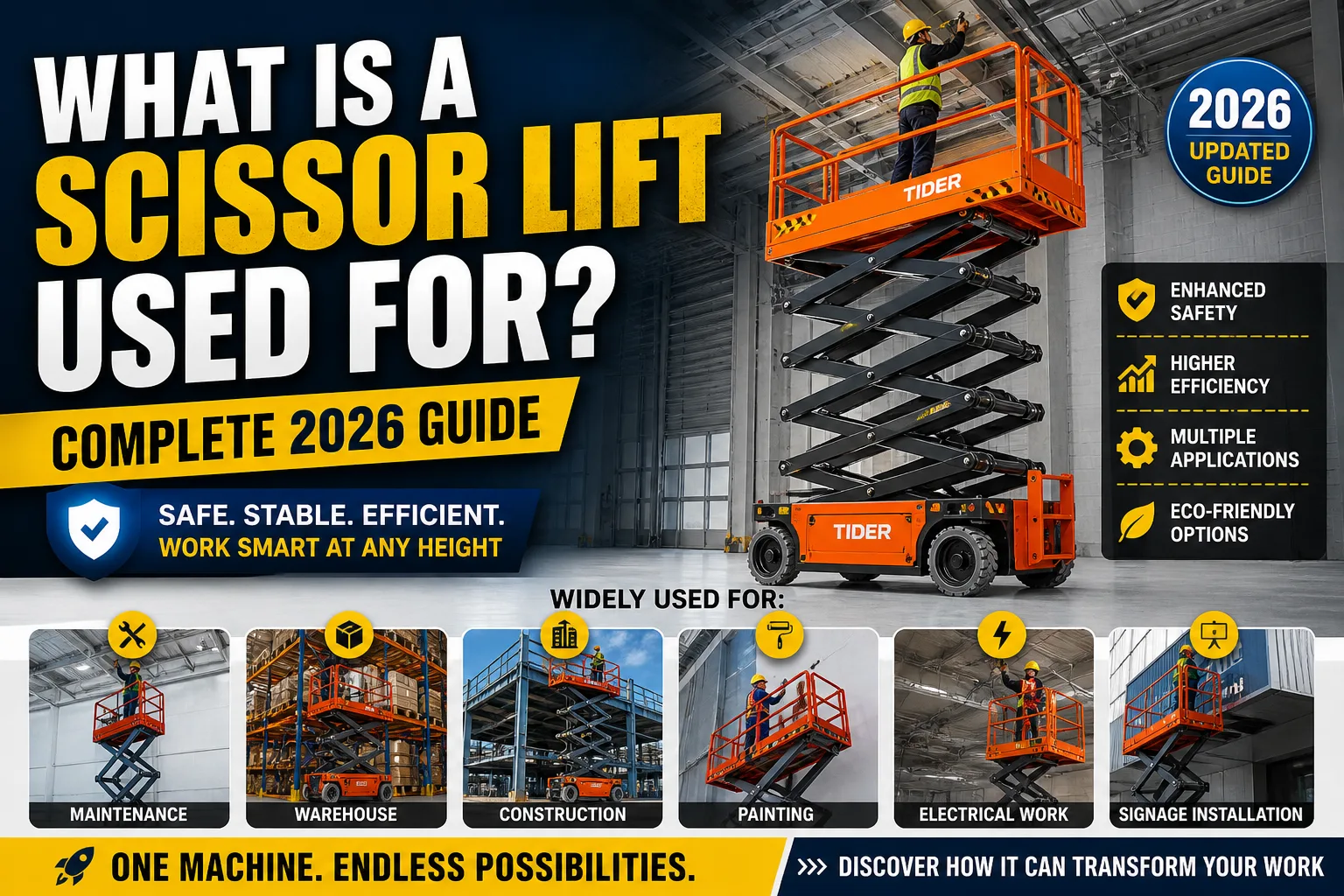
A scissor lift is a mobile elevated work platform (MEWP) primarily used to lift workers, tools, and materials vertically to perform tasks at height. Its main applications include construction (e.g., installing drywall, HVAC, electrical systems, exterior finishing), industrial maintenance (e.g., machinery repair, overhead crane maintenance), warehousing and logistics (e.g., inventory management, rack installation), retail (e.g., display setup, lighting maintenance), event management (e.g., stage setup, lighting rigs), and even aviation (e.g., aircraft maintenance). Essentially, any job requiring stable, temporary access to elevated work areas can benefit from a scissor lift.
Q2: How does a scissor lift work?
A scissor lift operates using a crisscrossing “scissor” mechanism that expands and contracts to raise and lower a work platform. This mechanism is typically powered by a hydraulic system. An engine (electric, diesel, or gasoline) drives a hydraulic pump, which pressurizes hydraulic fluid. This fluid is then directed to hydraulic cylinders connected to the scissor arms. As the cylinders extend, they push the scissor arms outwards, causing the platform to rise vertically. To lower the platform, the hydraulic fluid is released, allowing the arms to retract. Operators control the movement (up, down, forward, backward, steering) from a control panel on the platform, and often from a ground-level panel as well. The design provides a stable, broad base as the platform ascends, ensuring safety.
Q3: What are the main benefits of using a scissor lift over other equipment?
The key benefits of using a scissor lift include:
- Enhanced Safety: Provides a stable, guarded platform, significantly reducing fall risks compared to ladders or unstable scaffolding.
- Increased Efficiency & Productivity: Allows workers to reach heights quickly, carry tools and materials, and work collaboratively, speeding up project completion.
- Versatility: Suitable for a wide range of indoor and outdoor applications across numerous industries due to various models (slab, rough terrain, narrow).
- Cost-Effectiveness: Reduces labor hours, minimizes accident-related costs, and offers a favorable return on investment compared to alternative methods.
- Ease of Operation: User-friendly controls make them relatively easy to learn and operate after proper training.
- Large Work Platform: Offers more space for workers and materials than boom lifts, making it ideal for tasks requiring a broader workspace.
Q4: Do I need special training or certification to operate a scissor lift?
Yes, absolutely. In most regions, including the United States (mandated by OSHA), operators of all mobile elevated work platforms (MEWPs), which include scissor lifts, are required to undergo specific training and obtain certification. This training covers safe operating procedures, machine-specific knowledge, hazard recognition, emergency protocols, and relevant safety regulations. Operating a scissor lift without proper certification is dangerous and illegal, and can result in severe penalties and, more importantly, serious accidents.
Q5: What’s the difference between an electric slab scissor lift and a rough-terrain scissor lift?
The primary differences lie in their power source, tires, and intended operating environment:
- Electric Slab Scissor Lifts: Typically battery-powered, produce zero emissions, operate quietly, and have non-marking tires. They are designed for smooth, flat, indoor surfaces like concrete slabs in warehouses, retail stores, or finished construction sites. They are generally more compact and lighter.
- Rough-Terrain Scissor Lifts: Usually powered by diesel or gasoline engines, feature four-wheel drive, and have large, lugged tires for enhanced traction. They are built for outdoor, uneven, muddy, or sloped construction sites and rough ground conditions. They often have higher weight capacities and larger platforms, sometimes with outriggers for added stability.
Q6: Can I use a scissor lift in windy conditions?
Operating a scissor lift in windy conditions is extremely dangerous and generally not recommended. Most manufacturers specify a maximum allowable wind speed for safe operation (often around 28 mph or 12.5 m/s). High winds can compromise the lift’s stability, especially when elevated, increasing the risk of tipping over. Always check the operator’s manual for the specific wind speed limits of your model. If wind conditions exceed these limits or feel unsafe, the lift should be lowered, and operations should cease until conditions improve.
Q7: Is fall protection (harness) always required on a scissor lift?
This depends on the manufacturer’s guidelines and specific job site regulations. For most scissor lifts with full guardrails that meet safety standards, a personal fall arrest system (PFAS) like a harness and lanyard is not typically required by OSHA, as the guardrails are considered sufficient fall protection. However, some manufacturers do require a harness, and specific job sites or company policies might also mandate it regardless of the manufacturer’s stance. It is crucial to always consult the operator’s manual for your specific lift model and adhere to all site-specific safety rules. If a harness is required, it must be properly worn and attached to an approved anchor point on the platform, never to an adjacent structure.
Conclusion: Elevating Your Projects with Scissor Lifts
From the foundational stages of construction to the intricate details of event setup, and the critical demands of industrial maintenance, the scissor lift stands as a testament to intelligent engineering designed for practical, real-world challenges. This comprehensive guide has explored “What Is a Scissor Lift Used For?” by delving into its fundamental design, highlighting its unparalleled benefits in terms of safety and efficiency, outlining the essential steps for getting started, and detailing the crucial best practices for safe operation. We’ve also seen its incredible versatility through numerous real-world applications across a multitude of industries.
The ability of a scissor lift to provide a stable, spacious, and secure elevated platform has transformed how work is performed at height. It has replaced riskier, less efficient methods, allowing businesses to complete projects faster, more safely, and more cost-effectively. Whether you’re considering renting one for a short-term project, purchasing one for ongoing operations, or simply seeking to understand this ubiquitous piece of machinery, the knowledge gained here will serve as a valuable foundation.
Remember, the power and utility of a scissor lift come with the responsibility of proper training, diligent maintenance, and strict adherence to safety protocols. When used correctly, a scissor lift is not just a tool; it’s a partner that elevates your capabilities, ensuring that tasks at height are accomplished with confidence and precision.
Ready to take your projects to new heights?