Scissor Lift vs. Telescopic Boom Lift: Your Ultimate Guide to Choosing the Right Aerial Work Platform
Imagine a construction site, a warehouse, or even a film set. You see workers elevated high above the ground, diligently performing tasks that would be impossible to reach otherwise. How do they get up there safely and efficiently? The answer often lies in aerial work platforms (AWPs), with two of the most common and versatile being the scissor lift and the telescopic boom lift. While both serve the fundamental purpose of lifting people and equipment to elevated positions, they are far from interchangeable. Each machine is a marvel of engineering, designed with specific strengths and limitations that make them ideal for different scenarios.
Choosing between a scissor lift and a telescopic boom lift isn’t just about picking the first available option; it’s a critical decision that impacts project efficiency, safety, and cost-effectiveness. A wrong choice can lead to delays, increased expenses, and even hazardous working conditions. This comprehensive guide is designed to demystify these powerful machines, providing you with the knowledge to confidently distinguish between them and select the perfect tool for your next elevated task. We’ll dive deep into their mechanics, applications, benefits, and best practices, ensuring you’re equipped to make an informed decision, whether you’re a seasoned contractor, a facility manager, or simply curious about the world of aerial access. Let’s ascend to new heights of understanding!
1. What is a Scissor Lift vs. Telescopic Boom Lift?
To truly understand the differences and make an informed decision, we must first define what each of these aerial work platforms (AWPs) is and how they operate. While both are designed to elevate workers and materials, their fundamental mechanisms and operational envelopes vary significantly.
Scissor Lifts: The Vertical Workhorse
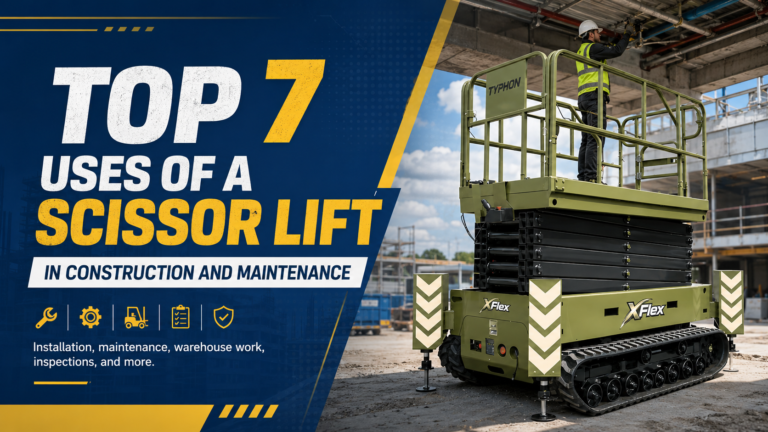
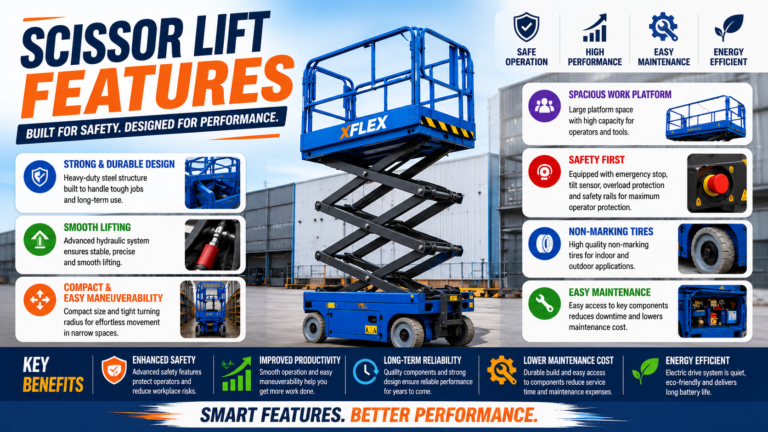
A scissor lift is an aerial work platform characterized by its unique lifting mechanism, which resembles a series of interconnected, folding supports arranged in a crisscross “X” pattern. As the hydraulic or electric system extends, these supports push the platform vertically upwards. The platform itself is typically quite spacious, offering a large, stable work area for multiple workers and their tools.
Key Characteristics of Scissor Lifts:
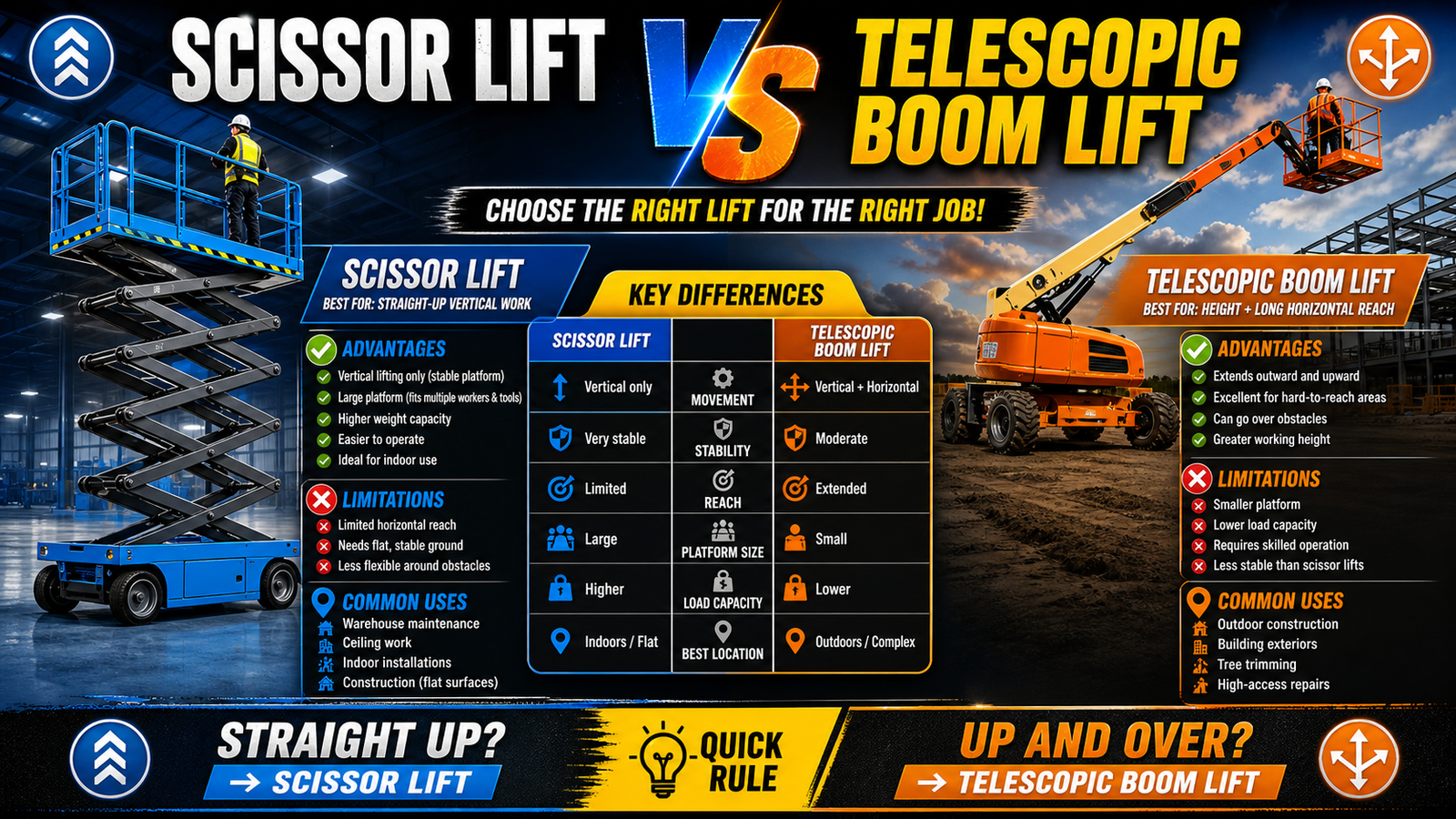
- Vertical Movement Only: Scissor lifts are designed for strictly vertical elevation. They cannot extend horizontally or reach over obstacles.
- Large Work Platform: Their platforms are generally larger than those on boom lifts, providing ample space for personnel, tools, and materials, making them ideal for tasks requiring a wide work area.
- Stability: Due to their robust base and direct vertical lift, scissor lifts offer excellent stability, especially on flat, even surfaces.
- Power Sources: They can be powered by electric batteries (ideal for indoor, emission-free operation) or internal combustion engines (for outdoor, rough terrain applications).
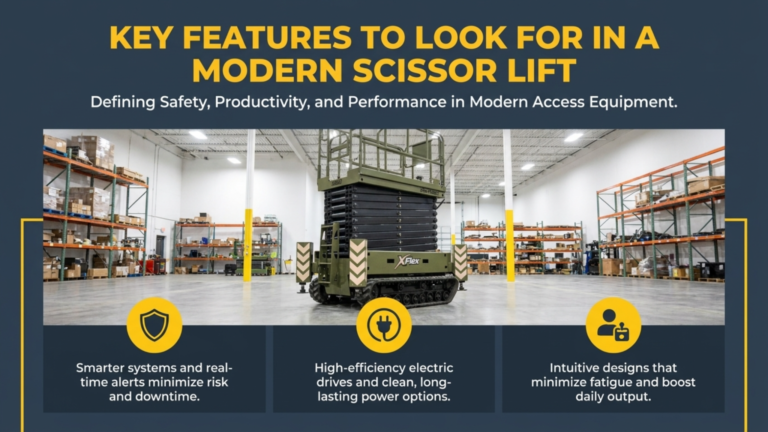
- Compact Storage: When fully retracted, scissor lifts are relatively compact, making them easier to store and transport.
- Limited Reach: While they can reach impressive vertical heights (often up to 50 feet or more), their lack of horizontal outreach is their primary limitation.
Common Applications for Scissor Lifts:
- Indoor Maintenance: Changing light bulbs, HVAC repair, ceiling work in warehouses, factories, and convention centers.
- Construction: Drywall installation, painting, electrical work, sprinkler system installation, and general finishing tasks on flat slabs.
- Warehouse Operations: Stock picking, inventory management, high shelving access.
- Retail: Setting up displays, sign installation, cleaning high windows.
- Film & Event Production: Lighting, camera positioning, stage setup.
Telescopic Boom Lifts: The Reaching Specialist
A telescopic boom lift, often referred to as a “straight boom” or “stick boom,” is an aerial work platform that features a single, extendable arm (or boom) that can telescope outwards and pivot. This design allows for both significant vertical and horizontal outreach, making it incredibly versatile for tasks that require navigating around obstacles or reaching distant points.
Key Characteristics of Telescopic Boom Lifts:
- Exceptional Horizontal and Vertical Reach: The defining feature is its ability to extend both upwards and outwards, reaching over barriers, across gaps, and into difficult-to-access areas.
- Maneuverability: While the base is substantial, the boom’s articulation allows for precise positioning of the work platform.
- Rough Terrain Capability: Many telescopic boom lifts are equipped with robust tires, four-wheel drive, and oscillating axles, making them highly capable on uneven, muddy, or sloped outdoor terrain.
- Power Sources: Primarily powered by diesel engines for outdoor, heavy-duty applications, though some electric or hybrid models exist for specific uses.
- Smaller Work Platform: The platform (or basket) is typically smaller than a scissor lift’s, designed to hold one or two workers and essential tools.
- Higher Reach: Telescopic boom lifts can achieve much greater heights than scissor lifts, often exceeding 100 feet, with some models reaching over 180 feet.
Common Applications for Telescopic Boom Lifts:
- Construction: Steel erection, bridge inspection, exterior building maintenance, roofing, facade work, reaching over trenches or excavations.
- Telecommunications: Installing and maintaining cell towers, utility lines.
- Tree Trimming: Reaching high branches in challenging locations.
- Oil & Gas: Inspection and maintenance of large industrial structures.
- Shipbuilding: Accessing various parts of large vessels.
- Signage Installation: Placing large signs on tall buildings or poles.
In essence, if your task requires a large, stable platform for vertical work on a flat surface, the scissor lift is likely your best bet. If you need to reach over, across, or around obstacles, or achieve extreme heights on varied terrain, the telescopic boom lift is the specialist you need. Understanding these fundamental differences is the first step in optimizing your project’s safety and efficiency.
2. Key Benefits: Why Choose One Over the Other?
The decision between a scissor lift and a telescopic boom lift hinges on understanding the unique advantages each offers for specific tasks and environments. It’s not about which one is “better” overall, but which one is “better suited” for your particular needs. Let’s delve into the key benefits that differentiate these two powerful machines.
Benefits of Scissor Lifts
Scissor lifts excel in situations where stability, platform space, and direct vertical access are paramount. Their design offers several distinct advantages:
- Larger Work Platform: This is arguably the biggest benefit. The spacious deck allows multiple workers to operate simultaneously, along with a significant amount of tools and materials. This reduces the need for repeated trips up and down, boosting productivity for tasks like installing large sections of ductwork, painting wide walls, or performing extensive ceiling repairs. For instance, a crew installing drywall can load an entire sheet onto the platform, rather than having to hoist it up separately.
- Higher Load Capacity: Generally, scissor lifts can support more weight than boom lifts. This higher capacity is crucial when workers need to carry heavy equipment, multiple toolboxes, or bulky construction materials to height.
- Enhanced Stability: The broad base and direct vertical lift mechanism of a scissor lift provide exceptional stability, especially on firm, level ground. This makes workers feel more secure and confident, which can lead to increased efficiency and reduced fatigue during long shifts.
- Easier to Operate (Generally): While all aerial work platforms require proper training, scissor lifts are often considered less complex to operate than boom lifts due to their limited vertical-only movement. This can reduce the learning curve for new operators.
- Cost-Effective for Specific Tasks: For jobs that primarily require vertical elevation on a flat surface, scissor lifts are typically more cost-effective to rent or purchase than boom lifts. Their simpler mechanism often translates to lower maintenance costs as well.
- Indoor Suitability: Electric scissor lifts produce zero emissions and operate quietly, making them ideal for indoor environments such as warehouses, retail stores, hospitals, and schools where air quality and noise levels are critical concerns.
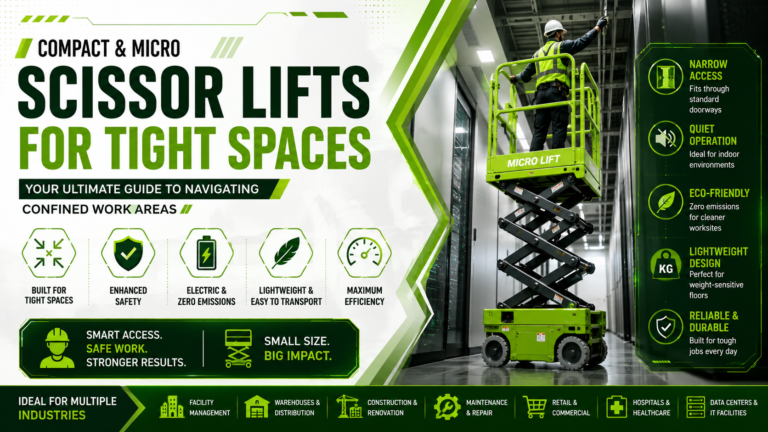
- Maneuverability in Tight Spaces (for compact models): Smaller, narrow-aisle scissor lifts are specifically designed to navigate confined indoor spaces where a boom lift would be too large or cumbersome.
Real-world Example: Consider a large retail store undergoing a major renovation. Workers need to install new lighting fixtures across the entire ceiling, repaint the upper walls, and set up high display shelving. An electric scissor lift would be the ideal choice. Its large platform allows two electricians to work on a fixture simultaneously with all their tools, while painters can cover wide sections of wall efficiently. The zero emissions ensure the store’s air quality isn’t compromised, and its stability provides a safe working environment for extended periods.
Benefits of Telescopic Boom Lifts
Telescopic boom lifts shine in scenarios demanding superior reach, maneuverability around obstacles, and robust performance on challenging terrain.
- Unmatched Horizontal and Vertical Reach: This is the telescopic boom lift’s defining advantage. Its ability to extend its boom both outwards and upwards allows it to reach over obstacles like fences, trenches, machinery, or even parts of a building’s structure. This makes it indispensable for tasks where direct vertical access is impossible. Imagine needing to inspect a bridge structure from underneath, or reaching a specific window on a multi-story building while the ground directly below is inaccessible.
- Superior Maneuverability and Articulation: While a telescopic boom lift has a single, straight boom, its ability to telescope and pivot, combined with a rotating turntable, offers incredible precision in positioning the work platform. This articulation allows operators to navigate complex job sites and place the basket exactly where it’s needed, even in areas with limited ground access.
- Rough Terrain Capability: Most telescopic boom lifts are built for the outdoors. They feature rugged, foam-filled or pneumatic tires, four-wheel drive, and oscillating axles that provide excellent traction and stability on uneven, muddy, sandy, or sloped construction sites. This capability is crucial for large-scale outdoor projects where the ground is rarely perfectly flat.
- Higher Working Heights: Telescopic boom lifts can achieve significantly greater working heights than scissor lifts, with some models reaching well over 100 feet. This makes them essential for high-rise construction, telecommunications tower maintenance, and large-scale industrial applications.
- Versatility for Outdoor Construction: From steel erection and roofing to facade installation and utility line maintenance, the boom lift’s combination of reach, height, and rough terrain capability makes it a cornerstone of outdoor construction and maintenance.
- Increased Safety in Obstacle-Rich Environments: By allowing workers to reach over obstacles rather than having to navigate around them on the ground, boom lifts can sometimes offer a safer solution, reducing the risk of ground-level hazards.
Real-world Example: Consider a crew tasked with repairing a section of a high-rise building’s exterior facade. A large trench has been dug directly below the damaged area, making ground access impossible. Furthermore, the repair requires reaching several stories up. A telescopic boom lift would be the only viable solution. Its boom can extend over the trench and then telescope upwards to the precise working height, allowing workers to safely access the damaged facade without disturbing the ground-level work. Its rough terrain capabilities would also be crucial for navigating the uneven construction site.
In summary, the choice hinges on the nature of the task. If you need a large, stable platform for vertical work on a level surface, a scissor lift is your efficient choice. If your work demands reaching over obstacles, extreme heights, or navigating challenging outdoor terrain, the telescopic boom lift is the indispensable tool.
3. How to Get Started: Choosing the Right Lift for Your Project
Selecting the appropriate aerial work platform is a critical decision that impacts safety, efficiency, and project costs. It’s not a one-size-fits-all scenario, and a thoughtful evaluation process is essential. Here’s a step-by-step guide on how to get started, ensuring you pick the right lift for your specific project.
Step 1: Define Your Project Needs and Scope
Before even looking at specific models, clearly outline what your project entails. Ask yourself the following questions:
- What is the maximum working height required? (This is the height of the platform plus the average height of a worker).
- What is the maximum horizontal outreach needed? Do you need to reach over obstacles, or is direct vertical access sufficient?
- What is the required platform capacity? How many workers, tools, and materials will need to be on the platform at one time?
- What type of work will be performed? (e.g., painting, electrical, HVAC, structural, inspection, cleaning). This affects the required platform size and stability.
- What is the duration of the project? (Rental vs. purchase considerations).
Practical Example: You need to install new light fixtures in a 30-foot high warehouse ceiling. You’ll have two electricians and their tools. You also need to paint a 25-foot high wall.
- Working Height: ~36 feet (30 ft ceiling + 6 ft worker height).
- Horizontal Outreach: None needed, direct vertical access.
- Capacity: Two workers + tools (approx. 500-700 lbs).
- Work Type: Electrical installation, painting.
- Conclusion: A scissor lift seems highly probable here due to vertical-only access, capacity, and platform size.
Step 2: Evaluate the Work Environment
The characteristics of your job site are paramount in determining the best lift.
- Indoor vs. Outdoor:
- Indoor: Requires electric power, non-marking tires, and zero emissions. Scissor lifts are often preferred.
- Outdoor: Requires robust engines, rough terrain tires, and potentially four-wheel drive. Boom lifts are typically more suited.
- Ground Conditions:
- Flat, Paved, Level: Suitable for most scissor lifts and smooth-tire boom lifts.
- Uneven, Sloped, Muddy, Rough Terrain: Requires rough terrain scissor lifts or, more commonly, rough terrain telescopic boom lifts with oscillating axles.
- Space Constraints:
- Tight Aisles, Narrow Doorways: Compact scissor lifts or articulated boom lifts (if horizontal reach is also needed) might be necessary.
- Open Spaces: Allows for larger machines.
- Obstacles: Are there permanent fixtures, trenches, machinery, or other barriers that need to be reached over or around? This is a strong indicator for a boom lift.
Practical Example: You’re working on a new construction site. The ground is unpaved, muddy in places, and slightly sloped. You need to install steel beams at 60 feet high, and there are several trenches dug for utilities.
- Environment: Outdoor, rough terrain, uneven, obstacles (trenches).
- Conclusion: A rough terrain telescopic boom lift is essential due to the ground conditions, height, and need to reach over trenches. A scissor lift would get stuck or be unstable.
Step 3: Consider Power Source and Fuel Type
- Electric: Ideal for indoor use, quiet, zero emissions, requires charging. Common for scissor lifts and some smaller boom lifts.
- Diesel/Gasoline: Powerful, suitable for outdoor and rough terrain, higher emissions, requires fuel. Standard for most telescopic boom lifts and rough terrain scissor lifts.
- Bi-Energy/Hybrid: Offers flexibility, combining electric for indoor/quiet operation and diesel for outdoor/power.
Step 4: Assess Operator Training and Safety
Regardless of the lift chosen, proper operator training is non-negotiable. OSHA and other regulatory bodies mandate that all operators of aerial work platforms be trained and certified.
- Training Requirements: Ensure your operators are certified for the specific type of lift they will be using. While scissor lifts are generally simpler, boom lifts require more advanced training due to their complex articulation and stability considerations.
- Safety Features: Familiarize yourself with the safety features of the chosen machine (e.g., emergency stop buttons, tilt alarms, platform overload sensors, fall protection anchor points).
- Site-Specific Safety Plan: Develop and implement a site-specific safety plan that addresses the use of AWPs, including daily inspections, fall protection, and emergency procedures.
Step 5: Rent or Buy?
- Rental: Ideal for short-term projects, infrequent use, or when you need specialized equipment for a single job. Reduces capital expenditure, maintenance costs, and storage needs.
- Purchase: Economical for frequent, long-term use, or if you have multiple ongoing projects requiring the same type of lift. Requires capital investment, storage, and ongoing maintenance.
Internal Link Suggestion: For a deeper dive into the specifics of lift operation and safety, consider consulting our “Scissor Lift vs. Telescopic Boom Lift Guide” which includes detailed safety protocols.
By systematically working through these steps, you can confidently select the aerial work platform that not only meets your project’s demands but also ensures the safety and efficiency of your workforce. Remember, the right tool for the job is always the safest and most productive choice.
4. Best Practices for Operating Scissor Lifts and Telescopic Boom Lifts
Operating aerial work platforms safely and efficiently is paramount. It’s not just about knowing which machine to choose, but how to use it responsibly. Adhering to best practices minimizes risks, extends equipment lifespan, and maximizes productivity.
General Best Practices for All Aerial Work Platforms
These foundational principles apply to both scissor lifts and telescopic boom lifts:
Pre-Operation Inspection (Daily Checks): Before each shift, a thorough inspection is crucial. This includes checking:
- Fluid levels (oil, hydraulic fluid, fuel, coolant).
- Tires and wheels for damage or proper inflation.
- Controls (emergency stop, platform controls, ground controls) for proper function.
- Safety devices (alarms, outriggers/stabilizers, guardrails, safety harnesses).
- Structural integrity (no visible damage, cracks, or leaks).
- Decals and warnings are present and legible.
- Practical Tip: Keep a checklist and log each inspection. Never operate a lift with known defects.
Operator Training and Certification: Only trained and certified operators should be allowed to use these machines. Training must cover:
- Manufacturer’s operating instructions.
- Workplace hazards.
- OSHA/local regulatory requirements.
- Hands-on practical experience.
- Practical Tip: Regular refresher training (e.g., every three years or after incidents) is highly recommended.
Work Area Assessment: Before positioning the lift, thoroughly assess the work environment:
- Ground Conditions: Ensure the surface can support the weight of the lift and is level (within manufacturer’s specifications). Watch for potholes, debris, slopes, or unstable ground.
- Overhead Hazards: Identify power lines, pipes, beams, or other obstructions. Maintain safe clearance distances.
- Ground-Level Hazards: Be aware of pedestrian traffic, vehicles, open trenches, or other equipment.
- Wind Conditions: High winds can significantly impact stability, especially for boom lifts at height. Refer to manufacturer guidelines for maximum wind speeds.
- Practical Tip: Use cones, barricades, and warning signs to cordon off the work area and alert others.
Fall Protection: Always wear a full-body harness and lanyard, and attach it to the designated anchor point on the platform. This is a non-negotiable safety rule.
- Practical Tip: Ensure harnesses are properly fitted and lanyards are inspected for wear and tear before each use.
Load Capacity Adherence: Never exceed the manufacturer’s rated load capacity for the platform. This includes the weight of workers, tools, and materials. Overloading can lead to instability and tip-overs.
- Practical Tip: If in doubt, weigh your tools and materials before lifting.
Maintain Safe Distances: Always maintain a safe distance from power lines, especially when operating boom lifts. The minimum safe approach distance (MSAD) varies by voltage.
- Practical Tip: If working near power lines, contact the utility company to de-energize or shield the lines.
Specific Best Practices for Scissor Lifts
- Level Ground is Key: Scissor lifts are most stable on firm, level surfaces. While some rough terrain models exist, they still have strict limits on permissible slopes. Always check the tilt alarm and level the machine if necessary.
- Avoid Extending on Slopes: Never extend a scissor lift on a slope that exceeds the manufacturer’s specified limit. Retract the platform before moving up or down a slope.
- Watch for Overhangs: Be mindful of overhead obstructions when raising the platform, as scissor lifts only move vertically.
- Don’t Climb on Guardrails: Never use the guardrails to gain additional height. This compromises stability and fall protection.
- Proper Use of Extension Decks: If your scissor lift has an extendable deck, ensure it is fully locked into position before use and that its separate load capacity is not exceeded.
Specific Best Practices for Telescopic Boom Lifts
- Outrigger/Stabilizer Deployment (if applicable): If the boom lift has outriggers or stabilizers, ensure they are fully extended and properly set on stable ground before elevating the boom. Use cribbing or mats on soft surfaces.
- Dynamic Stability: Boom lifts have a more dynamic center of gravity due to the articulating boom. Operators must be aware that extending the boom horizontally significantly reduces stability compared to vertical elevation.
- Smooth Movements: Operate controls smoothly and gradually. Jerky movements can cause the platform to sway excessively, leading to instability or loss of control.
- Boom Position During Travel: When moving the lift, the boom should be fully retracted and lowered to the travel position unless the manufacturer specifies otherwise for specific maneuvers.
- Wind Awareness: Pay extra attention to wind conditions, especially when working at extreme heights. The large surface area of the platform and boom can act like a sail, making the lift unstable in high winds. Always follow manufacturer’s wind speed limits.
- Clearance from Obstacles: Due to the boom’s ability to extend and pivot, continuously monitor clearance from all surrounding objects, both overhead and at ground level, throughout the entire range of motion.
Internal Link Suggestion: For more in-depth safety guidelines and training resources, explore our “Scissor Lift vs. Telescopic Boom Lift Resources” section.
By diligently following these best practices, operators can ensure a safer work environment, prevent accidents, and maintain the longevity of these essential aerial work platforms. Safety is always the highest priority.
5. Frequently Asked Questions
Understanding the core differences and applications of scissor lifts and telescopic boom lifts often leads to a few common questions. Here, we address some of the most frequently asked queries to further clarify their distinctions and uses.
Q1: What is the main difference between a scissor lift and a telescopic boom lift?
A1: The main difference lies in their lifting mechanism and range of motion. A scissor lift uses a crisscross “X” pattern of folding supports to lift its platform straight up and down, offering only vertical elevation. It provides a large, stable work area. A telescopic boom lift, on the other hand, features a single, extendable arm (boom) that can telescope outwards and pivot, allowing for both significant vertical and horizontal outreach. This enables it to reach over obstacles and access areas that are not directly above the machine’s base.
Q2: How does a scissor lift work?
A2: A scissor lift operates using a series of interconnected, hinged supports arranged in a scissor-like fashion. These supports are typically powered by hydraulic cylinders or an electric motor. When activated, the cylinders push the bottom set of supports outwards, causing the “X” pattern to extend and push the platform directly upwards. To lower the platform, the hydraulic pressure is released, allowing the supports to retract and the platform to descend. The controls are usually located on the platform itself, with a ground control panel for emergency or override operation.
Q3: How does a telescopic boom lift work?
A3: A telescopic boom lift works by extending a series of nested boom sections, much like a telescope. The boom is mounted on a rotating turntable (turret) on the machine’s chassis, allowing it to swing 360 degrees. Hydraulic cylinders extend and retract the boom sections, providing horizontal reach, while other cylinders raise and lower the entire boom assembly, providing vertical height. The work platform (or basket) is attached to the end of the boom. Operators use a joystick and control panel in the basket to maneuver the boom precisely, controlling its extension, retraction, elevation, and rotation.
Q4: What are the primary benefits of using a scissor lift?
A4: The primary benefits of a scissor lift include:
- Large Work Platform: Ample space for multiple workers, tools, and materials.
- High Load Capacity: Can typically lift more weight than boom lifts.
- Excellent Stability: Very stable on flat, level surfaces.
- Cost-Effective: Often more economical for vertical-only tasks.
- Indoor Suitability: Electric models are quiet and emission-free, ideal for indoor use.
Q5: What are the primary benefits of using a telescopic boom lift?
A5: The primary benefits of a telescopic boom lift include:
- Exceptional Reach: Unmatched horizontal and vertical outreach, allowing access over and around obstacles.
- High Working Heights: Can reach much greater heights than most scissor lifts.
- Rough Terrain Capability: Many models are designed for uneven, muddy, or sloped outdoor construction sites.
- Maneuverability: Precise positioning of the platform due to boom articulation and rotation.
- Versatility: Ideal for a wide range of outdoor construction, maintenance, and utility tasks.
Q6: Which lift is safer, a scissor lift or a telescopic boom lift?
A6: Both scissor lifts and telescopic boom lifts are inherently safe when operated correctly, by trained personnel, and according to manufacturer guidelines and safety regulations. The perception of safety often relates to the complexity of operation and the environment. Scissor lifts are generally considered simpler to operate due to their vertical-only movement, potentially reducing certain types of operator error. However, boom lifts, with their dynamic stability and ability to operate at extreme heights and on rough terrain, require more advanced training and a greater awareness of environmental factors like wind. Ultimately, safety depends on proper training, adherence to best practices, thorough pre-operation inspections, and a comprehensive site-specific safety plan, regardless of the lift type.
Q7: Can I use a scissor lift or boom lift on a sloped surface?
A7: Both types of lifts have limitations regarding operation on sloped surfaces, which are specified by the manufacturer.
- Scissor Lifts: Generally require a very level surface. Even rough terrain scissor lifts have strict limits on the degree of slope they can operate on, and often require the platform to be fully retracted before traversing a slope. Exceeding these limits can lead to tip-overs.
- Telescopic Boom Lifts: While many rough terrain boom lifts are designed to operate on uneven ground, they still have specific limits on the maximum permissible slope for both travel and elevation. Some models are equipped with automatic leveling systems or outriggers to enhance stability on slopes. Always consult the operator’s manual and the machine’s tilt alarm before operating on any incline. Never operate beyond the manufacturer’s specified slope limits.
Conclusion: Elevating Your Project with the Right Choice
Navigating the world of aerial work platforms can seem daunting, but by understanding the fundamental differences between a scissor lift and a telescopic boom lift, you are now equipped to make informed decisions that will significantly impact the safety, efficiency, and success of your projects.
We’ve explored how scissor lifts excel in providing stable, spacious platforms for vertical access on level surfaces, making them indispensable for indoor maintenance, warehouse operations, and many construction finishing tasks. On the other hand, telescopic boom lifts stand out with their unparalleled reach, ability to navigate obstacles, and robust performance on challenging outdoor terrains, making them the go-to choice for high-rise construction, utility work, and complex industrial applications.
Remember, the “best” lift isn’t a universal truth; it’s the one that perfectly aligns with your project’s specific requirements, environmental conditions, and safety protocols. Always prioritize a thorough site assessment, adhere strictly to load capacities, ensure all operators are fully trained and certified, and never compromise on safety.
Choosing the right aerial work platform is more than just selecting a piece of equipment; it’s about empowering your workforce to operate safely, reach new heights of productivity, and ultimately achieve your project goals with confidence.