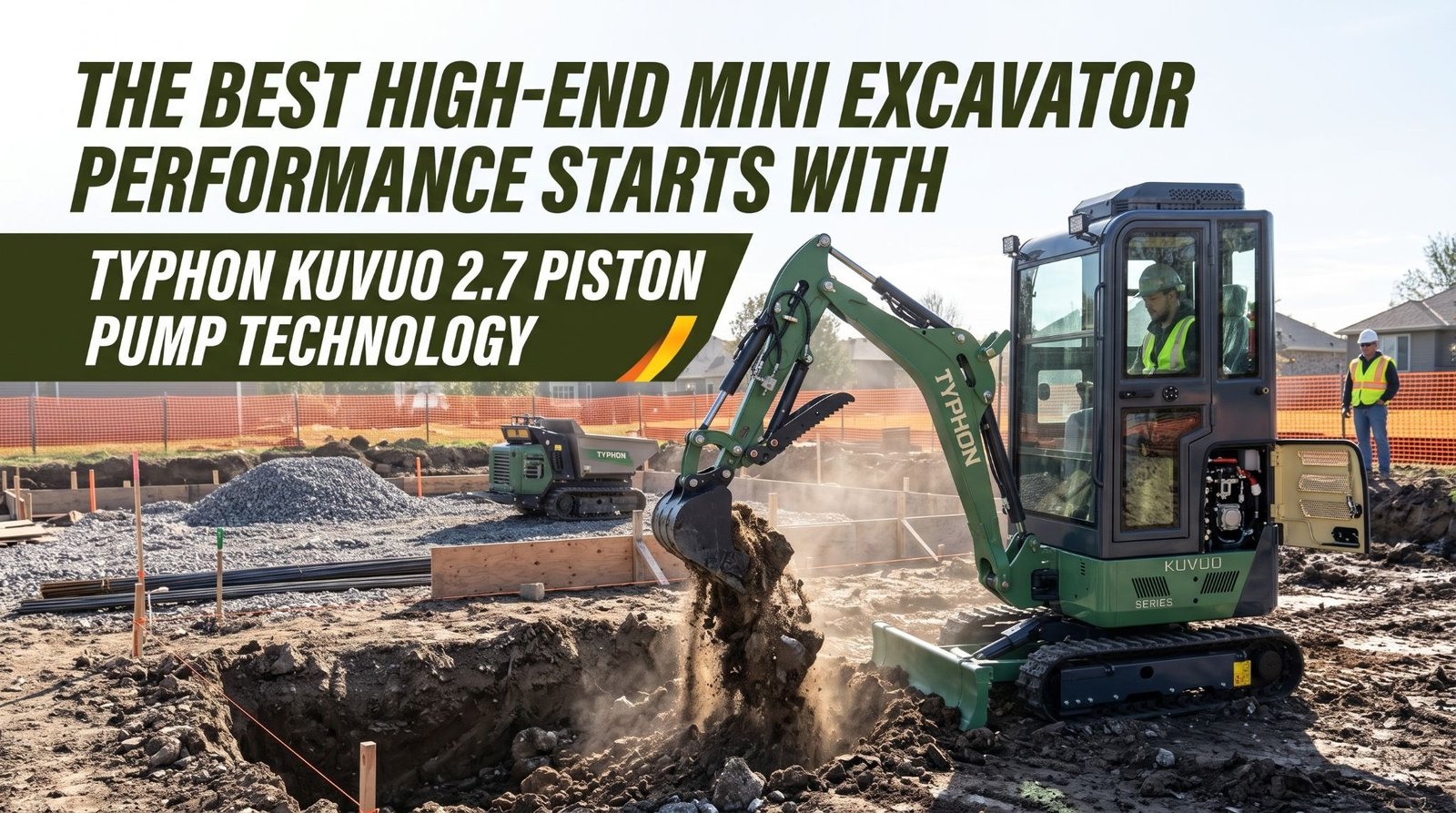
The Best High-End Mini Excavator Performance Starts With the TYPHON KUVUO 2.7 Piston Pump Technology
Contractors often compare mini excavators by engine rating first. The performance an operator feels at the joysticks, however, depends on the component the engine drives. The hydraulic pump converts engine power into the pressurized flow behind every dig, lift, swing, and attachment function. When that conversion is efficient and well controlled, the whole machine responds with confidence, from heavy breakout in compacted soil to fine trimming beside a finished foundation.
Pump design is one of the clearest indicators of how a compact excavator will handle real excavation. It affects how steadily the boom lifts under load, how smoothly the upper structure swings toward a spoil pile, and how consistently the machine performs across a full shift. The TYPHON KUVUO 2.7 KONSTRUCTZ Series builds its hydraulic system around a variable-displacement axial piston pump, paired with full hydraulic pilot joystick controls.
The hydraulic pump converts engine output into the hydraulic power needed to operate the machine and responds to changing work demands. Axial piston design plays an important role in hydraulic performance, while the KUVUO 2.7’s published specifications help explain its operating capabilities. Understanding these features also reveals how the system supports precise excavation movements and why regular maintenance is essential for protecting pump performance over time.
Turning Engine Power Into Hydraulic Output
Every working movement on a mini excavator begins with the engine driving the hydraulic pump. The pump pushes pressurized fluid into the system, and that fluid becomes the speed and force behind each function the operator commands. In practical terms, the pump is the link between mechanical power and productive work.
From the pump, fluid travels through control valves and hydraulic circuits before it reaches the actuators. Cylinders move the boom, arm, and bucket, while hydraulic motors drive the swing and travel systems. Each stage along that path affects how much of the engine’s power arrives at the bucket teeth as usable output.
Because the pump sits at the start of this chain, its design sets the foundation for everything that follows. A pump that delivers fluid efficiently and responds well to demand gives the valves and actuators a strong supply to work with. A poorly matched pump limits the system before the fluid ever reaches a cylinder.
Overall results still depend on every component working together. Well-designed valves, properly sized circuits, clean fluid, and healthy actuators all contribute. A capable pump can’t fully compensate for a restriction, a worn seal, or contaminated oil elsewhere in the system, which is why pump design is the right place to start an evaluation but not the place to end it.
Key takeaway: The hydraulic pump converts engine power into pressurized flow, and the KUVUO 2.7’s performance depends on the pump, valves, circuits, and actuators operating as one coordinated system.
Variable Displacement for Changing Workloads
Excavation never places a steady load on the hydraulics. In a single cycle, the bucket may need high force to break into compacted clay, followed by a quick boom lift, a measured swing, and a slow, controlled dump. Hydraulic demand rises and falls from one second to the next, and it changes again as soil conditions shift across the site.
A variable-displacement pump can change how much fluid it delivers per revolution, according to its design and control system. Rather than moving the same volume regardless of the task, it can respond as the work moves through each stage of the dig cycle. That flexibility suits excavation far better than a design locked to one output volume.
This adaptability supports efficient operation. When functions call for more flow, the pump can supply it. When demand eases, delivery can drop, which helps reduce wasted energy and unnecessary heat in the hydraulic system. Lower heat generation also supports fluid life and component health over long working days.
The pump’s control arrangement governs how quickly and smoothly it responds to these changes. Two machines with variable-displacement pumps can still feel different at the controls because their control strategies differ. The most reliable way to judge that behavior is to watch the machine complete full dig cycles on ground similar to your typical job sites.
Key takeaway: Variable displacement allows the KUVUO 2.7’s pump to adjust delivery as demand changes through each dig cycle, with response shaped by its hydraulic control arrangement.
Supporting Controlled Excavation Movements
Trenching and foundation work demand constant coordination between the boom, arm, bucket, and swing. The KUVUO 2.7 pairs its piston pump with full hydraulic pilot joystick controls, which send low-pressure signals to the main control valves so light inputs produce measured, proportional responses. These five movements show where that control makes the biggest difference on the job.
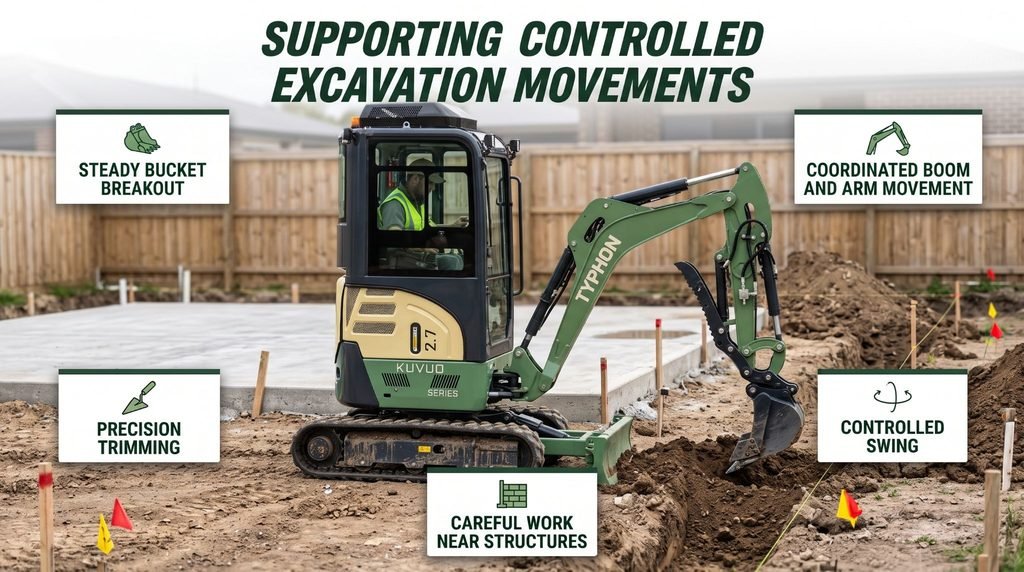
- Bucket Breakout: Responsive flow and pressure help the bucket penetrate compacted soil with steady, controlled force.
- Boom and Arm Coordination: Smooth hydraulic delivery lets operators blend boom and arm movements to hold grade along a trench.
- Precision Trimming: Proportional pilot input supports small, accurate corrections when shaping footings or cleaning trench bottoms.
- Controlled Swing: Measured swing response helps operators move loads to the spoil pile without abrupt starts or stops.
- Work Near Structures: Feathered joystick control helps keep the bucket clear of foundations, fences, and marked utilities.
Key takeaway: The KUVUO 2.7’s piston pump and pilot controls support smooth breakout, coordinated boom and arm work, precise trimming, controlled swing, and careful digging near structures, provided operators use good technique and work within the machine’s range.
Why Piston Pump Design Matters
An axial piston pump uses a group of pistons arranged around a rotating cylinder block. As the block turns, each piston draws fluid in and pushes it out in sequence. Because the strokes overlap, the pump produces a steady, continuous flow into the hydraulic system rather than a series of uneven pulses.
In a variable-displacement design, an adjustable swashplate sets how far the pistons travel. A steeper angle lengthens the stroke and moves more fluid per revolution. A shallower angle shortens the stroke and moves less. This lets the pump change its output during operation without any change in engine speed.
That precise control explains why axial piston pumps are widely used in hydraulic systems that must handle varied working demands. They give equipment designers a dependable way to match fluid delivery to the task, whether the machine is digging a deep footing or easing a bucket into position beside a wall.
Pump type is a strong signal of hydraulic capability, but it isn’t a guarantee on its own. Results also depend on valve design, fluid cleanliness, system condition, and consistent maintenance. A piston pump delivers its full value when the rest of the hydraulic system is designed and cared for to the same standard.
Key takeaway: The KUVUO 2.7’s axial piston pump design supports controlled delivery across varied workloads, while real-world results also depend on the full hydraulic system and its condition.
KUVUO 2.7 Hydraulic Specifications
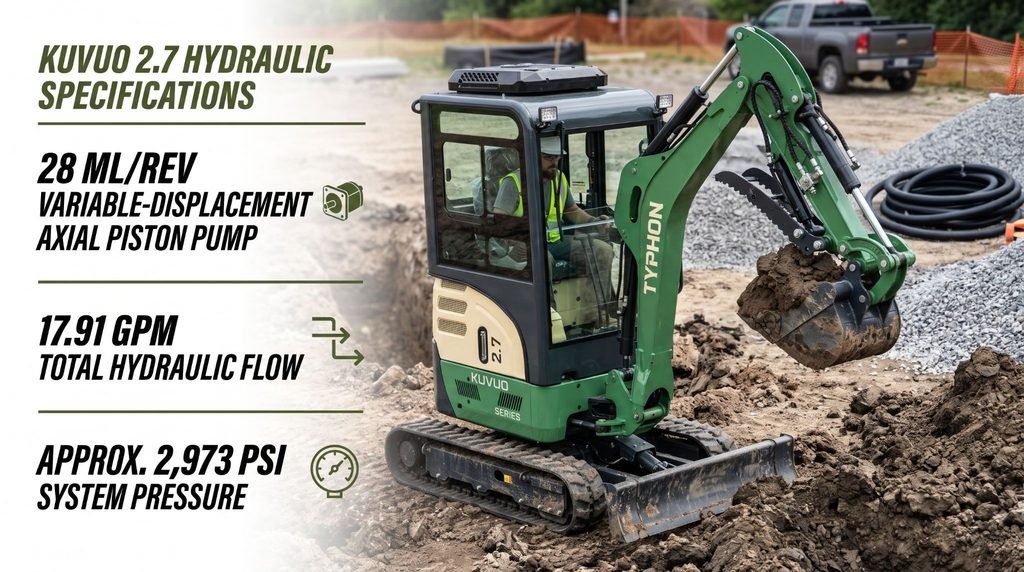
Published specifications give buyers a clear technical baseline for comparison. The KUVUO 2.7 product information lists a 28 ml/rev variable-displacement axial piston pump, total hydraulic flow of 17.91 GPM, and system pressure of approximately 2,973 PSI. Together, these figures describe the core of the machine’s hydraulic capability.
Each figure covers a different aspect of performance. Displacement is the volume of fluid the pump moves in one revolution. Total flow reflects how much fluid the system can deliver, which mainly affects how fast cylinders extend and motors turn. Pressure contributes to the force those components can apply when they meet resistance, such as dense soil or a heavy lift.
For a mini excavator buyer guide, these numbers are most useful when you read them together. Flow without adequate pressure can lack force in tough ground, while pressure without enough flow can make movements feel slow. Displacement alone doesn’t equal flow, because actual output also depends on pump speed and control behavior. Viewed as a set, the KUVUO 2.7’s published figures provide a balanced reference point for compact excavation work.
Confirm the specifications for the exact model and configuration you’re considering. Also separate total system flow from the requirements of any attachment circuit, because auxiliary circuits can carry their own flow and pressure limits. Check circuit-level figures before planning auger, breaker, or thumb work.
Key takeaway: The KUVUO 2.7 lists a 28 ml/rev variable-displacement axial piston pump, 17.91 GPM total flow, and approximately 2,973 PSI system pressure, and circuit-level figures should be confirmed before attachment work.
Long-Term Hydraulic Reliability
A piston pump performs only as well as the system that supports it. Contaminated oil, the wrong fluid, overheating, and restricted filtration can all cause gradual performance loss and premature wear. Because these problems often develop slowly, consistent maintenance is the most reliable way to protect the pump and preserve the response operators depend on.
Start with the fluid itself. Use only the hydraulic fluid type and grade the manufacturer specifies, and keep containers sealed until use. Replace filters at the specified intervals so contaminants are captured before they reach the pump. Wipe couplers clean before connecting attachments, and cap open lines whenever a hose is disconnected.
Regular inspections catch small issues early. Check hoses, fittings, and seals for leaks, abrasion, or damage during every walkaround. Watch hydraulic temperature during long shifts, and address overheating promptly rather than working through it. A slow leak or partly blocked filter is far easier and less costly to correct than a damaged pump.
When performance changes, follow the manufacturer’s troubleshooting procedures. Avoid unapproved pressure adjustments or improvised repairs, since they can damage the pump and other hydraulic components. Disciplined care keeps the KUVUO 2.7’s hydraulic system delivering the controlled performance it was designed to provide.
Key takeaway: Specified fluid, timely filter service, clean connections, regular leak inspections, temperature monitoring, and approved repair procedures protect the KUVUO 2.7’s piston pump for dependable long-term performance.
The TYPHON KUVUO 2.7’s variable-displacement axial piston pump is the foundation of its hydraulic performance and a clear reason the machine stands out among high-end compact excavators: it converts engine power into pressurized flow, adjusts delivery as demand changes through every dig cycle, uses an axial piston architecture built for controlled output across varied workloads, delivers a published 28 ml/rev displacement, 17.91 GPM total flow, and approximately 2,973 PSI system pressure, works with full pilot joystick controls to support smooth breakout, coordinated boom and arm movement, precise trimming, controlled swing, and careful digging near structures, and keeps its capability when protected by disciplined hydraulic maintenance. Before you buy, confirm the specifications for the exact model and configuration, check circuit-level flow and pressure figures for every attachment you plan to run, and watch the machine complete full dig cycles during a demonstration on ground similar to your typical sites, then, once it’s in service, use the specified fluid, replace filters on schedule, keep couplers clean, inspect for leaks, monitor hydraulic temperature, and follow approved repair procedures so the pump continues to deliver reliable, responsive performance season after season.
Frequently Asked Questions
Why does piston pump technology matter in a mini excavator?
Pump design determines how hydraulic fluid reaches the machine’s working functions. A variable-displacement axial piston pump can adjust delivery as demand changes through the dig cycle. The overall result also depends on flow, pressure, valve design, and the condition of the rest of the hydraulic system.
What does variable displacement mean?
Variable displacement means the pump can change the amount of fluid it moves per revolution, according to its design and control system. This allows hydraulic delivery to follow changing workloads more closely than a fixed-displacement pump. On the KUVUO 2.7, the pump’s published displacement is 28 ml/rev.
Does higher hydraulic pressure always mean better performance?
No. Pressure must suit the task and work together with appropriate flow, control design, and component ratings. Unapproved pressure adjustments can damage hydraulic components and shorten pump life, so always follow the manufacturer’s specifications.
How can hydraulic pump life be supported?
Use the specified fluid, service filters on schedule, prevent contamination, monitor hydraulic temperature, and follow the manufacturer’s maintenance plan. Investigating any change in performance early helps prevent costly pump damage and unplanned downtime.